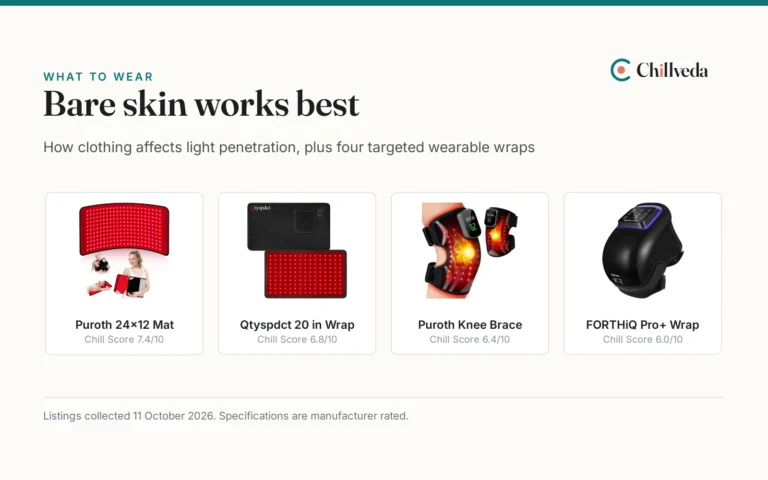
What to wear for red light therapy depends on the treatment area, but bare skin is always the gold standard. Red light around 660nm and near-infrared light around 850nm deliver their intended irradiance directly to bare tissue. Everyday clothing fibers reflect, absorb, and scatter light, substantially reducing the amount of optical energy that reaches the skin. For full-body panels, wearing minimal clothing like underwear or a swimsuit works best, while targeted wearable wraps should be secured directly against bare, clean skin.
This guide breaks down fabric interference, practical attire options for home setups and commercial clinics, eye safety requirements, and four targeted red light therapy devices compared from their published specifications. Listings were collected 11 October 2026.
This article is informational and is not medical advice. Intense optical output can strain unprotected eyes. Never look directly into illuminated LEDs, wear opaque protective eyewear when lights are near your face, and consult a doctor before use if you take light-sensitizing medications or have an underlying health condition. See our Medical Disclaimer.
Chillveda earns a commission when you buy through links on this page, at no extra cost to you. As an Amazon Associate I earn from qualifying purchases. Affiliate disclosure.
Quick picks
-
1
 Red Light Therapy Mat for Body 24"x12" with 242 Chill Score 9.5/10Check price on Amazon
A 24 by 12 inch flexible red light therapy mat with 242 LEDs, dual 660nm and 850nm wavelengths, and three operating modes.
-
2
 Red Light Therapy Pad, 20" Large Wearable 660nm Chill Score 9.4/10Check price on Amazon
A 20 by 12 inch wearable red light wrap with 150 LEDs, dual wavelengths, a 33.5 inch extension strap, and a 10-foot USB controller.
-
3
 Red Light Therapy Knee Brace with Massage Chill Score 9.4/10Check price on Amazon
A cordless knee brace pairing 660nm and 850nm red light with three vibration modes and a 5000mAh rechargeable battery.
-
4
 FORTHiQ Knee Massager Pro+ for Pain Relief Chill Score 9.3/10Check price on Amazon
A cordless knee massager combining dual red light, three vibration levels, and rapid 30-second heat-up with memory recall.

A 24 by 12 inch flexible red light therapy mat with 242 LEDs, dual 660nm and 850nm wavelengths, and three operating modes.
Pros & ConsViewHide
Pros
- 242 LEDs with 726 chips across dual 660nm and 850nm wavelengths
- Large 24 by 12 inch flexible coverage area with elastic straps
- Three modes including constant, 10Hz pulse, and 40Hz pulse
- Timer adjustable from 10 to 90 minutes with auto shut-off
Cons
- No warranty term is stated
- Wired power connection requires wall outlet access
- Heaviest unit in this group at 1.92 pounds
- No safety certifications are stated

A 20 by 12 inch wearable red light wrap with 150 LEDs, dual wavelengths, a 33.5 inch extension strap, and a 10-foot USB controller.
Pros & ConsViewHide
Pros
- Generous 20 by 12 inch surface with a 33.5 inch extension strap
- 150 LEDs combining 660nm red and 850nm near-infrared light
- Long 10-foot USB controller cable allows flexible placement
- Lightweight design at 1.07 pounds
Cons
- No warranty term is stated
- No built-in battery and power bank is not included
- Only two operating modes compared to three on the Puroth mat
- No safety certifications are stated

A cordless knee brace pairing 660nm and 850nm red light with three vibration modes and a 5000mAh rechargeable battery.
Pros & ConsViewHide
Pros
- 5000mAh rechargeable battery offers 1 to 2 hours of cordless use
- Dual 660nm and 850nm light with five adjustable intensity levels
- Three vibration modes with touch panel and LED display
- Adjustable straps fit knees, elbows, and arms
Cons
- No warranty term is stated
- Spec table contradicts bullets by listing 120 lithium polymer batteries
- Timer limited to 10, 20, or 30 minutes
- No safety certifications are stated

A cordless knee massager combining dual red light, three vibration levels, and rapid 30-second heat-up with memory recall.
Pros & ConsViewHide
Pros
- Cordless design with memory recall for saved settings
- Three vibration levels and fast 30-second heat-up
- FSA and HSA eligibility stated on the listing
- Auto shut-off feature built into the electronics
Cons
- No warranty term is stated
- Listing omits specific nanometer wavelengths and irradiance figures
- Spec table contradicts title by listing foot massager machine form
- Spec table lists 1 C batteries required despite cordless rechargeable build
More to compare
 LTW 2 Pack Knee Massager with Heat & Red Light Therapy forCheck price on Amazon
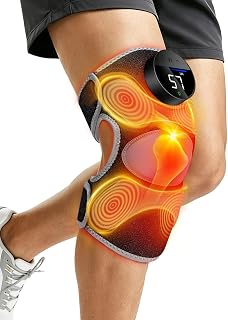 3-in-1 Red Light Therapy Knee Massager with Heat & 4Check price on Amazon
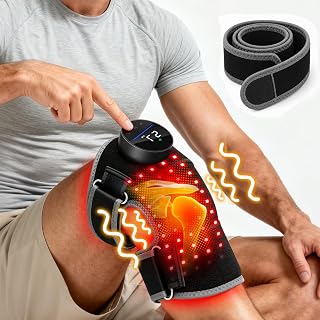 3-in-1 Red Light Therapy Knee Massager with Heat & VibrationCheck price on Amazon
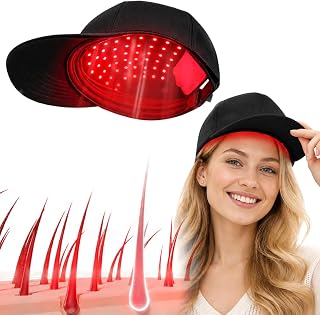 Laser Hair Growth CapCheck price on Amazon
 LLLT Laser Hair Growth CapCheck price on Amazon
 Knee Massager Smart for Pain Relief with Heat and Red LightCheck price on Amazon
What to wear for red light therapy: bare skin vs clothing
| Attire option | Light penetration | Best use case | Practical notes |
|---|---|---|---|
| Bare skin | Full direct transmission without fabric loss | Direct wrap or panel exposure | Clean, dry skin without lotions or oils |
| Underwear or swimwear | Fabric reduces light; exposed skin receives full light | Home panels or commercial clinics | Standard for modesty in shared treatment spaces |
| Sheer or thin white fabric | Substantially reduced transmission from scattering | Not recommended for active therapy | Threads scatter light even if fabric looks translucent |
| Dark or thick workout clothes | Near total blockage from absorption | Warm-up or cool-down only | Dense weaves and dark dyes absorb red and near-infrared wavelengths |
| Protective eye goggles | Opaque shielding to block direct rays | All facial and panel sessions | Shields retinas from bright LED arrays |
The general principle across red light therapy devices is straightforward: light must reach the skin to deliver optical energy. Garments absorb and scatter a major portion of visible red light at 660nm and near-infrared light at 850nm. In fact, makers of targeted wraps, such as Qtyspdct in our comparison below, explicitly note in their manuals that clothing thickness and color may reduce light penetration. For targeted knee or back wraps, placing the LEDs directly against bare skin ensures that fabric does not diminish the emitted wavelengths.
Why clothing blocks red and near-infrared light
Visible red light (typically 660nm) targets surface tissue, while near-infrared light (typically 850nm) reaches slightly deeper structures. However, both wavelengths behave according to the laws of optics. When photons hit clothing fibers, they undergo reflection, absorption, and refraction. Dyes in colored fabrics absorb specific wavelengths, while tight weaves physically scatter the light beams away from the skin. Our guide to red light wavelengths explained details how these wavelengths interact with tissue.
A common misconception is that thin, white cotton allows red light through because you can see light glowing under the cloth. While some visible glow passes through the spaces between fibers, the actual optical irradiance reaching the skin drops sharply. If modesty requires wearing clothing, choose loose-fitting items that you can pull back to expose the target treatment area completely.
What to wear to red light therapy clinics and salons
When booking a session at a commercial spa, gym, or wellness clinic, what to wear to red light therapy requires balancing skin exposure with comfort and modesty. Most professional setups feature large vertical panels or walk-in light beds where you stand or lie down inside a private room.
Wear loose, easily removable clothing such as sweatpants, shorts, or a robe to your appointment. Inside the private treatment room, you can disrobe down to your underwear or a bikini. Salons typically request that visitors remove all makeup, body lotion, and perfumes prior to the session, as cosmetic compounds can reflect optical energy or cause skin irritation under bright light. Always ask clinic staff for sanitized, opaque protective goggles before turning on the device.
Eye protection and safety during sessions
Eye safety is the most critical apparel consideration in any red light routine. High-output LED arrays produce intense concentrated illumination that can cause retinal glare, headaches, or photic stress when viewed directly. Our breakdown on red light therapy eye safety highlights why standard sunglasses do not offer adequate protection.
Always wear dedicated opaque goggles or blackout glasses designed specifically for light therapy, particularly during sessions targeting the face, neck, or chest. Even when using targeted pads on the knee or back, keep the LED surface directed away from your line of sight, and never look directly into active diodes.
Targeted red light therapy devices worth strapping on
These devices are scored on the Chill Score, which weighs performance 35, build 25, value 25, safety certifications 10 where it applies, and warranty 5. Because none of these four listings state a concrete warranty term or an electrical safety certification, each scores 0 for warranty and safety.
| Product | Chill Score | Perf. /35 | Build /25 | Value /25 | Safety /10 | Warranty /5 |
|---|---|---|---|---|---|---|
| Puroth 24×12 Mat | 9.5 | 30 | 21 | 22 | 0 | 0 |
| Qtyspdct 20 in Wrap | 9.4 | 27 | 20 | 21 | 0 | 0 |
| Puroth Knee Brace | 9.4 | 26 | 19 | 20 | 0 | 0 |
| FORTHiQ Pro+ Wrap | 9.3 | 23 | 18 | 19 | 0 | 0 |
Scores run from 9.2 to 9.8: each product’s point total is placed on that range, so more points always means a higher score.
For more options across different body zones, see our guides to the best targeted red light therapy devices and the best red light therapy for knees.
Fitting and wearing targeted wraps in practice
- Position directly against bare skin. As noted in the Qtyspdct listing, clothing thickness or fabric color may reduce optical penetration. Strap the wrap snugly around the knee, back, or shoulder so the diodes rest directly against bare skin.
- Start with recommended session times. The Qtyspdct manual recommends 20 minutes per daily session, while Puroth wraps offer timers for 10, 20, or 30 minutes, or up to 90 minutes on the large mat.
- Clean skin before use. Wash away moisturizers, cosmetic products, and skin oils prior to strapping on a pad to avoid reflecting the emitted light.
- Manage cords comfortably. Wired models provide substantial reach, such as the 10-foot USB cord on the Qtyspdct wrap or the roughly 6.5 feet of cabling on the Puroth mat, allowing you to relax while connected to power.
- Check for built-in heat. Dedicated light wraps like the Qtyspdct state a maximum surface temperature of 111.2 F, while hybrid wraps like the FORTHiQ provide active heating with a 30-second warm-up.
Common mistakes
- Wearing thick leggings or dark athletic clothes under a targeted wrap, which blocks light transmission.
- Assuming thin white cotton lets enough light pass through to the tissue.
- Applying thick lotions, body oils, or makeup immediately before a red light session.
- Skipping protective eye goggles when using wraps or panels anywhere near the face.
- Exceeding the maker’s stated session timer recommendations or daily limits.
Common questions
Can you wear clothes during red light therapy?
You can wear clothes for modesty, but any fabric covering the target area blocks a large portion of the optical energy. Red and near-infrared wavelengths must make direct contact with skin tissue to deliver optimal exposure. If you wear clothing, leave the specific body part you are treating completely bare.
What should you wear to red light therapy at a commercial clinic?
At a commercial salon or spa, wear loose, comfortable clothing that is easy to take off, such as gym shorts or sweatpants. Once inside the private treatment room, you can change down to your underwear or a bathing suit so the panel lights can reach your skin. Salons will also provide or require opaque protective goggles for your session.
Does red light penetrate through thin white fabrics?
While you may see a visible red glow passing through thin white cotton or sheer fabric, the fibers scatter and reflect the concentrated light beams. This scattering drastically reduces the irradiance reaching your skin, making the session far less effective. Always position wraps directly on bare skin rather than over clothing.
Do you need to wear goggles during red light therapy?
Yes, protective eyewear is strongly recommended whenever bright LED arrays are active nearby. Even when treating non-facial areas with a targeted wrap, intense stray light can cause eye strain or discomfort. Never stare directly into illuminated diodes, and use blackout goggles for any session near your face.
Can you apply lotion or sunscreen before red light therapy?
No, you should keep your skin completely clean and dry prior to a session. Sunscreen contains active compounds specifically designed to block optical energy, while thick lotions and oils can reflect the light rays. Apply your moisturizers and skin care products after your light session is finished.
Sources: Amazon product listings for the red light therapy devices named above, collected 11 October 2026. Related: our red light wavelengths explained and red light therapy eye safety.
Back to all red light therapy reviews.