Red Light Therapy
Reviews and buying guides for red light and near infrared devices. We report manufacturer rated irradiance and wavelengths, note which devices hold FDA clearance and for what, and flag eye protection requirements.
98 articles
Best in Red Light Therapy
Comparisons
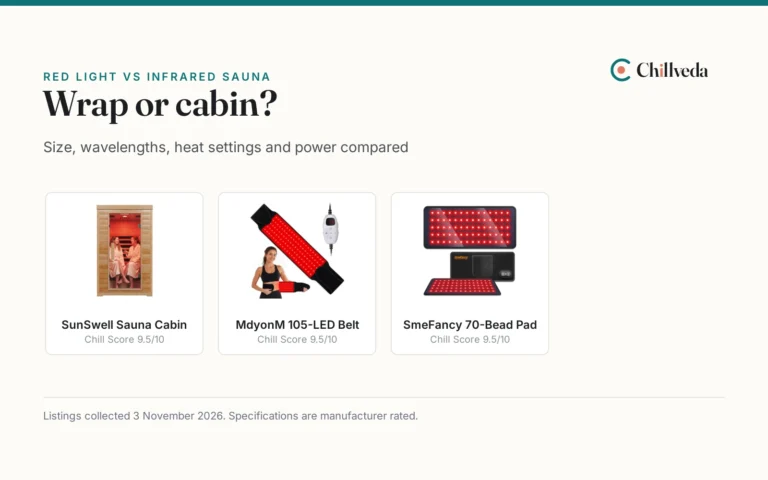
- Red Light Therapy vs Infrared Sauna: Which One Should You Buy?
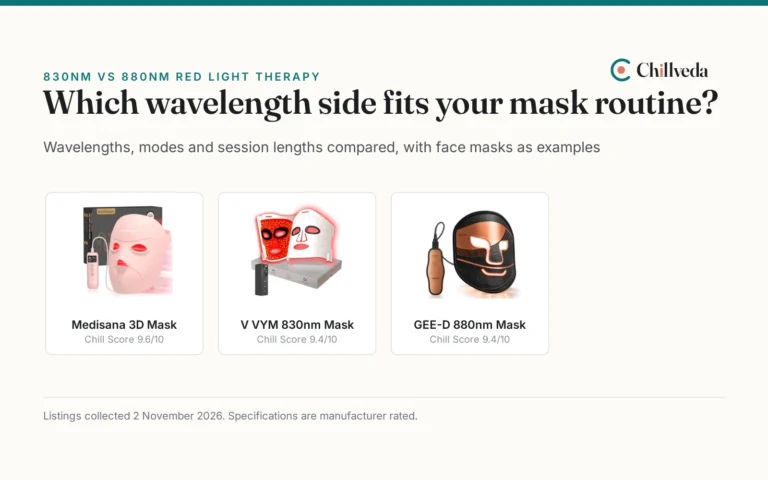
- 830nm vs 880nm Red Light Therapy: Which One Should You Buy?
- Red Light Therapy Bed vs Red Light Blanket: Which One Should You Buy?
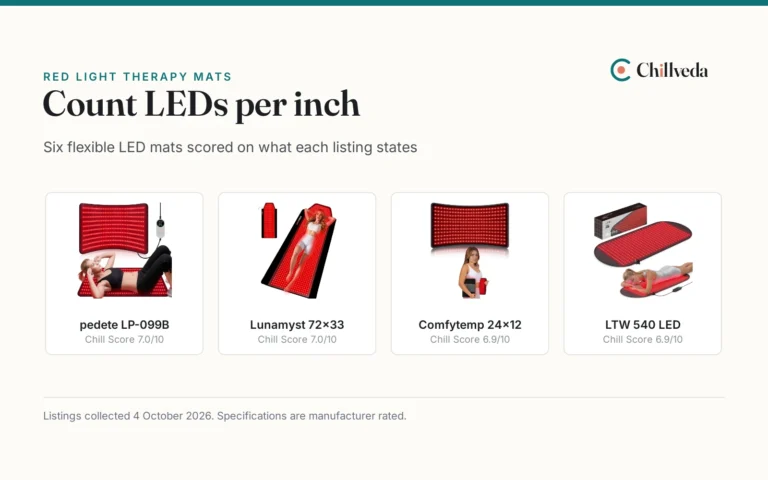
- 810nm vs 940nm Red Light Therapy: Which One Should You Buy?
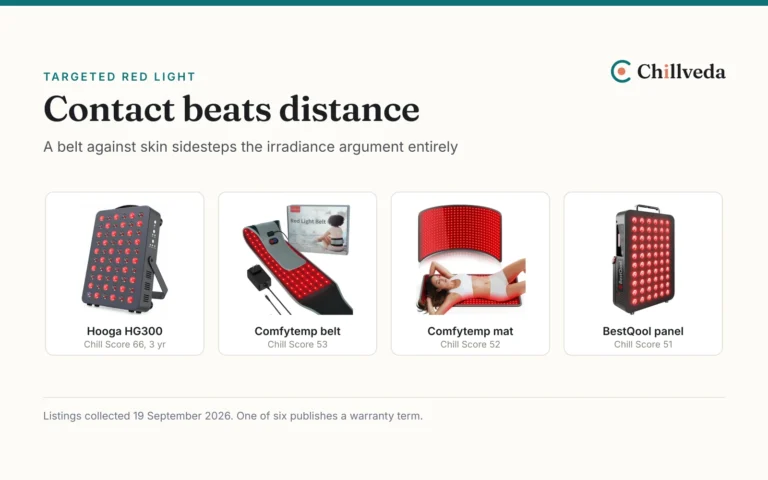
- Red Light Therapy Mask vs Belt: Which One Should You Buy?
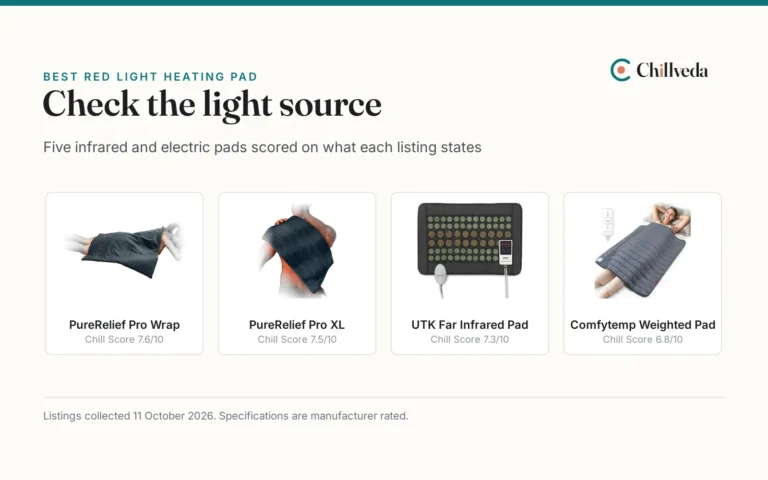
- Red Light Heating Pad vs Heating Pad: Which One Should You Buy?
All articles
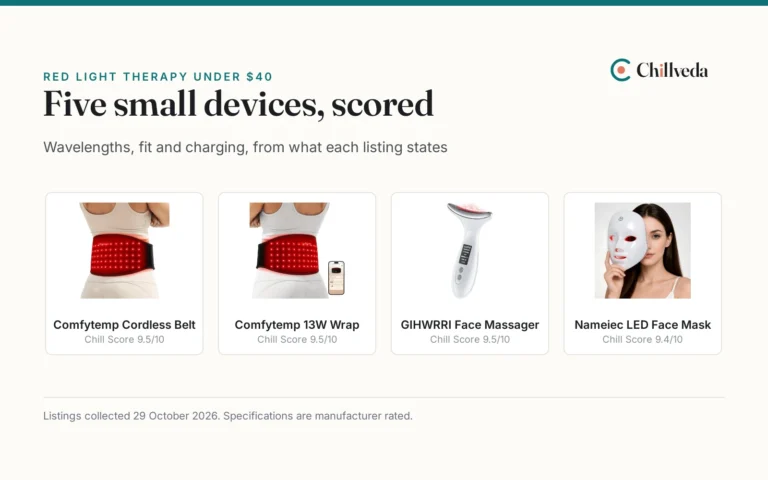
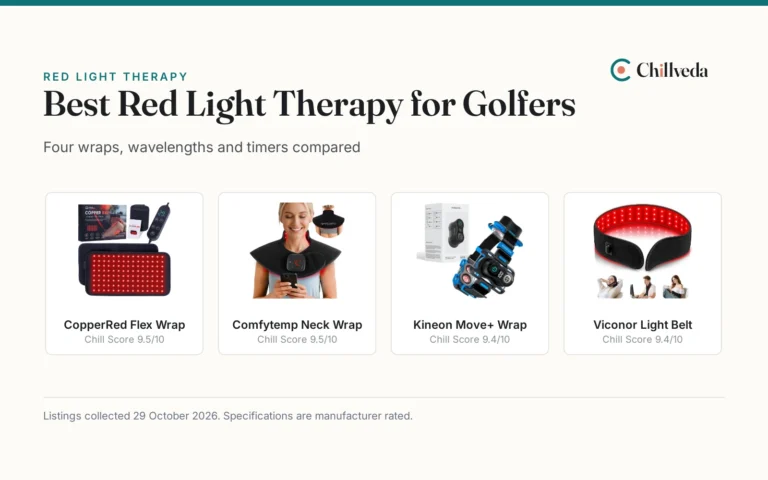
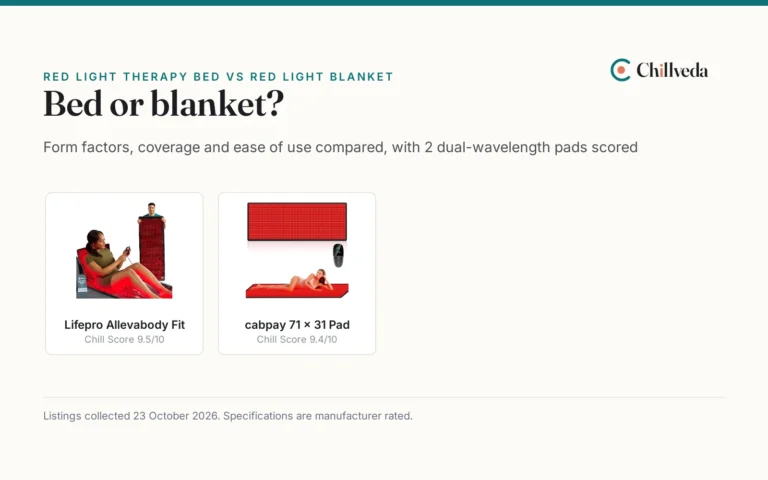
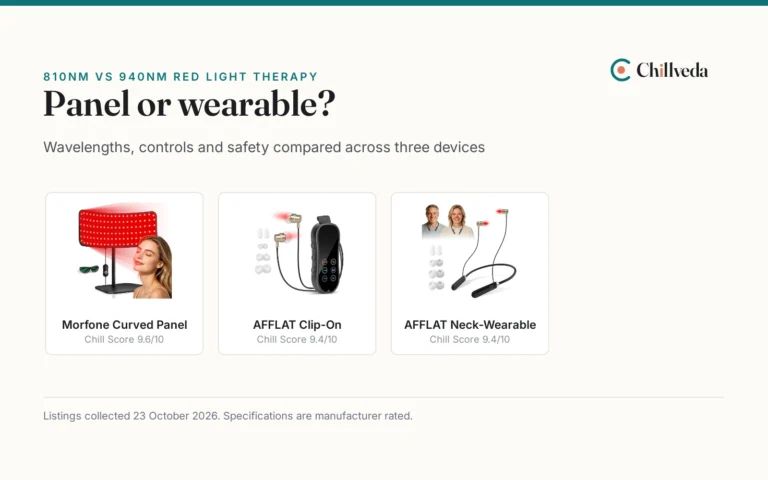
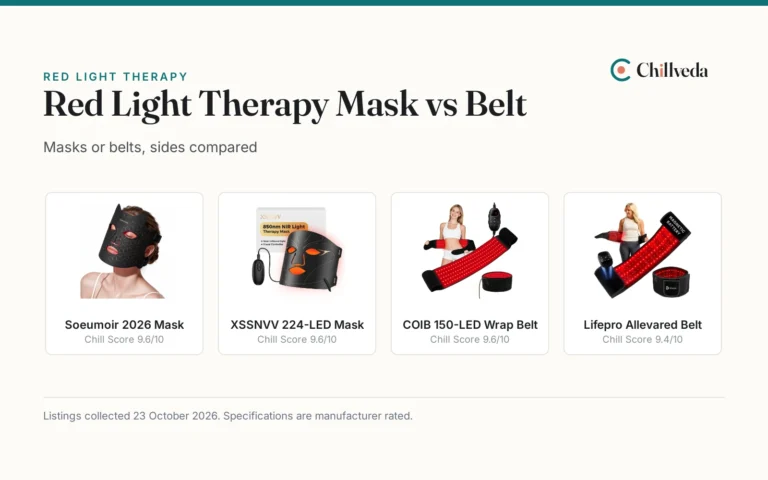
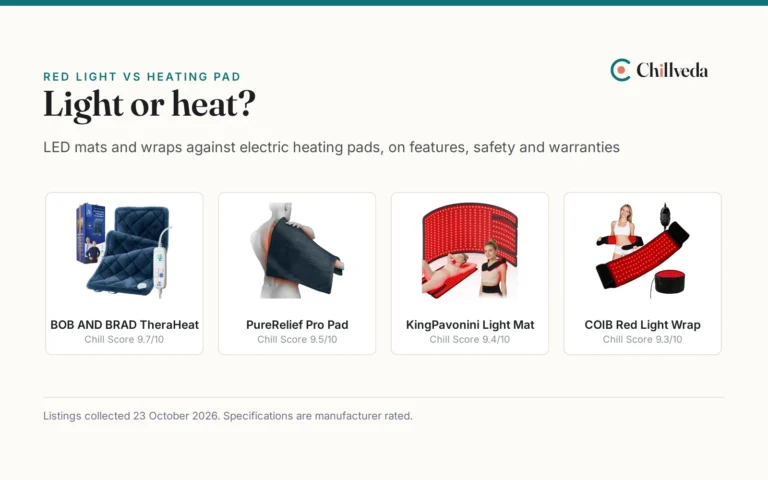
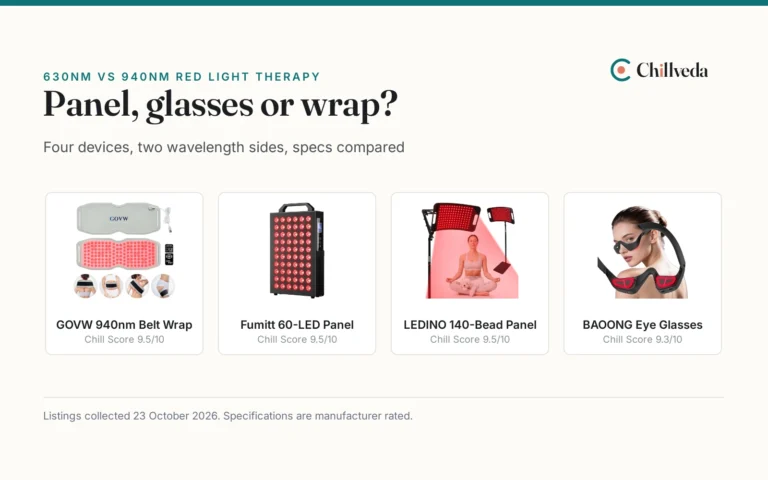
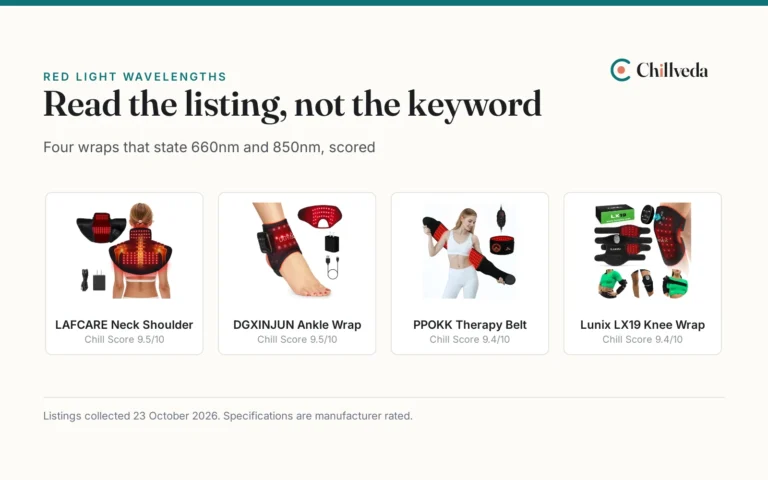
Red Light Therapy: a quick buyer's checklist
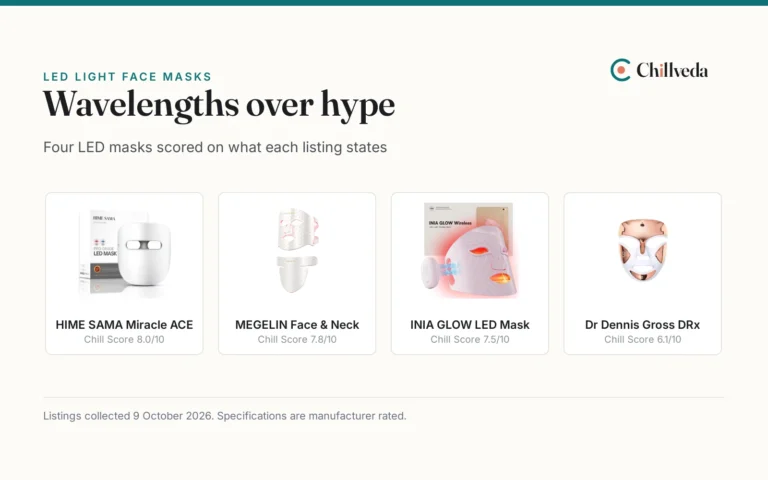
- Wavelengths. Makers list the nanometer values. Check which are included and that the listing names them plainly.
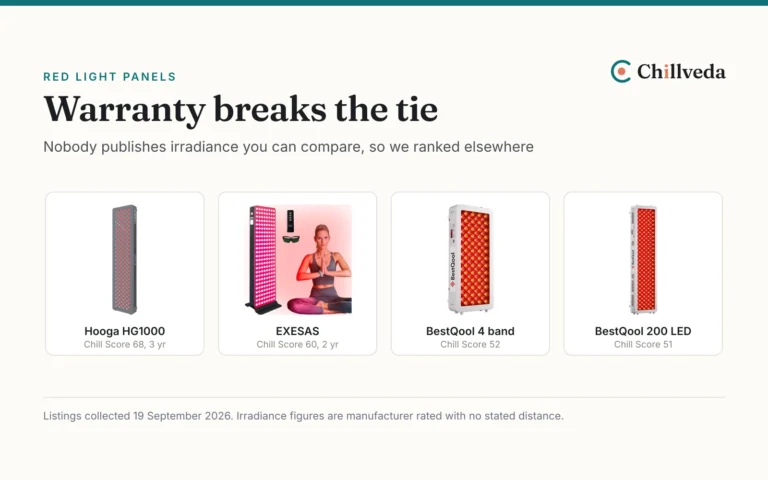
- Rated irradiance and distance. Irradiance is a manufacturer-rated figure, and brands often quote it at zero distance. Look for the stated distance.
- Coverage area. Compare panel size with the area you want covered, and note whether the device is wearable, handheld or free-standing.
- Eye protection. Check whether eyewear is included, and follow the maker's directions on eye safety.
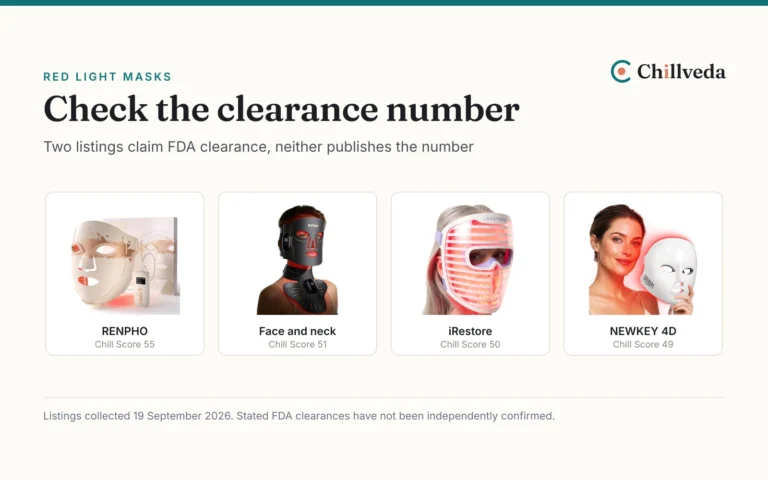
- Regulatory wording. Clearance is not approval. If a listing mentions FDA clearance, it should name the indication.
- Warranty and support. Compare the stated term and who pays return shipping, because documentation quality varies as much as the hardware.
Devices vary far more in documentation than in appearance. Read our medical disclaimer, and speak to a clinician first if you take light-sensitising medication. The three figures that vary most between brands are irradiance, the distance it was measured at, and the wavelengths included. We label each as manufacturer-rated, and we do not repeat claims about bodily effects, since a spec sheet cannot support them.