Compression Boots
Pneumatic boots and sleeves for legs, hips, and arms. We look at chamber count, pressure range, program options, sizing, pump noise, and portability.
29 articles
Best in Compression Boots
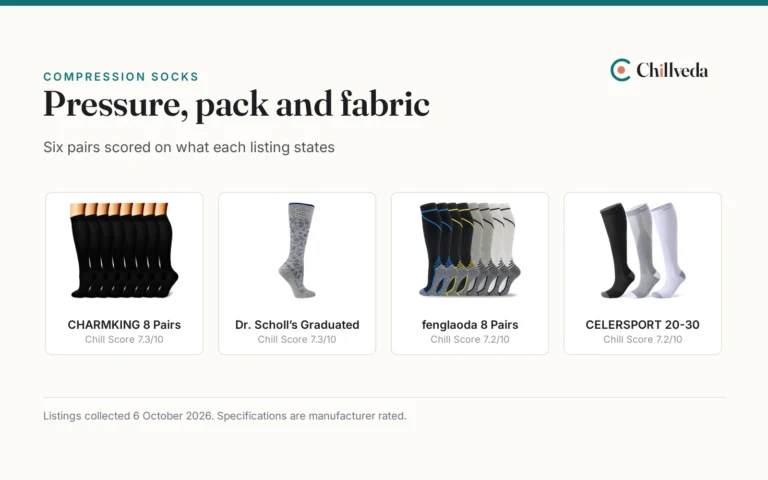
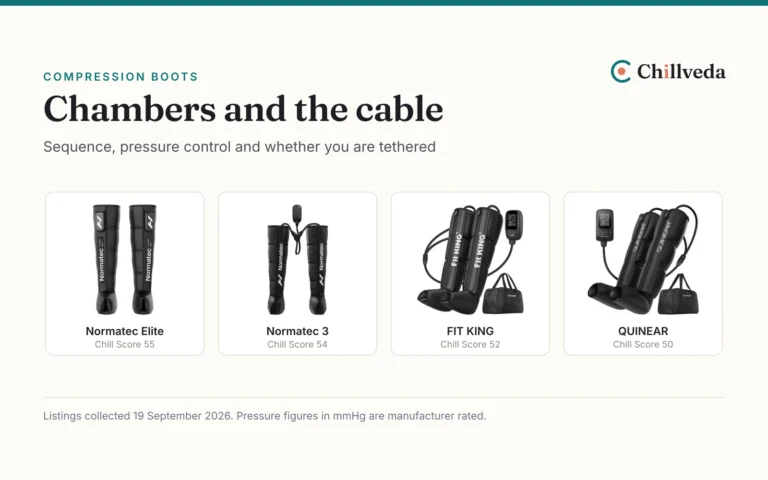
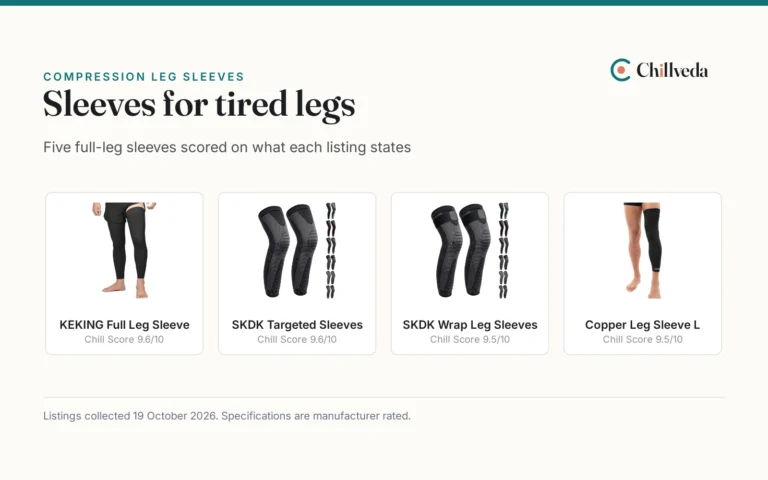
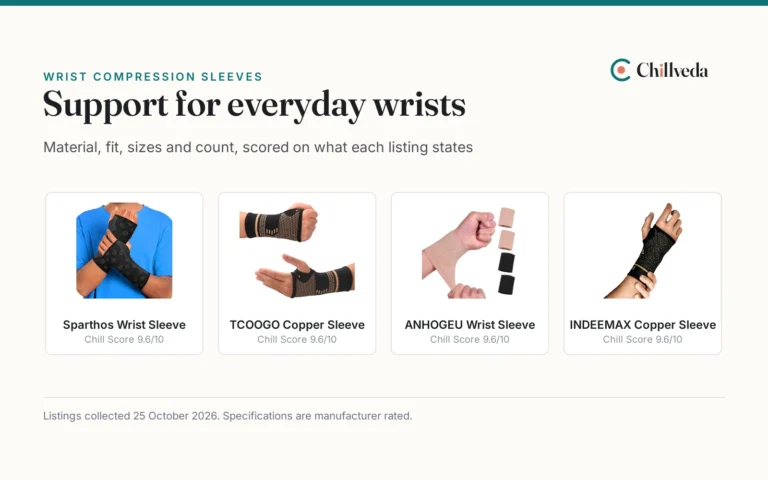
Comparisons
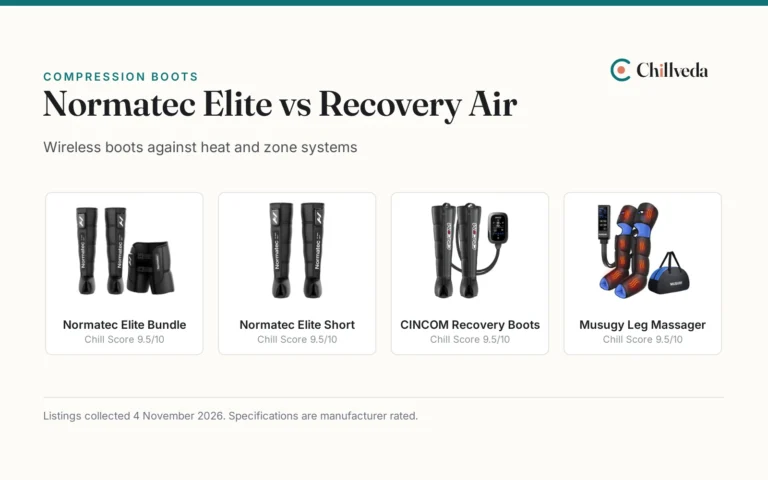
- Normatec Elite vs Recovery Air: Which One Should You Buy?
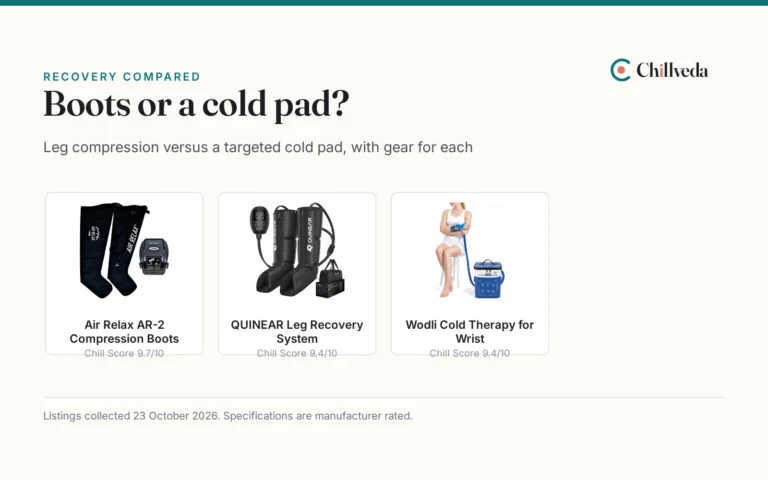
- Compression Boots vs Cold Therapy Machine: Which Recovery Route?
- Compression Boots with Hips vs Leg Boots: Which One Should You Buy?
- Graduated Compression Boots vs Uniform Compression Boots: Which One Should You Buy?
- Compression Boots vs Foot Massager: Which One Should You Buy?
- Compression Boots vs Cold Plunge: Which One Should You Buy?
All articles
Compression Boots: a quick buyer's checklist
- Chamber count. The listing gives the number of air chambers, which affects how the sequence moves along the leg.
- Pressure range. Check the stated minimum and maximum, and the number of modes.
- Sizing. Compare the boot length and circumference with the sizing chart, including any extension options.
- Pump and noise. Look at the pump size, the stated noise level and how portable the controller is.
- Power. Corded or battery power changes how you can use them.
- Warranty and parts. Hoses, pumps and controllers wear. Look for the stated term and replacement parts.
Compression devices are not right for everyone, so follow the manufacturer's directions and read our medical disclaimer before use. Sizing is the detail buyers most often get wrong, so read the chart against your own measurements. We also note whether a listing states a pressure range in units you can compare, because brands use different scales. Compare two or three sets on those points, and ask the seller when a size or pressure figure is missing from the listing.