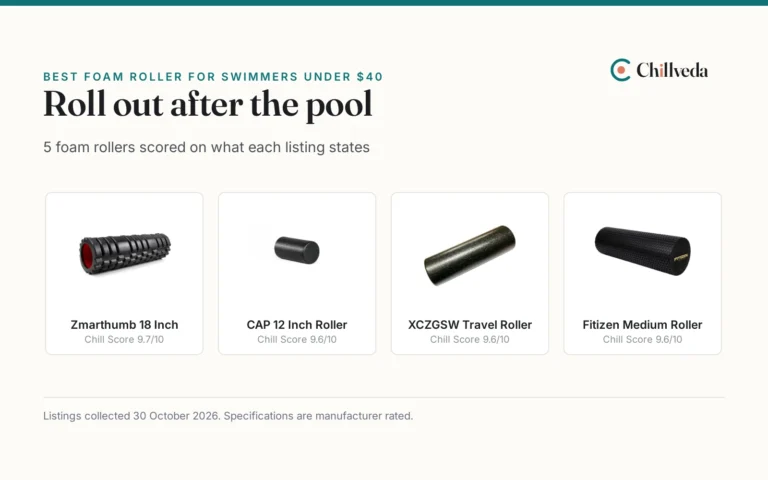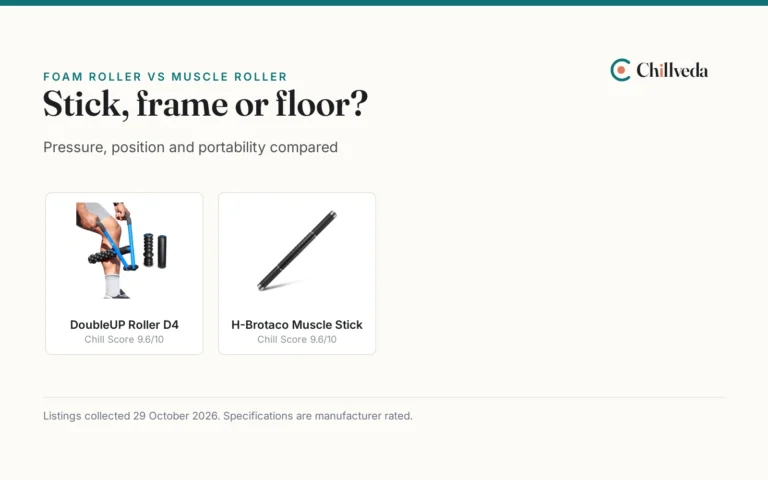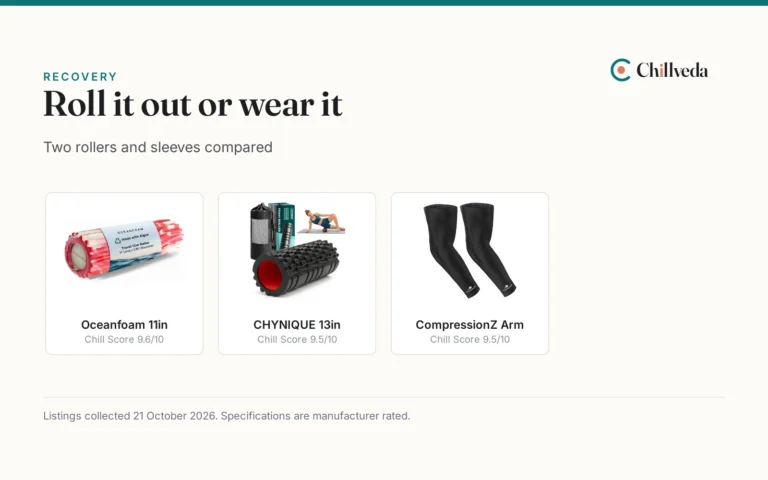
Foam roller vs compression sleeves is a recovery question with a clean answer. Pick the foam roller when you want to work out muscle soreness and stiffness yourself. Pick compression sleeves when you want wearable support and sun protection during activity. The three listings below show the difference in concrete terms: two foam rollers on one side, one pair of sleeves on the other.
Chillveda earns a commission when you buy through links on this page, at no extra cost to you. Read our affiliate disclosure.
Chillveda earns a commission when you buy through links on this page, at no extra cost to you. As an Amazon Associate I earn from qualifying purchases. Affiliate disclosure.
Quick picks
-
1
 Oceanfoam Ripple Roller Small Foam Roller Chill Score 9.6/10Check price on Amazon
An 11 in mini foam roller in firm high-density wave-textured foam for targeted relief.
-
2
 Foam Roller, Deep Tissue Muscle Massage Chill Score 9.5/10Check price on Amazon
A 13 in foam roller with patented 3-zone massage, PVC and EVA construction.
-
3
 CompressionZ Compression Arm Sleeves for Men Chill Score 9.5/10Check price on Amazon
Compression arm sleeves in 85% nylon 15% spandex with UPF 50+ sun protection.
The picks

An 11 in mini foam roller in firm high-density wave-textured foam for targeted relief.
Pros & ConsViewHide
Pros
- 11 in, travel size
- Firm high-density foam
- Wave texture
- Targets specific areas
Cons
- Too small for full back
- No warranty term stated
- No certification stated
- Firm may be intense

A 13 in foam roller with patented 3-zone massage, PVC and EVA construction.
Pros & ConsViewHide
Pros
- 13 in, fuller size
- Patented 3-zone
- Waterproof, sweat-proof
- Holds shape
Cons
- No density stated
- No warranty term stated
- No certification stated
- Zones may suit some

Compression arm sleeves in 85% nylon 15% spandex with UPF 50+ sun protection.
Pros & ConsViewHide
Pros
- 85% nylon, 15% spandex
- UPF 50+ protection
- Cooling, breathable
- All-day wear
Cons
- Arms only
- No compression level stated
- No warranty term stated
- Sizing not detailed
More to compare
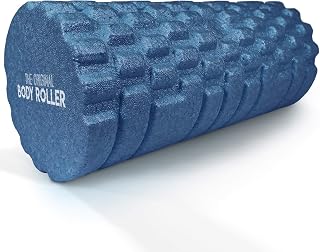 The Original Body RollerCheck price on Amazon
 Amazon Basics High Density Foam Roller for Exercise andCheck price on Amazon
 Krightlink 5 in 1 Foam Roller Set Trigger Point Exercise FoamCheck price on Amazon
 Brazyn Morph Foam Roller: Collapsible Travel Foam Roller forCheck price on Amazon
 TONE Fitness Firm High-Density Foam Roller for ExerciseCheck price on Amazon
 Fitizen Foam RollerCheck price on Amazon
The two sides
The foam roller side is active recovery you do yourself. The Oceanfoam 11 in is the targeted tool: firm, high-density, wave-textured foam in a travel size for specific areas like plantar fasciitis, quads, calves and feet. The CHYNIQUE 13 in is the fuller tool: a patented 3-zone design in PVC and EVA, waterproof and sweat-proof, for back tension, leg tightness and IT band discomfort before and after exercise.
The compression sleeves side is passive support you wear. The CompressionZ arm sleeves are 85 percent nylon and 15 percent spandex, snug and flexible, with a cooling breathable feel and UPF 50+ sun protection. They are built for basketball, football, volleyball and outdoor work: support during the activity, not massage after it.
The use cases barely overlap. A foam roller breaks up stiffness after the workout; sleeves support the arms during it. The rollers work the back, legs and feet from the floor; the sleeves cover the arms and stay on all day. One tool recovers; the other protects.
How they compare
Mechanism is the whole difference. The rollers use body weight against the foam to press into muscle; the Oceanfoam’s foam is firm high-density with a wave texture for deep tissue, while the CHYNIQUE states no density figure and uses a 3-zone design to control intensity. The sleeves use elastic compression around the arm; the listing states no compression level, so the listings do not support comparing squeeze across the sides. Active pressure against muscle versus passive support around it: that is the split.
Coverage runs 11 in to 13 in of roller against two arms of sleeves. The CHYNIQUE’s 13 in covers more per pass than the Oceanfoam’s 11 in; the sleeves cover only the arms, all day, wherever you go. The rollers need floor space and a few minutes; the sleeves need nothing but an arm. For a sore back, the rollers win by default; for sun and chafing on a run, the sleeves do.
Materials tell the durability story. The CHYNIQUE’s PVC and EVA are waterproof and sweat-proof and hold shape after heavy use; the Oceanfoam’s high-density foam is firm for deep work. The CompressionZ blend is 85 percent nylon and 15 percent spandex, soft and cooling. The listings do not state warranties on any of the three, so durability runs on material claims alone.
How we scored them
Each product is scored on performance, build, value, safety and warranty, with the weights published on our How We Pick page. None of these listings states a warranty term or a safety certification, so warranty and safety are zero for all.
| Product | Chill Score | Perf. /35 | Build /25 | Value /25 | Safety /10 | Warranty /5 |
|---|---|---|---|---|---|---|
| Oceanfoam 11in | 9.6 | 28 | 20 | 20 | n/a | 0 |
| CHYNIQUE 13in | 9.5 | 27 | 20 | 19 | n/a | 0 |
| CompressionZ Arm | 9.5 | 26 | 19 | 19 | n/a | 0 |
Scores run from 9.2 to 9.8: each product’s point total is placed on that range, so more points always means a higher score. Safety counts only for powered gear or where the listing states safety features; where it does not apply, the score is taken over the remaining 90 points.
Listings were collected 21 October 2026.
Buying guide: foam roller vs compression sleeves
When the roller wins
After exercise, when muscles are stiff and sore. The Oceanfoam targets specific spots with firm high-density foam; the CHYNIQUE covers more area with its 13 in length and 3-zone intensity control. If the goal is working soreness out of muscle, the roller side is the only side that does it.
When the sleeves win
During activity, outdoors, in the sun. The CompressionZ sleeves add UPF 50+ protection and chafe resistance while you move, with a cooling feel for warm weather. No roller does that. If the goal is protection while you train or work, the sleeves are the pick.
Size and portability
The Oceanfoam’s 11 in is the travel pick; the CHYNIQUE’s 13 in is the home pick. The sleeves are the most portable of all: they weigh almost nothing and pack flat. For a gym bag, the sleeves or the mini roller; for the living room, the full-size roller.
What the listings leave unclear
No listing states a warranty term. The sleeves state no compression level. The CHYNIQUE states no density figure. The Oceanfoam states no material beyond high-density foam. Buy on what is stated; the gaps are the gaps.
Recovery, your way
Foam roller vs compression sleeves is not really a fight. The rollers recover muscle after the work; the sleeves support arms during it. Many active people keep both: sleeves for the run, a roller for after. The listings agree with that split, and nothing in them argues otherwise. Pick the side that matches the moment.
Frequently Asked Questions
Can compression sleeves replace a foam roller?
No. The sleeves support and protect during activity; they do not press into muscle the way a roller does. For soreness and stiffness, the roller side is the tool.
Which foam roller for beginners?
The CHYNIQUE’s 3-zone design lets you control intensity, which suits beginners. The Oceanfoam’s firm high-density foam is the deeper, more intense option.
Do the sleeves help with elbow pain?
The CompressionZ listing names elbow pain relief among its uses. No compression level is stated, so treat the claim as the maker’s.
Can I use a foam roller every day?
The listings describe use before and after exercise to reduce stiffness. Daily use on sore spots is a common pattern; back off if an area is bruised or injured.
Related: the best massage gun, the best heating pad and the best ice pack.