Short answer
Can compression boots replace compression socks?
No, they serve distinct roles. Compression boots deliver high-pressure intermittent pneumatic massage during short seated sessions. Compression socks provide continuous, lower static pressure while you are upright, working, or traveling.
Side by side Choose compression socks if Choose compression boots if
Compression boots vs compression socks comes down to active pneumatic massage versus passive elastic support. Compression boots use an electric pump and inflatable chambers to deliver high-pressure dynamic compression while you sit or recline. Compression socks use elastic knit fabric to apply lower, continuous static compression that you can wear for hours while standing, walking, or traveling. Pick compression boots if you want dedicated, high-pressure mechanical compression at home, and pick compression socks if you want an affordable, portable option you can wear on the move.
This comparison covers pressure levels, coverage, power needs, daily routines, upkeep, and equipment for each side. It does not compare medical treatments or clinical therapies. Listings were collected 9 October 2026.
This article is informational and is not medical advice. Compression tools change pressure on the legs. Avoid using pneumatic compression boots or tight socks over acute injuries, open wounds, or fragile skin, and ask a clinician first if you have circulatory or cardiovascular conditions. See our Medical Disclaimer.
Chillveda earns a commission when you buy through links on this page, at no extra cost to you. As an Amazon Associate I earn from qualifying purchases. Affiliate disclosure.
Quick picks
-
1
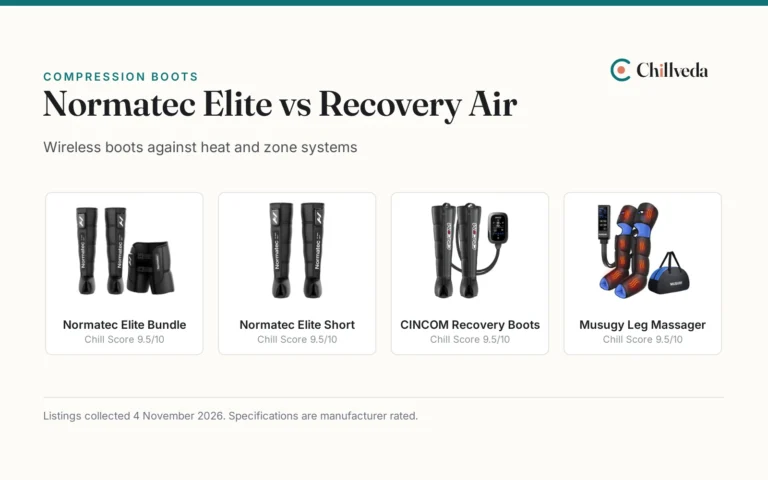
 Nekteck Cordless Leg Compression Massager Recovery Chill Score 9.5/10Check price on Amazon
Rechargeable air compression boots with 4 leg chambers, 50 to 200 mmHg pressure, and 90 to 120 minutes of battery life.
-
2
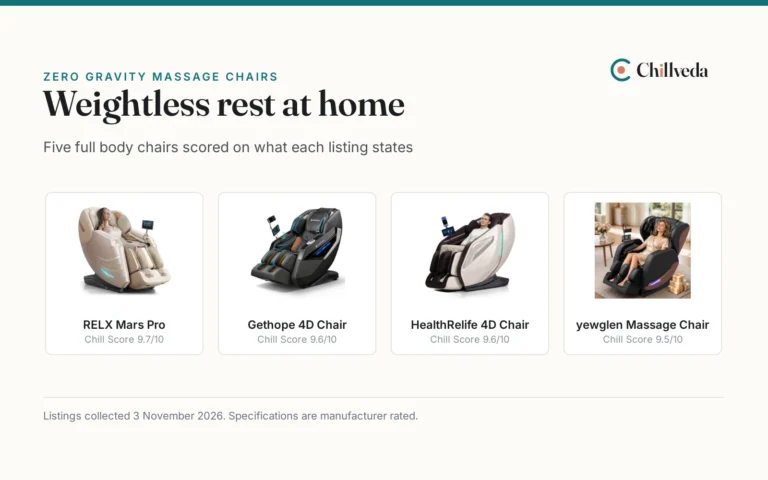
 YINGGG Air Leg Massager with Compression Chill Score 9.5/10Check price on Amazon
A corded electric compression boot system delivering 60 to 200 mmHg across 9 intensities with an air pump rated under 50 dB.
-
3
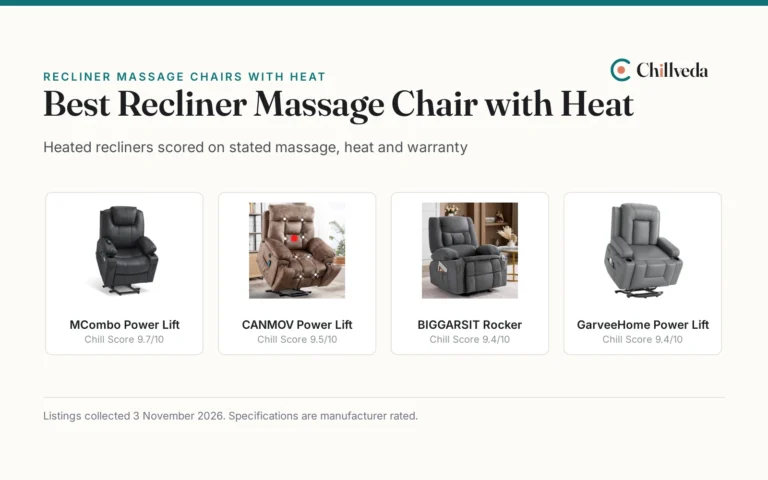
 CHARMKING Compression Socks for Women & Men Chill Score 9.4/10Check price on Amazon
A three-pair pack of knee-high compression socks rated at 15 to 20 mmHg in an 85 percent nylon and 15 percent spandex blend.
-
4
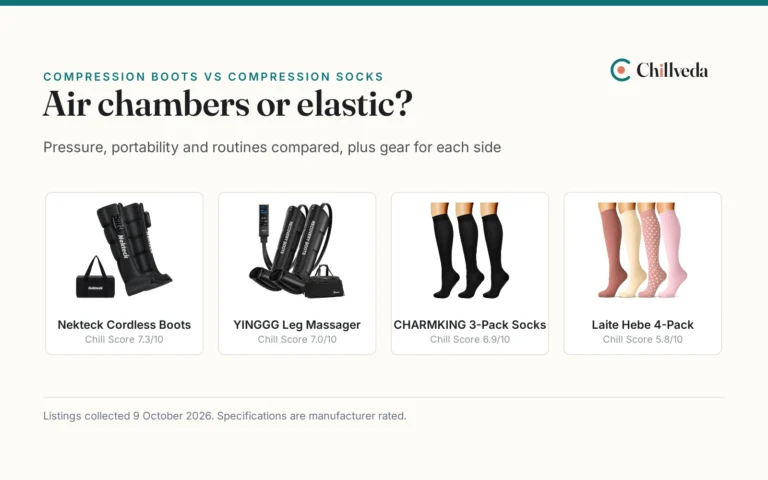
 Laite Hebe 4 Pairs-Compression Socks for Women&Men Chill Score 9.3/10Check price on Amazon
A four-pair pack of pull-on compression socks in an 85 percent nylon and 15 percent polyester knit with an unstated pressure level.

Rechargeable air compression boots with 4 leg chambers, 50 to 200 mmHg pressure, and 90 to 120 minutes of battery life.
Pros & ConsViewHide
Pros
- Cordless battery operation with 90 to 120 minutes of runtime
- 4 air chambers covering foot, calf, and thigh
- Adjustable pressure range from 50 to 200 mmHg across 4 intensities
- FSA and HSA eligible per the listing
Cons
- Listing notes best fit is for users 5 feet 7 inches or taller
- Recharge time requires 4 hours
- No heating function included
- No warranty term is stated

A corded electric compression boot system delivering 60 to 200 mmHg across 9 intensities with an air pump rated under 50 dB.
Pros & ConsViewHide
Pros
- Wide pressure range from 60 to 200 mmHg across 9 intensities
- Quiet air pump rated under 50 dB
- Specific sizing given for inseam and thigh circumference
- Sporty crossbody carry bag included
Cons
- Corded electric power requires sitting near an outlet
- At 6.9 pounds it is bulky to transport
- Bullet text contains minor formatting errors
- No warranty term is stated

A three-pair pack of knee-high compression socks rated at 15 to 20 mmHg in an 85 percent nylon and 15 percent spandex blend.
Pros & ConsViewHide
Pros
- Stated 15 to 20 mmHg graduated compression level
- Breathable blend of 85 percent nylon and 15 percent spandex
- Includes 3 pairs in the package
- Machine washable fabric
Cons
- Feature bullets are missing from the listing
- Mild pressure does not match pneumatic recovery boots
- Covers only the foot and lower leg, not the thigh
- No warranty term is stated

A four-pair pack of pull-on compression socks in an 85 percent nylon and 15 percent polyester knit with an unstated pressure level.
Pros & ConsViewHide
Pros
- Includes 4 pairs of compression socks
- Machine washable fabric
- Pull-on design with elastic cuff
- Sizing chart lists 14 to 19 inch calf fit for Large-X-Large
Cons
- No mmHg compression pressure level is stated
- Title says Women&Men while spec table lists Women
- Spec table lists polyester rather than spandex for stretch
- No warranty term is stated
More to compare
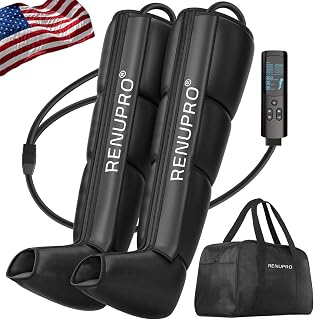 Leg Compression MassagerCheck price on Amazon
 SAN HIMA Air Compression Leg MassagerCheck price on Amazon
 Air Relax Plus AR-3 Professional Compression BootsCheck price on Amazon
 DEKEMASTER Full Leg Compression MassagerCheck price on Amazon
 JZBRAIN Professional Sequential Air Compression Boots forCheck price on Amazon
Compression boots vs compression socks at a glance
| Feature | Compression boots | Compression socks |
|---|---|---|
| Mechanism | Pneumatic air chambers inflating in sequence | Graduated elastic fabric tension |
| Stated pressure range | High (50 to 200 mmHg on Nekteck, 60 to 200 mmHg on YINGGG) | Low to moderate (15 to 20 mmHg on CHARMKING, unstated on Laite Hebe) |
| Coverage | Full leg (feet, calves, and thighs on listed models) | Lower leg (feet to calf below the knee) |
| Power source | Corded electric or rechargeable battery | None (passive garment) |
| Session length | Short timed sessions while resting | Hours or all day while upright or active |
| Portability | Bulky equipment (6.8 lb on Nekteck, 6.9 lb on YINGGG) with storage bags | Compact fabric (6.4 oz on CHARMKING 3-pack) |
| Up front investment | Higher equipment purchase | Inexpensive multi-pair packs |
| Upkeep | Wipe clean with damp cloth (no machine washing) | Machine washable fabric |
How much pressure boots and socks deliver
The primary technical difference between compression boots and compression socks is how pressure is produced and applied. Pressure in compression gear is measured in millimeters of mercury (mmHg). Graduated compression socks exert continuous static compression that is tightest at the ankle and decreases up the calf. In contrast, pneumatic compression boots use motorized pumps to cycle air through chambers, applying intermittent dynamic pressure sequentially up the leg while the user rests.
| Product example | Category side | Stated pressure | Air chambers / zones | Timer or wear time |
|---|---|---|---|---|
| Nekteck FE-7204B | Compression boots | 50 to 200 mmHg | 4 chambers (foot to thigh) | 3 timer settings |
| YINGGG FE-7204B | Compression boots | 60 to 200 mmHg | Thighs, calves, feet | 15, 20, or 25 minutes |
| CHARMKING 3-pack | Compression socks | 15 to 20 mmHg | Single graduated sleeve | Hours or all day |
| Laite Hebe 4-pack | Compression socks | Not stated | Single graduated sleeve | Hours or all day |
The pressure numbers reflect these different roles. The Nekteck boots adjust from 50 to 200 mmHg across 4 intensities, and the YINGGG boots adjust from 60 to 200 mmHg across 9 intensities. By contrast, the CHARMKING socks specify 15 to 20 mmHg of graduated compression, while the Laite Hebe listing leaves its pressure rating unstated. The top pressure of 200 mmHg on both boot examples is designed for brief mechanical compression sessions, whereas the lower pressure on socks is designed for continuous wear during daily routines.
Power delivery also separates the designs. The cordless Nekteck boots list 90 to 120 minutes of battery life from their included batteries, paired with a 4-hour recharge time. The corded YINGGG boots require continuous wall power, avoiding battery degradation at the expense of mobility.
Cost, space and power
Compression socks require minimal storage space and zero electricity. The three-pair package of CHARMKING socks measures 9 by 6.2 by 1.9 inches and lists an item weight of 6.4 ounces. They fold into any drawer or gym bag and function passively anywhere you travel. If you want portable everyday support, explore our roundup of the best compression socks.
Pneumatic compression boots are larger appliances that demand dedicated storage and power considerations. The YINGGG package measures 13.4 by 12.6 by 7.1 inches and weighs 6.9 pounds. The Nekteck package measures 11.41 by 5.51 by 15.35 inches and weighs 6.8 pounds. While both models include storage bags, their bulky fabric sleeves and motorized components take up real closet or luggage space. Corded models require sitting near a standard wall outlet, while cordless models require routine recharging. For dedicated full-leg recovery systems, see our guide to the best compression boots and our review of the best leg air compression massagers.
Upkeep
Because compression socks pull directly against the skin during workouts, standing shifts, and flights, they collect sweat and body oils. Both the CHARMKING (85 percent nylon, 15 percent spandex) and Laite Hebe (85 percent nylon, 15 percent polyester) listings specify machine washable care, allowing regular cleaning in standard laundry cycles.
Pneumatic compression boots cannot be washed in a machine or submerged in water because of their internal air bladders, air hoses, electronic valves, and wiring. The YINGGG boots list nylon fabric, while the Nekteck boots list polyester. Upkeep requires unzipping the sleeves, wiping the fabric with a damp cloth and mild soap after sweaty sessions, and letting them air dry completely before storing them in their carry bags.
Gear for each route
These are scored on the Chill Score: performance 35, build 25, value 25, safety certifications 10 where it applies and warranty 5. None states a UL or ETL listing, so all score 0 for safety.
| Product | Chill Score | Perf. /35 | Build /25 | Value /25 | Safety /10 | Warranty /5 |
|---|---|---|---|---|---|---|
| Nekteck Cordless Boots | 9.5 | 30 | 21 | 21 | 0 | 0 |
| YINGGG Leg Massager | 9.5 | 29 | 21 | 20 | 0 | 0 |
| CHARMKING 3-Pack Socks | 9.4 | 28 | 20 | 21 | 0 | 0 |
| Laite Hebe 4-Pack | 9.3 | 22 | 18 | 19 | 0 | 0 |
Scores run from 9.2 to 9.8: each product’s point total is placed on that range, so more points always means a higher score.
Choose compression socks if
- You want support you can wear while standing, walking, working, or traveling.
- You want an affordable, passive garment that requires no batteries or wall outlets.
- You prefer mild to moderate graduated compression (such as the 15 to 20 mmHg rating on the CHARMKING listing).
- You want compact gear that is machine washable and fits into any small bag.
Choose compression boots if
- You want dynamic pneumatic massage reaching up to 200 mmHg for post-workout sessions.
- You have time to sit or recline while air chambers cycle sequentially.
- You want full-leg coverage extending from the feet through the calves to the thighs.
- You are comfortable investing in dedicated equipment and performing wipe-down upkeep.
Common questions
Can compression boots replace compression socks?
No, they serve distinct roles. Compression boots deliver high-pressure intermittent pneumatic massage during short seated sessions. Compression socks provide continuous, lower static pressure while you are upright, working, or traveling.
How much pressure do compression boots and socks provide?
Compression boots produce significantly higher pressure than socks. The boots in this comparison list adjustable top pressures of 200 mmHg, starting at 50 mmHg on the Nekteck listing and 60 mmHg on the YINGGG listing. On the sock side, the CHARMKING listing specifies 15 to 20 mmHg, while the Laite Hebe listing leaves its pressure rating unstated.
How long should you use compression boots compared to socks?
Compression boots are intended for brief, timed sessions. Both boot models in this comparison include automatic preset timers to manage session length. In contrast, compression socks are passive clothing items that users wear for several consecutive hours or throughout an entire workday.
Can compression boots be used while walking?
No. The compression boots in this comparison are designed for seated or reclining use, as the leg sleeves restrict knee movement and require either a power cord or connected air chambers. Compression socks are passive knit garments designed specifically for wearing while walking, standing, or traveling.
How do compression boots and socks fit into a workout routine?
Compression boots provide intermittent pneumatic compression across the feet, calves, and thighs during a dedicated rest session after exercise. Compression socks are worn during or after workouts, providing continuous light compression while you walk, stretch, or travel.
Back to all recovery tools reviews.