Side by side Choose a back stretcher if Choose a massage stick if
Evening on the living room floor, shoes off and shoulders tight after a long day at a desk, is when a back tool earns its place. This back stretcher vs massage stick comparison gives a short verdict up front: pick a back stretcher if you want to lie back and let body weight do the work, and pick a massage stick if you want to steer pressure yourself, spot by spot, with your hands.
The listings below cover both sides, with the back stretcher side holding the Magic Back Support board and the GymCope roller, and the massage stick side holding the Cubetoou cane and the Nine for Nine stick. Listings were collected 25 October 2026.
This article is informational and is not medical advice. Massage tools are not for use on the neck, spine or arteries, or on acute injuries, and anyone with a health condition should ask a clinician first. See our Medical Disclaimer.
Chillveda earns a commission when you buy through links on this page, at no extra cost to you. As an Amazon Associate I earn from qualifying purchases. Affiliate disclosure.
Quick picks
-
1
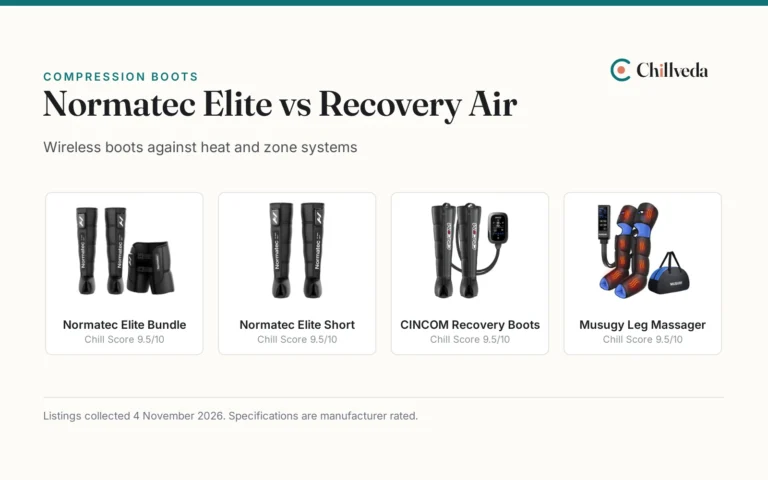
 GymCope 10in Back Roller Chill Score 9.4/10Check price on Amazon
A dual-width foam back roller with a spine groove and raised nodes, listed as supporting up to 530 lb, for floor or chair-back use.
-
2
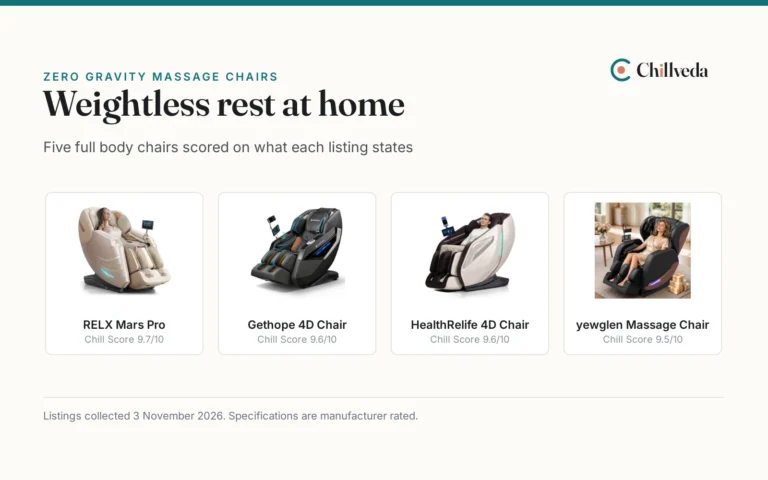
 Back and Neck Massager for Pain Relief Deep Chill Score 9.3/10Check price on Amazon
A 2-piece handheld cane with 16 nodes for targeted pressure on the neck, back, shoulders, arms and legs.
-
3
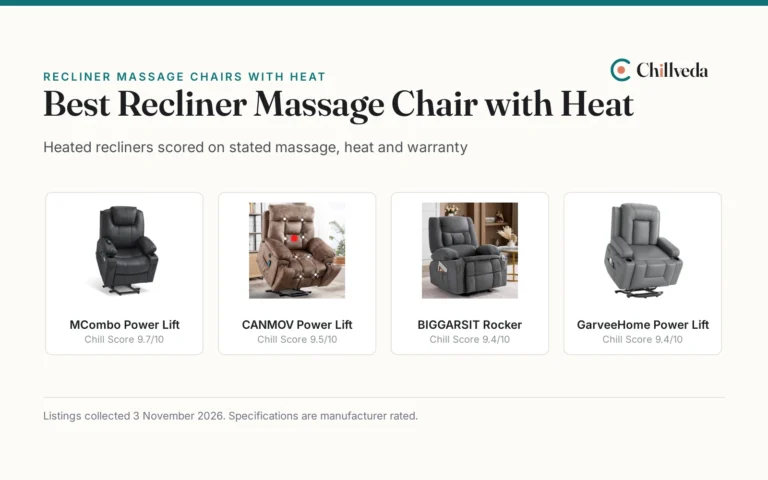
 Back Stretching Device,Back Massager for Bed Chill Score 9.3/10Check price on Amazon
A multi-level lumbar stretcher board in ABS that needs no power, shaped for bed, chair and car use.
-
4
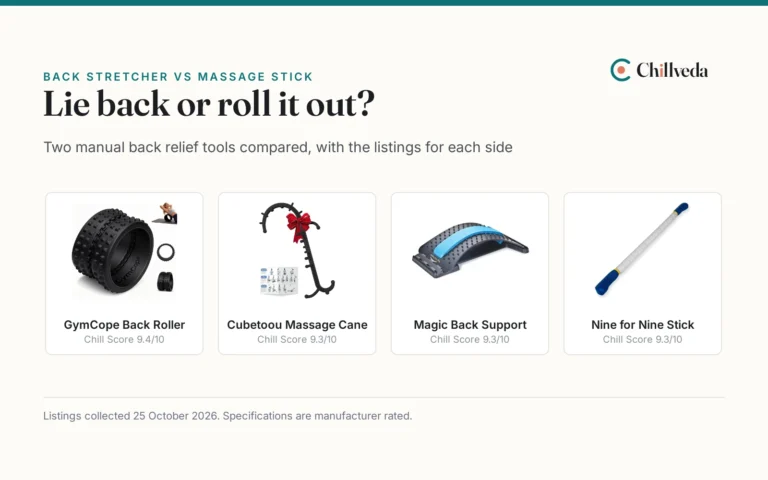
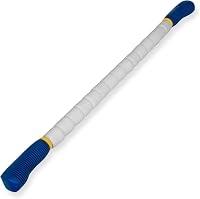 Massage Stick 24" Handheld Spindle Massage Roller Chill Score 9.3/10Check price on Amazon
A 24 in handheld spindle roller with freely rolling spindles for full-body muscle rolling.

A dual-width foam back roller with a spine groove and raised nodes, listed as supporting up to 530 lb, for floor or chair-back use.
Pros & ConsViewHide
Pros
- Dual widths of 5.5 and 7.5 in stated
- Supports up to 530 lb per the listing
- Spine groove avoids direct spinal pressure, per the listing
- High-density ABS interior with EVA foam exterior
Cons
- Listing warns it is not for beginners
- Title says 10in while the table lists a 5.5 in diameter
- No warranty term stated
- Firm build, per the listing, with no softer option stated

A 2-piece handheld cane with 16 nodes for targeted pressure on the neck, back, shoulders, arms and legs.
Pros & ConsViewHide
Pros
- 16 nodes for targeted pressure
- 2-piece design assembles from two parts
- BPA free material stated
- Detailed manual included, per the listing
Cons
- Size figures conflict: bullets say 23.5 x 14.5 x 1.2 in, table says 26.2 x 14.8 x 1.2 in
- Bullets say less than a pound, table says 1.8 pounds
- Needs assembly before first use
- No warranty term stated

A multi-level lumbar stretcher board in ABS that needs no power, shaped for bed, chair and car use.
Pros & ConsViewHide
Pros
- Height adjustable, per the spec table
- No power or battery required
- Weighs 0.62 kg per the table
- For bed, chair and car use, per the title
Cons
- Size figures conflict: 16 x 10.5 x 1.96 in vs 6.3 x 3.94 x 0.71 in
- Table calls it a massage roller while the form factor is a board
- Not water resistant, per the table
- No warranty term stated
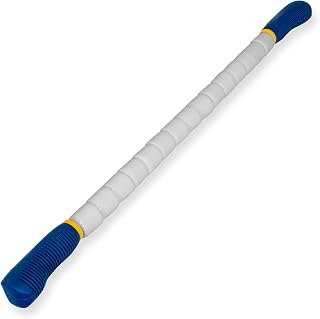
A 24 in handheld spindle roller with freely rolling spindles for full-body muscle rolling.
Pros & ConsViewHide
Pros
- 24 in length for full-body reach
- Spindles roll freely and will not drag, per the listing
- Chemical free plastic stated
- Maker states 20+ years making massage sticks
Cons
- No node count or grip detail stated
- Sparsest listing among the picks
- No warranty term stated
- No carry or storage option stated
More to compare
 Back StretcherCheck price on Amazon
 Back Stretcher for Lower Back Pain ReliefCheck price on Amazon
 Decompression Table Lumba Traction Device Back SpinalCheck price on Amazon
 Spine Decompression Table Back StretcherCheck price on Amazon
 Docemel Back Stretcher for Lower Back Pain ReliefCheck price on Amazon
 Muscle Roller & Massage Roller Stick for AthletesCheck price on Amazon
Back stretcher vs massage stick at a glance
| Back stretcher | Massage stick | |
|---|---|---|
| How it works | Lie back over a board or wheel | Move a handled tool by hand |
| Pressure source | Body weight | Hand pressure |
| Where you use it | Floor, bed, chair or car | Home or office, per the cane listing |
| Power | None, manual | None, manual |
| Target areas listed | Upper back, lower back, shoulders and legs (roller); lumbar, whole body (board) | Neck, back, shoulder, arms, foot and legs (cane); total body (stick) |
| Stated sizes | 16 x 10.5 x 1.96 in board; 10.47 x 7.47 x 7.47 in roller | 23.5 x 14.5 x 1.2 in cane; 24 x 1 x 1 in stick |
What separates the two sides
A back stretcher holds a shape and you lie back over it, so body weight supplies the pressure while you rest on the board or wheel. A massage stick works the other way round: you hold it, place it where you want pressure, and move it by hand, which gives more control over each spot but asks more of your arms.
The listings do not settle every head-to-head question. Only the GymCope roller states a load capacity, up to 530 lb, so the stretcher side cannot be called sturdier on that spec, since the other listings state no load figure. Only the Cubetoou cane states a node count, 16, so the stick side cannot be called more targeted on nodes alone. Where a listing leaves a spec unclear, this article says so rather than awarding a win.
Size figures also need care. The Magic Back Support listing gives two different sizes, and the Cubetoou listing gives two different sizes and weights, so the product notes below call out each conflict instead of smoothing it over. A figure from one listing describes that listing only, never the whole side.
Gear for each side
These are scored on the Chill Score, which weighs performance, build and value most, with safety where it applies, and warranty. None of the listings states a certification or a warranty term, so every pick scores 0 for safety and warranty.
| Product | Chill Score | Perf. /35 | Build /25 | Value /25 | Safety /10 | Warranty /5 |
|---|---|---|---|---|---|---|
| GymCope Back Roller | 9.4 | 28 | 20 | 19 | 0 | 0 |
| Cubetoou Massage Cane | 9.3 | 26 | 18 | 20 | 0 | 0 |
| Magic Back Support | 9.3 | 26 | 18 | 19 | 0 | 0 |
| Nine for Nine Stick | 9.3 | 23 | 18 | 19 | 0 | 0 |
Scores run from 9.2 to 9.8: each product’s point total is placed on that range, so more points always means a higher score.
Choose a back stretcher if
- You want to lie back and let body weight supply the pressure.
- You have floor, bed or chair space for a board or wheel.
- You like a set shape rather than steering a tool by hand.
- You want a tool with no power or battery need.
Choose a massage stick if
- You want to steer pressure yourself, spot by spot.
- You want a tool that also reaches shoulders, arms and legs, as the cane listing describes.
- You want knobs or spindles rather than a fixed shape.
- You want a slim tool: the Nine for Nine stick measures 24 x 1 x 1 in.
Check Your Space First
- Floor or bed space for a board listed at 16 x 10.5 x 1.96 in, or a roller at 10.47 x 7.47 x 7.47 in.
- A chair back or wall to lean on: the GymCope listing suggests a mat or wall for support.
- No outlet needed: every listing here is manual, and the Magic Back Support listing states no power or battery is required.
- Storage for a cane or stick: the Nine for Nine stick measures 24 x 1 x 1 in and the Cubetoou cane lists 23.5 x 14.5 x 1.2 in in its bullets and 26.2 x 14.8 x 1.2 in in its table.
- A soft cloth or towel on hand if you are new to the board: the Magic Back Support listing suggests one for first use.
Common questions
Can a back stretcher and a massage stick cover the same areas?
Only partly. Both sides list the back among their target areas: the GymCope roller listing names the upper back, lower back, shoulders and legs, while the Cubetoou cane listing names the neck, back, shoulder, arms, foot and legs. The shared ground is the back, and only the cane listing names the foot, so coverage is not identical: the stretcher holds a shape you lie back over, while the stick is moved by hand to each spot.
Do any of these tools need power?
No. Every listing here describes a manual tool, and the Magic Back Support listing states no power or battery is required. That also means no outlet, cord or charging routine to plan around.
Which side suits a small room?
Only the Nine for Nine stick is clearly slim at 24 x 1 x 1 in. The Cubetoou cane lists 23.5 x 14.5 x 1.2 in in its bullets, a larger footprint than the GymCope roller at 10.47 x 7.47 x 7.47 in, so the stick side as a whole is not the smaller side. The GymCope roller needs floor or chair-back space, and the Nine for Nine listing states no carry or storage option.
Why do some listings give two different sizes?
Because the title, bullets and spec table do not always agree. The Magic Back Support listing gives 16 x 10.5 x 1.96 in in one place and 6.3 x 3.94 x 0.71 in in another, and the Cubetoou listing gives different sizes and weights in its bullets and its table. This article notes each conflict in the product notes and follows the title and bullets where they differ.
Which pick suits a newcomer?
The Magic Back Support listing is the friendliest to newcomers: it suggests adding a soft cloth pad or towel when first starting, to avoid direct contact with the hard waist plate. The GymCope listing warns it is not for beginners and suggests starting slow, wearing a shirt, and using a mat or wall for support. A newcomer who wants guidance from the listing itself should start with the board, not the roller.
Back to all recovery tools reviews.