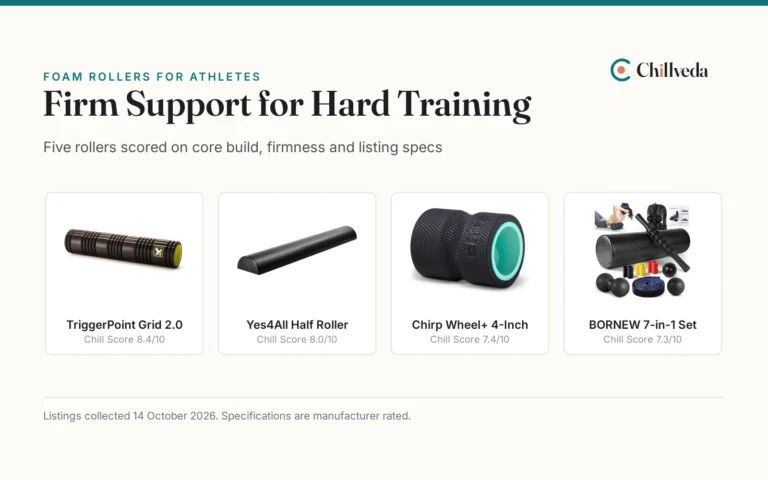
Rolling out on a living room rug after an evening training session requires gear that can withstand intense, repetitive use without collapsing. Finding the best foam roller for athletes means looking past soft starter rollers to models built with rigid cores, high-density materials and verified load limits.
This roundup scores five foam rollers on Amazon based strictly on what each manufacturer publishes on its listing. Listings and specifications were collected 14 October 2026; specs and availability change over time.
This article is informational and is not medical advice. Deep tissue rolling places heavy mechanical pressure on tissues. Speak to a doctor first if you have acute injuries, circulatory issues, or osteoporosis. Avoid direct pressure on the neck, spine, and major arteries, and do not roll over acute injuries. See our Medical Disclaimer.
Chillveda earns a commission when you buy through links on this page, at no extra cost to you. As an Amazon Associate I earn from qualifying purchases. Affiliate disclosure.
Quick picks
-
1
 TriggerPoint Grid 2.0 Foam Roller for Deep Tissue Chill Score 9.7/10Check price on Amazon
A 26-inch hollow-core roller with multi-density EVA foam zones rated to hold 500 pounds and backed by a 1-year warranty.
-
2
 Yes4All High-Density EPP Half Round Back Roller Chill Score 9.6/10Check price on Amazon
A 36-inch high-density expanded polypropylene half-roller with a flat base rated for 250 pounds and a 1-year warranty.
-
3
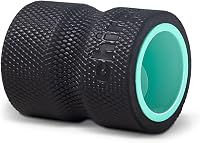 Chirp Wheel+ Foam Roller, Back & Neck Pain Relief Chill Score 9.5/10Check price on Amazon
A compact 4-inch diameter wheel with an ABS core rated for 500 pounds and a center groove designed for spine clearance.
-
4
 7 in1 Foam Roller Set for Deep Tissue Muscle Chill Score 9.5/10Check price on Amazon
A 7-piece recovery set featuring a 16.5-inch high-density roller rated for 300 pounds alongside a massage stick, strap and balls.
-
5
 Chirp Wheel XR 6" Knot Kneader Back Roller Chill Score 9.4/10Check price on Amazon
A 6-inch diameter knot-kneader wheel with medium cushioning designed for targeted spinal and deep-tissue knot relief.
What we picked for home recovery
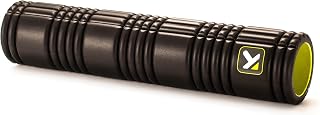
A 26-inch hollow-core roller with multi-density EVA foam zones rated to hold 500 pounds and backed by a 1-year warranty.
Pros & ConsViewHide
Pros
- Supports up to 500 pounds, highest weight capacity here
- 26-inch length provides broad back and leg coverage
- Multi-density EVA surface over a rigid hollow core
- 1-year warranty stated by the manufacturer
Cons
- Listing table contradicts title on length, listing 13 inches
- Firm hollow-core design may feel aggressive for beginners
- Single roller without carry strap or travel bag
- Diameter listed inconsistently between dimensions and specs

A 36-inch high-density expanded polypropylene half-roller with a flat base rated for 250 pounds and a 1-year warranty.
Pros & ConsViewHide
Pros
- 36-inch length gives full spinal and body support
- Flat base stays stable on floors without rolling away
- High-density expanded polypropylene foam resists flattening
- 1-year warranty and 30-day return policy stated
Cons
- Flat half-round shape limits continuous rolling movements
- 250-pound weight capacity is lower than round core models
- Extra firm density offers minimal surface cushioning
- Listing lists weight as 0.2 kg, unusually light for its size

A compact 4-inch diameter wheel with an ABS core rated for 500 pounds and a center groove designed for spine clearance.
Pros & ConsViewHide
Pros
- Reinforced ABS core supports up to 500 pounds
- Built-in spinal channel protects vertebrae during rolling
- Compact 4-inch diameter targets tight neck and shoulder knots
- Weighs only 9.6 ounces for easy gym bag packing
Cons
- No warranty term is stated
- Spec table lists length as 24 inches, conflicting with wheel shape
- Narrow 4-inch rolling width cannot cover broad back areas
- Firm surface pressure may feel intense on tender muscles

A 7-piece recovery set featuring a 16.5-inch high-density roller rated for 300 pounds alongside a massage stick, strap and balls.
Pros & ConsViewHide
Pros
- Complete 7-piece kit includes roller, stick, strap and balls
- Solid high-density foam supports up to 300 pounds
- Includes nylon carry bag that holds all included tools
- 78-inch stretching strap aids post-workout mobility drills
Cons
- No warranty term is stated
- Spec table lists diameter as 16.5 inches instead of length
- Brand support promises 24-hour response rather than a formal warranty policy
- Solid foam core lacks hollow-tube structural reinforcement

A 6-inch diameter knot-kneader wheel with medium cushioning designed for targeted spinal and deep-tissue knot relief.
Pros & ConsViewHide
Pros
- 6-inch diameter provides moderate arch for thoracic extension
- Specialized knot-kneader surface targets deep muscular knots
- Medium firmness cushioning balances pressure and comfort
- Compact shape fits easily into athletic travel gear
Cons
- No warranty term is stated
- Weight capacity is not stated on the listing
- Listing provides package dimensions rather than product size
- Narrow profile does not allow broad two-leg rolling
More to compare
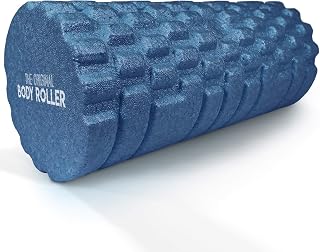 The Original Body RollerCheck price on Amazon
 Amazon Basics High Density Foam Roller for Exercise andCheck price on Amazon
 Krightlink 5 in 1 Foam Roller Set Trigger Point Exercise FoamCheck price on Amazon
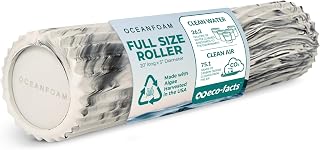 Oceanfoam Tidal RollerCheck price on Amazon
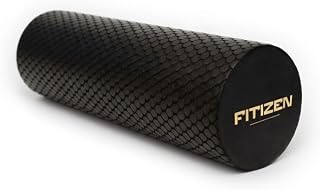 Foam Roller for Muscle MassageCheck price on Amazon
What makes the best foam roller for athletes
Athletes apply far greater body weight and dynamic force than casual stretchers, which quickly compresses standard polyethylene foam. When evaluating durable options, rigid internal cores, dense foam materials and clear weight limits separate long-lasting gear from basic rollers.
Core construction dictates how well a roller maintains firm pressure over time. Hollow-core models utilize a rigid plastic cylinder that prevents flattening, while solid expanded polypropylene rollers offer uniform density without hollow flex. For focused knot relief, specialized wheels target tight areas without placing direct mechanical pressure on spinal vertebrae.
Dimensions, core build and warranty
| Roller | Length | Weight Capacity | Core Build | Warranty |
|---|---|---|---|---|
| TriggerPoint Grid 2.0 | 25.98 in | 500 lb | Hollow core with EVA | 1 year |
| Yes4All Half Roller | 36 in | 250 lb | Solid EPP foam | 1 year |
| Chirp Wheel+ 4-Inch | 4 in | 500 lb | ABS core with EVA | Not stated |
| BORNEW 7-in-1 Set | 16.5 in | 300 lb | Solid high-density foam | Not stated |
| Chirp Wheel XR 6-Inch | 6 in | Not stated | Not stated | Not stated |
We examined five recovery roller listings designed for athletic training. Two listings state a 1-year manufacturer warranty, two state a 500-pound load limit, and three listings present direct contradictions between their titles and technical specification tables.
Who should not buy these
Athletes recovering from acute muscle tears, fractures or fresh joint injuries should avoid foam rolling, as direct mechanical pressure can aggravate injured tissues. Anyone with deep vein thrombosis, severe osteoporosis or circulatory conditions should avoid deep myofascial pressure entirely. If you prefer gentle surface pressure rather than dense knot release, softer models like those in our guide to soft foam rollers may suit you better. For running-specific routines, see our recommendations for the best foam rollers for runners.
Score notes
The Chill Score weighs performance 35, build 25, value 25, safety certifications 10 where it applies and warranty 5. For non-electrical manual foam rollers, electrical safety certifications do not apply, so safety is scored zero across all products. Performance covers stated length, surface versatility and muscle coverage, while build evaluates core materials and stated weight limits.
| Product | Chill Score | Perf. /35 | Build /25 | Value /25 | Safety /10 | Warranty /5 |
|---|---|---|---|---|---|---|
| TriggerPoint Grid 2.0 | 9.7 | 30 | 22 | 20 | n/a | 2 |
| Yes4All Half Roller | 9.6 | 28 | 20 | 21 | n/a | 2 |
| Chirp Wheel+ 4-Inch | 9.5 | 27 | 21 | 19 | n/a | 0 |
| BORNEW 7-in-1 Set | 9.5 | 27 | 19 | 20 | n/a | 0 |
| Chirp Wheel XR 6-Inch | 9.4 | 26 | 18 | 18 | n/a | 0 |
Scores run from 9.2 to 9.8: each product’s point total is placed on that range, so more points always means a higher score. Safety counts only for powered gear or where the listing states safety features; where it does not apply, the score is taken over the remaining 90 points.
TriggerPoint Grid 2.0 earns the highest score due to its 500-pound weight capacity, 26-inch length, hollow-core build and stated 1-year warranty. Yes4All offers a stable 36-inch platform with a flat base and warranty coverage. Chirp and BORNEW provide specialized shapes for knot relief but state no warranty term.
Check Your Space First
Before adding a recovery roller to your home training setup, consider these space and practical checks based on the published specifications:
- Floor space: The longest roller measures 36 inches long, while the 26-inch model requires dedicated width across your exercise mat.
- Storage setup: Cylindrical rollers with 5.51-inch and 6-inch diameters roll freely on hard surfaces, making vertical storage or a dedicated basket helpful.
- Item weight: Product weights range from 9.6 ounces for the compact 4-inch wheel up to 1.94 pounds for the complete 7-piece set in its travel bag.
- Power and hookups: None of these manual rollers use cords or electrical outlets, so you can roll on any flat carpet, hardwood floor or gym mat.
Common questions
How firm should a foam roller be for athletes?
Athletes generally benefit from firm or extra-firm foam rollers made with dense EPP foam or hollow plastic cores. Softer rollers often compress completely under heavy athletic body weight, reducing mechanical pressure on deep muscle tissue. Starting with moderate pressure helps you gauge tissue tolerance before progressing to rigid textured surfaces.
What length foam roller is best for athletic recovery?
A 26-inch or 36-inch foam roller provides enough surface area to roll both legs simultaneously and comfortably support the full length of the spine. Shorter 4-inch or 6-inch wheels excel at targeted knot relief in the neck and shoulders but lack the width for broad leg rolling. Choosing depends on whether your routine focuses on full-body posture work or targeted muscle trigger points.
Can foam rolling replace a massage gun for athletes?
Foam rollers and massage guns serve complementary roles in an athletic recovery routine. A roller uses your own body weight to apply broad compression across large muscle groups like the quads, hamstrings and back. A massage gun provides rapid, localized percussive strokes to pinpoint tight spots without requiring floor space.
How often should athletes use a foam roller?
Many athletes incorporate foam rolling into daily warm-up and cool-down routines. Rolling before exercise helps ease muscular stiffness and prepare soft tissue for training. Rolling after training helps relieve post-exercise tightness when performed with slow, controlled passes across major muscle groups.
Why do hollow core foam rollers hold more weight than solid foam?
Hollow-core rollers feature a rigid internal cylinder molded from durable plastic and wrapped in EVA foam. This rigid skeleton supports weight limits up to 500 pounds without flattening or warping under body weight. Solid foam rollers rely entirely on foam density and can gradually lose shape under repetitive athletic use.
Back to all foam roller reviews.