Side by side Choose red light therapy if Choose far infrared if
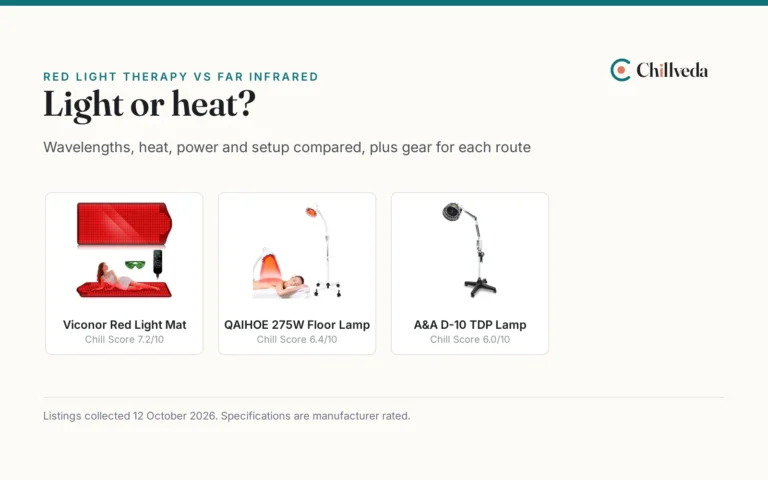
Picture your evening routine: unrolling a flexible mat across the bedroom floor before sleep, or sitting beside an upright heat lamp in the living room after a long workday. Deciding between red light therapy vs far infrared comes down to whether you want light delivery or radiant heat for your recovery routine. Choose red light therapy if your priority is photobiomodulation through red and near-infrared wavelengths, as seen in the LED mat example, without relying on high-temperature mineral heat. Choose far infrared if you want direct, radiant warmth to heat tissue, as delivered by TDP element plates.
This comparison covers light wavelengths, heat output, electrical power needs, space, and upkeep, using these home recovery listings as concrete examples. It does not evaluate clinical medical claims. Listings were collected 12 October 2026.
This article is informational and is not medical advice. High-output light and radiant heat devices can cause eye strain or thermal irritation. Never stare directly into bright light emitters without appropriate eye protection, keep heat lamps at a safe clearance from clothing and bedding, and consult a doctor before use if you are pregnant, have light sensitivity, or use photosensitizing medications. See our Medical Disclaimer and our red light therapy eye safety guide.
Chillveda earns a commission when you buy through links on this page, at no extra cost to you. As an Amazon Associate I earn from qualifying purchases. Affiliate disclosure.
Quick picks
-
1
 Red Light Therapy Mat for Body Chill Score 9.5/10Check price on Amazon
A 73 by 32 inch red light therapy body mat with 1,090 LEDs combining 660nm and 850nm wavelengths across 7 operating modes.
-
2
 Infrared Red Light Therapy Lamp 275W with Timer Chill Score 9.4/10Check price on Amazon
A 275W corded electric floor lamp with an adjustable carbon steel stand, 360-degree rotating head, and remote control.
-
3
 3-in-1 Infrared Instant Warm TDP Heat Lamp Chill Score 9.3/10Check price on Amazon
A 100W far infrared TDP mineral plate heat lamp featuring an adjustable support arm and plastic housing.

A 73 by 32 inch red light therapy body mat with 1,090 LEDs combining 660nm and 850nm wavelengths across 7 operating modes.
Pros & ConsViewHide
Pros
- 1,090 LEDs with 660nm red and 850nm near-infrared wavelengths
- Full-body coverage measuring 73 by 32 inches
- 7 operating modes including pulse and breathing settings
- Timer adjustable from 10 to 90 minutes
Cons
- Wattage and power consumption are not stated
- No warranty term is stated
- No safety certifications are stated
- Large 73 by 32 inch footprint requires dedicated floor or bed space

A 275W corded electric floor lamp with an adjustable carbon steel stand, 360-degree rotating head, and remote control.
Pros & ConsViewHide
Pros
- High 275W heating bulb for targeted warmth
- Adjustable stand reaching up to 66 inches high with 4 wheels
- Remote control for brightness and timer adjustment
- Stated 12-month base and 90-day bulb warranty
Cons
- Emits intense surface heat rather than non-thermal light therapy
- Spec table contains contradictions including an 18-inch bulb diameter
- No electrical safety certifications are stated
- High 275W power draw compared to LED panels

A 100W far infrared TDP mineral plate heat lamp featuring an adjustable support arm and plastic housing.
Pros & ConsViewHide
Pros
- Features far infrared mineral element plate
- 100W power draw is energy efficient
- Stated 1-year warranty coverage
- Stated 1,500-hour average lamp head lifespan
Cons
- Accepted voltage is listed at 220 to 240 Volts and 50 Hertz
- Heavy unit with package weight listed at 23.28 pounds
- No independent safety certifications are stated
- TDP mineral plates require warm-up time to emit radiant heat
More to compare
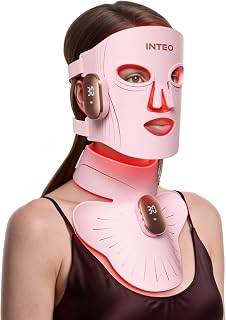 Red Light Therapy Mask for Face & NeckCheck price on Amazon
 iRestore EliteCheck price on Amazon
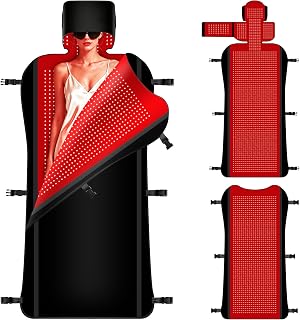 Red Light Therapy Mat for Body with 3040 LEDsCheck price on Amazon
 NVBOTY Red Light Therapy for FaceCheck price on Amazon
 Red Light Therapy Device for WomenCheck price on Amazon
 Far Infrared Sauna Box with Red Light TherapyCheck price on Amazon
Red light therapy vs far infrared at a glance
| Feature | Red light therapy | Far infrared |
|---|---|---|
| Primary mechanism | Cellular absorption of visible red and near-infrared light (or thermal heat when using incandescent bulbs) | Radiant thermal energy emitted from mineral or ceramic heating elements |
| Heat output | Varies by device type: negligible in the LED mat example, but substantial in the 275 W heat lamp listing | Radiant heat designed to warm body tissue directly |
| Listed wavelengths | The Viconor example lists 660 nm and 850 nm; incandescent bulbs emit broad infrared | Long-wave far infrared (the A&A example lists far infrared with near-infrared and a mineral plate) |
| Stated power | The Viconor mat leaves wattage unstated; the QAIHOE lamp lists 275 watts | The A&A TDP lamp lists 100 watts |
| Device design in these listings | Flexible 73 by 32 inch body mat and wheeled floor lamp | Freestanding TDP lamp with mineral element plate |
| Routine focus | Full-body light sessions or targeted heat application | Targeted thermal relief for stiff joints and muscles |
| Sensory feeling | Bright light with minimal skin warmth on LED mats | Direct, soothing radiant warmth |
How light and heat differ in recovery
The fundamental technical distinction between these modalities is how energy is delivered. Red light therapy centers on photobiomodulation, where visible red and near-infrared light are absorbed by cellular photoreceptors. In dedicated LED devices, this process occurs with minimal temperature increase. Far infrared, by contrast, operates primarily as radiant thermal energy, warming superficial and deeper tissues through heat transfer.
However, product listings in this category can blur the line between light and heat. While the Viconor mat uses 1,090 LEDs at 660 nm and 850 nm to deliver light without heavy heating, the QAIHOE listing is titled as red light therapy yet relies on a 275 W incandescent bulb that converts energy directly into heat. True far infrared devices, such as the A&A D-10 lamp, use a coated mineral element plate to radiate thermal energy.
Power consumption reflects these equipment choices. The QAIHOE lamp lists a 275-watt bulb for its floor stand. The A&A TDP lamp lists 100 watts, while specifying an accepted voltage frequency of 220 to 240 Volts and 50 Hertz. Meanwhile, the Viconor mat leaves its operating wattage completely unstated.
| Device listing | Stated wattage | Stated voltage and frequency | Light or heat source |
|---|---|---|---|
| Viconor Red Light Mat | Not stated | Not stated | 1,090 LEDs (660 nm and 850 nm) |
| QAIHOE 275W Floor Lamp | 275 watts | Corded electric | 275W infrared bulb |
| A&A D-10 TDP Lamp | 100 watts | 220 to 240 Volts and 50 Hertz | Far infrared mineral plate |
Because the Viconor listing leaves its power consumption unstated, we cannot call either modality more efficient across the board; the omission simply leaves the mat’s operating draw unclear. Between the two heating lamps, the 275-watt QAIHOE example lists higher wattage than the 100-watt A&A example, though the A&A unit requires a compatible 220 to 240 Volts supply to operate.
Cost, space and power
Device footprint depends heavily on whether you choose a flexible light mat or a freestanding heat lamp. The Viconor mat measures 73 by 32 inches when laid out, folding down into a 34 by 11.5 by 4 inch package weighing 12.1 pounds. It requires floor space or a bed during use, compared to smaller pads featured in our red light heating pad guide.
Heat lamps occupy vertical floor space. The QAIHOE lamp uses an 18-inch wheeled base and stands up to 66 inches tall, weighing 11.8 pounds. The A&A unit arrives in a 23.39 by 17.48 by 10.87 inch box weighing 23.28 pounds (10.56 kg product weight). Furthermore, while the QAIHOE lamp connects as a standard corded electric appliance, the A&A lamp lists an accepted voltage frequency of 220 to 240 Volts at 50 Hertz, requiring dedicated wiring or a voltage transformer for typical domestic outlets.
Daily routine and upkeep
A red light mat integrates into quiet downtime. The Viconor mat provides an automated timer adjusting from 10 to 90 minutes across 7 operational modes, allowing you to lie down without monitoring the clock. Its TPU skin wipes down with a damp cloth after use. Our guide to red light wavelengths breaks down why 660 nm and 850 nm LEDs are paired together.
Heat lamps require careful clearance during and after operation. The QAIHOE listing suggests session lengths of 5 to 25 minutes and includes a remote control to modify timer and brightness settings from across the room. The A&A TDP lamp features a coated mineral element plate rated for an average head life of 1,500 hours. Both lamps generate hot surfaces that must cool down thoroughly before being moved or stored.
Gear for each route
These are scored on the Chill Score: performance 35, build 25, value 25, safety certifications 10 where it applies and warranty 5. None states a UL or ETL listing, so all score 0 for safety.
| Product | Chill Score | Perf. /35 | Build /25 | Value /25 | Safety /10 | Warranty /5 |
|---|---|---|---|---|---|---|
| Viconor Red Light Mat | 9.5 | 29 | 21 | 21 | 0 | 0 |
| QAIHOE 275W Floor Lamp | 9.4 | 27 | 18 | 18 | 0 | 2 |
| A&A D-10 TDP Lamp | 9.3 | 23 | 19 | 16 | 0 | 2 |
Scores run from 9.2 to 9.8: each product’s point total is placed on that range, so more points always means a higher score.
Choose red light therapy if
- You want light-based sessions utilizing 660 nm red or 850 nm near-infrared wavelengths.
- You want full-body coverage while lying comfortably on a 73 by 32 inch mat.
- You prefer flexible placement on a floor or bed with wipe-clean TPU material.
- You want multi-mode timer settings such as the 10 to 90 minute range on the Viconor mat.
Choose far infrared if
- You want direct, radiant warmth emitted from a mineral element plate.
- You prefer focused thermal application directed at a specific joint or muscle area.
- You want a freestanding directional head with an adjustable support arm.
- You have access to compatible 220 to 240 Volts electrical supply for specialized hardware.
Check Your Space First
- Floor area for mats: The Viconor mat requires a flat surface of at least 73 by 32 inches, with storage space for its 34 by 11.5 by 4 inch packaged footprint weighing 12.1 pounds.
- Vertical clearance for floor stands: The QAIHOE lamp head adjusts up to 66 inches high from an 18-inch wheeled base, requiring clear vertical clearance away from low-hanging fixtures.
- Electrical voltage compatibility: The A&A unit specifies 220 to 240 Volts at 50 Hertz, which will not operate on standard domestic household receptacles without voltage conversion hardware.
- Cord reach and weight: The QAIHOE stand weighs 11.8 pounds on 4 caster wheels, while the A&A package weighs 23.28 pounds (10.56 kg item weight), requiring stable, level flooring near power outlets.
Common questions
Is red light therapy the same as far infrared?
No, they rely on different parts of the spectrum and different mechanisms. Dedicated red light therapy devices use visible red (such as 660 nm) and near-infrared (such as 850 nm) wavelengths for cellular absorption, with minimal heat in LED formats. Far infrared uses longer thermal wavelengths to deliver direct radiant heat, as seen in mineral plate heat lamps.
Does red light therapy emit heat like far infrared lamps?
LED red light therapy devices emit minimal heat, delivering light to the skin without high surface temperatures. However, some listings marketed under red light therapy, such as the 275 W QAIHOE lamp, utilize incandescent bulbs that produce substantial heat. Far infrared devices like the A&A TDP lamp use dedicated mineral plates specifically to emit radiant thermal warmth.
Can I plug any infrared lamp into a standard US wall outlet?
Most domestic lamps built for the US market use standard corded electric connections, such as the 275 W QAIHOE model. However, some specialized models like the A&A D-10 list accepted voltages of 220 to 240 Volts at 50 Hertz. Always verify the voltage specifications before purchasing to ensure compatibility with your home receptacles.
How long should a typical session last?
Session lengths vary based on device design and manufacturer guidance. For example, the QAIHOE listing suggests 5 to 25 minutes per session, while the Viconor mat offers timer settings between 10 and 90 minutes. Always begin with shorter sessions to evaluate personal skin comfort.
Do I need eye protection during these sessions?
Eye protection is strongly recommended when using high-output red light or bright heating bulbs. While far infrared lamps primarily produce thermal warmth, near-infrared and red light LEDs can be uncomfortably bright. Never look directly into illuminated emitters during operation.
Back to all red light therapy reviews.