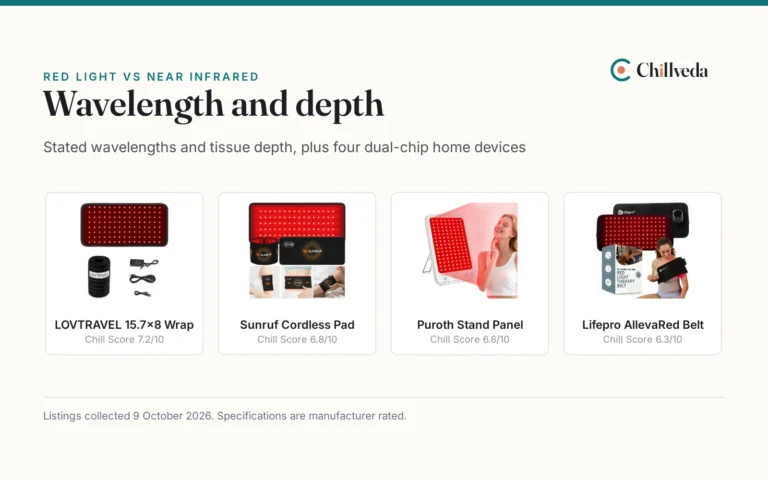
When comparing red light vs near infrared light, the core difference is wavelength and penetration depth. Red light uses visible wavelengths, frequently around 660 nm, that are absorbed primarily in superficial skin layers, while near-infrared light uses invisible wavelengths, frequently around 850 nm, that penetrate into deeper tissue layers. Many home devices combine both wavelengths using multi-chip beads or combined arrays so users receive both surface and deeper tissue exposure.
This guide breaks down how makers configure 660 nm and 850 nm diodes, how delivery formats differ between wearable wraps and standing panels, and four dual-wavelength devices evaluated on stated technical specifications. Listings were collected 9 October 2026.
This article is informational and is not medical advice. Never look directly into high-intensity LEDs, and use protective eyewear during sessions to guard your eyes. Consult a healthcare provider before using light therapy if you are pregnant, have a medical condition, or take light-sensitizing medication. See our Medical Disclaimer.
Chillveda earns a commission when you buy through links on this page, at no extra cost to you. As an Amazon Associate I earn from qualifying purchases. Affiliate disclosure.
Quick picks
-
1
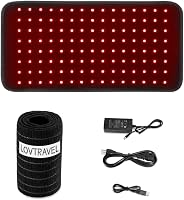 New 660nm LED Red Light and 850nm Near Infrared Chill Score 9.5/10Check price on Amazon
A 15.7 by 8 inch wearable fabric wrap with 360 red and near-infrared lights, 25 watts of power, and a 1-year replacement period.
-
2
 Red Light Therapy for Body Chill Score 9.4/10Check price on Amazon
A 13.6 by 5.9 inch cordless red and near-infrared light therapy pad with 80 triple-chip lamp beads and a 2000mAh rechargeable battery.
-
3
 Red Light Therapy, 660nm & 850nm Dual Chill Score 9.4/10Check price on Amazon
A dual-wavelength light therapy panel with an adjustable stand, 3 operating modes, 6 brightness levels, and included protective glasses.
-
4
 Lifepro Allevared Red Light Therapy Belt Chill Score 9.3/10Check price on Amazon
A 17.44 by 8.03 inch red and near-infrared light therapy belt with a velcro extender and rechargeable battery.
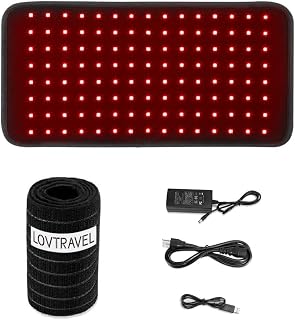
A 15.7 by 8 inch wearable fabric wrap with 360 red and near-infrared lights, 25 watts of power, and a 1-year replacement period.
Pros & ConsViewHide
Pros
- 360 total lights: 120 red at 660nm and 240 near-infrared at 850nm
- Separate controls for 660nm, 850nm, or combined output with pulse mode
- 1-year replacement period stated in the listing
- 15.7 by 8 inch treatment area with USB power bank support
Cons
- Spec table contradicts diode count, listing 120 pcs instead of 360
- Spec table lists ultrasonic and ultraviolet features that do not apply
- Weighs 2.1 pounds, heavier than the other three wraps here
- No safety certification stated

A 13.6 by 5.9 inch cordless red and near-infrared light therapy pad with 80 triple-chip lamp beads and a 2000mAh rechargeable battery.
Pros & ConsViewHide
Pros
- 2000mAh rechargeable battery provides cordless mobility
- 80 lamp beads with 3 chips each for dual red and near-infrared light
- Includes 3 intensity levels and a pulsing mode
- Stated battery life yields 3 to 5 sessions per charge
Cons
- No warranty term is stated
- Smaller 13.6 by 5.9 inch surface than the LOVTRAVEL wrap
- Spec table lists number of settings as 1, contradicting the bullets
- No safety certification stated

A dual-wavelength light therapy panel with an adjustable stand, 3 operating modes, 6 brightness levels, and included protective glasses.
Pros & ConsViewHide
Pros
- Adjustable, foldable stand allows hands-free face and body positioning
- 6-stage timer offers 10, 20, 30, 40, 50, and 60 minute auto shut-off
- 6 brightness settings from 10% to 100% with 3 light modes
- Protective glasses included in the box
Cons
- Total diode count and operating wattage are not stated
- Panel dimensions are not stated (package is 14.37 x 10.67 x 2.48 in)
- No warranty term is stated
- No safety certification stated

A 17.44 by 8.03 inch red and near-infrared light therapy belt with a velcro extender and rechargeable battery.
Pros & ConsViewHide
Pros
- Longest pad here at 17.44 inches with included velcro extender
- Four operational modes: Red, NIR, Combined, and Pulsed light
- Lightweight build at 11.04 ounces with rechargeable battery
- Dual wavelengths: 660nm red and 850nm near-infrared
Cons
- Diode count, wattage, and battery capacity are not stated
- Title ambiguously claims dual or triple chip LED design
- No warranty term is stated
- No safety certification stated
More to compare
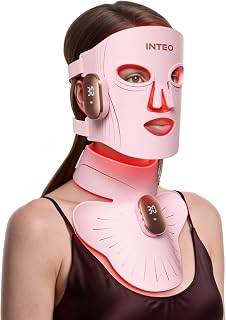 Red Light Therapy Mask for Face & NeckCheck price on Amazon
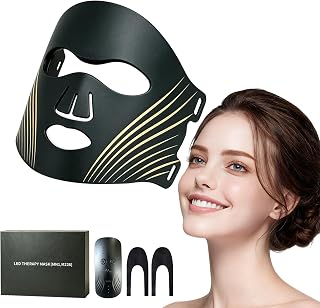 Red Light Therapy Mask for FaceCheck price on Amazon
 Red Light Therapy Mat for Body with 1540 LEDsCheck price on Amazon
 LED-Red-Light-Therapy-DeviceCheck price on Amazon
 45W Red LED Light Therapy PanelCheck price on Amazon
 LifePro BiorecoverCheck price on Amazon
Comparing red light vs near infrared light across home devices
| Device model | Stated wavelengths | Stated diode and chip configuration |
|---|---|---|
| LOVTRAVEL wrap | 660 nm red and 850 nm near-infrared | 120 red LEDs and 240 infrared lights (360 total) |
| Sunruf TP-02 pad | 660 nm red and 850 nm near-infrared | 80 beads with 3 chips each (2 red and 1 infrared per bead) |
| Puroth stand panel | 660 nm red and 850 nm near-infrared | Two 660 nm red LEDs to one 850 nm near-infrared LED ratio (total count not stated) |
| Lifepro AllevaRed belt | 660 nm red and 850 nm near-infrared | Dual or triple chip LED array (diode count not stated) |
Across all four listings, makers pair visible red light at 660 nm with invisible near-infrared light at 850 nm. LOVTRAVEL provides 360 individual light sources with an alternating layout of 120 red and 240 near-infrared diodes. Sunruf houses 80 lamp beads with three chips per bead, combining two 660 nm chips and one 850 nm chip into each module. Both Puroth and Lifepro also incorporate both spectral bands, though neither listing publishes a total diode count.
Why near-infrared reaches deeper than visible red light
Light penetration depends on wavelength. Visible red light at 660 nm has shorter wavelengths that interact primarily with melanin and hemoglobin in the dermis and epidermis. Near-infrared light at 850 nm sits just beyond visible red in the electromagnetic spectrum, experiencing lower optical absorption by surface pigments and allowing energy to pass into deeper tissue layers, as described in manufacturer listings.
Because 850 nm light is invisible to human vision, LEDs emitting near-infrared light appear dim or unlit to the naked eye. Users sometimes mistake working near-infrared diodes for broken bulbs. Our guide on red light wavelengths explained details the physics behind 660nm and 850nm spectral bands.
How delivery format changes how you apply each wavelength
How light enters the body depends heavily on device design. Wearable flexible pads sit flush against the skin, minimizing optical reflection and delivering photons at contact distance. Standing panels project light across broader areas from an offset distance, allowing simultaneous coverage of the face, neck, or chest without skin contact. Our red light therapy panel vs mask comparison details the trade-offs between wearable wraps and rigid panels.
Power delivery also dictates practical placement. LOVTRAVEL lists a 25-watt rating and connects via USB to a wall charger or a 5V or 12V power bank. Cordless options like Sunruf rely instead on an integrated 2000mAh rechargeable battery rated for 3 to 5 sessions per charge, while Lifepro also incorporates a rechargeable battery.
Dual-wavelength light therapy devices worth considering
These are scored on the Chill Score, which weighs performance 35, build 25, value 25, safety certifications 10 where it applies and warranty 5. None of these four listings publish a recognized electrical safety certification, so all four score 0 for safety.
| Product | Chill Score | Perf. /35 | Build /25 | Value /25 | Safety /10 | Warranty /5 |
|---|---|---|---|---|---|---|
| LOVTRAVEL 15.7×8 Wrap | 9.5 | 29 | 20 | 21 | 0 | 2 |
| Sunruf Cordless Pad | 9.4 | 28 | 20 | 20 | 0 | 0 |
| Puroth Stand Panel | 9.4 | 27 | 19 | 20 | 0 | 0 |
| Lifepro AllevaRed Belt | 9.3 | 26 | 19 | 19 | 0 | 0 |
Scores run from 9.2 to 9.8: each product’s point total is placed on that range, so more points always means a higher score.
For more choices across formats, see our targeted red light devices roundup.
Using red and near-infrared light in practice
- Shield your eyes during operation. Near-infrared light at 850 nm does not stimulate the human blink reflex because it is invisible. Always use protective goggles or closed-eye shields during facial sessions.
- Select separate modes when supported. If you only want visible red light for surface skin targeting, devices like LOVTRAVEL allow running 660 nm LEDs independently from 850 nm diodes.
- Start with conservative session lengths. Follow the manufacturer manual rather than arbitrary online routines. Puroth provides timer intervals of 10, 20, 30, 40, 50, and 60 minutes with auto shut-off.
- Do not sharply fold flexible pads. Internal diode wiring and PCB tracks in wraps can fracture if creased tightly during storage. Roll loosely or store flat.
- Check stated power requirements. Devices vary in power sources: LOVTRAVEL specifies connecting to a charger or a 5V or 12V power bank via USB, while Sunruf uses an integrated 2000mAh battery.
Common mistakes
- Assuming unlit near-infrared LEDs are broken or defective when 850 nm emission is simply invisible to human eyes.
- Looking directly into active diodes without protective eyewear.
- Confusing overall pad dimensions with active diode treatment area.
- Assuming an email customer support window represents a formal warranty term.
Common questions
Can you see near-infrared light?
Generally no. Visible red light at 660 nm is clearly visible as bright red, whereas near-infrared light at 850 nm lies outside normal human visual perception. In an active device, 850 nm diodes may appear completely unlit or show only a faint dull glow, even while actively emitting light.
Can red light and near-infrared light be used together?
Yes. All four devices evaluated here incorporate both 660 nm and 850 nm wavelengths. Units such as LOVTRAVEL and Lifepro offer separate controls to deliver combined light or run either wavelength alone, while multi-chip pads like Sunruf activate both wavelengths across their lamp beads simultaneously.
What is the difference between 660nm and 850nm?
The difference is wavelength and penetration depth. Visible red light at 660 nm is absorbed primarily by outer skin layers, while 850 nm near-infrared light reaches deeper tissue layers. Because each wavelength interacts with tissue differently, makers often combine them so a single session addresses surface skin and underlying structures.
Do you need eye protection with near-infrared light?
Yes, eye protection is strongly recommended during light therapy sessions. Because 850 nm near-infrared light is invisible, your blink reflex does not trigger automatically. Always wear protective eyewear or keep your eyes shielded when operating red and near-infrared light devices near the face.
Does a cordless red light pad work as well as a corded device?
Cordless pads provide portability but depend on battery capacity. For example, Sunruf uses a built-in 2000mAh battery rated for 3 to 5 sessions per charge, whereas corded pads like LOVTRAVEL (25 watts) and plug-in panels like Puroth draw continuous power from an outlet or power bank without runtime limits.
Sources: Amazon product listings for the light therapy devices named above, collected 9 October 2026. Related: our red light wavelengths explained and what is near infrared light therapy.
Back to all red light therapy reviews.