After unclipping from pedals and stepping off the bike, clearing space on the living room rug or garage floor for mobility work is often the first step in a post-ride routine. Choosing the best foam roller for cyclists comes down to finding a surface that targets overworked quadriceps, tight IT bands, and fatigued calves without sliding out from under you.
This roundup scores five foam rollers on Amazon on what each listing states. Listings and specifications were collected 13 October 2026.
This article is informational and is not medical advice. Foam rolling applies direct mechanical pressure to soft tissue. Consult a doctor or physical therapist before starting a rolling routine, especially if managing acute injuries. Avoid rolling directly over the neck, spine, joints, and major arteries. See our Medical Disclaimer.
Chillveda earns a commission when you buy through links on this page, at no extra cost to you. As an Amazon Associate I earn from qualifying purchases. Affiliate disclosure.
Quick picks
-
1
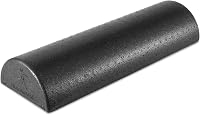 ProsourceFit High Density Foam Rollers Chill Score 9.6/10Check price on Amazon
An 18-inch half-round high-density EPP roller with a flat base that stays in place during post-ride stretches, backed by a limited lifetime warranty.
-
2
 Yes4All Half Foam Roller Chill Score 9.6/10Check price on Amazon
A compact 12-inch high-density EPP half roller rated for 250 pounds, featuring a flat base for stable hip and IT band mobility work.
-
3
 BackBaller Foam Roller (Ridged) Chill Score 9.6/10Check price on Amazon
A dual-mounted EVA foam roller system on steel ball bearings designed with contoured ridges to protect the spine during athletic recovery.
-
4
 Oceanfoam Ripple Roller Chill Score 9.5/10Check price on Amazon
A portable textured travel roller made from recycled EVA and algae foam, using wave ridges to target post-ride calf and quad tightness.
-
5
 SUBCULTUREPICK 5 in1 Foam Roller Set Trigger Point Chill Score 9.5/10Check price on Amazon
A five-piece mobility kit featuring a 13-inch hollow grid roller, a 15-inch muscle stick, a massage ball, and a stretching band in a mesh carry bag.
What we picked for home recovery

An 18-inch half-round high-density EPP roller with a flat base that stays in place during post-ride stretches, backed by a limited lifetime warranty.
Pros & ConsViewHide
Pros
- Limited lifetime warranty stated
- Flat base keeps the roller stable on the floor
- High-density expanded polypropylene construction
- Lightweight design at 4 ounces
Cons
- Flat side prevents continuous cylindrical rolling
- Listing title omits the roller length
- Spec table conflicts with stated 3-inch diameter
- Firm surface may feel stiff for sensitive riders
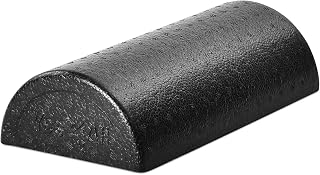
A compact 12-inch high-density EPP half roller rated for 250 pounds, featuring a flat base for stable hip and IT band mobility work.
Pros & ConsViewHide
Pros
- Stated 1-year warranty and 30-day return window
- Rated weight capacity of 250 pounds
- Flat base prevents unwanted rolling during use
- Compact 12-inch length stores easily in small spaces
Cons
- Flat bottom limits use to stationary positions
- Title states high firmness while spec table lists extra firm
- 12-inch width offers narrower coverage across both legs
- Extra firm foam provides minimal surface cushioning
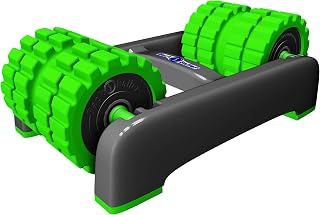
A dual-mounted EVA foam roller system on steel ball bearings designed with contoured ridges to protect the spine during athletic recovery.
Pros & ConsViewHide
Pros
- Dual-mounted rollers with steel ball-bearings
- Contoured ridges minimize spinal contact
- High-density EVA foam and neoprene grip pads
- Sturdy 4.63-pound base stays in place on the floor
Cons
- No warranty term is stated
- Heavier than standard cylinders at 4.63 pounds
- Larger footprint at 17.91 by 11.02 inches
- Fixed frame design limits handheld portability

A portable textured travel roller made from recycled EVA and algae foam, using wave ridges to target post-ride calf and quad tightness.
Pros & ConsViewHide
Pros
- Wave textured surface provides targeted tissue contact
- Made with recycled EVA and algae-based foam
- Compact 11-inch cylinder weighs only 6.08 ounces
- Full round shape enables smooth rolling strokes
Cons
- No warranty term is stated
- Spec table conflicts on length and width dimensions
- Listing title states high density while table lists medium
- Narrow 11-inch width requires single-leg rolling

A five-piece mobility kit featuring a 13-inch hollow grid roller, a 15-inch muscle stick, a massage ball, and a stretching band in a mesh carry bag.
Pros & ConsViewHide
Pros
- Includes five tools for diverse recovery techniques
- 15-inch massage stick allows seated calf rolling
- 2.5-inch ball targets isolated glute and foot trigger points
- Nylon mesh carry bag holds all five components
Cons
- No warranty term is stated
- Hollow plastic PVC core provides firmer feel than solid foam
- Bullets claim to reduce lactic acid accumulation
- Heavier total kit weight at 3.06 pounds
More to compare
 Amazon Basics High Density Foam Roller for Exercise andCheck price on Amazon
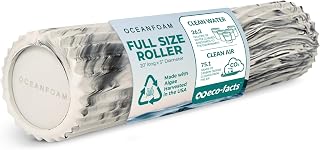 Oceanfoam Tidal RollerCheck price on Amazon
 High-Density Foam Roller for Exercise and RecoveryCheck price on Amazon
 Workout Foam RollerCheck price on Amazon
 Oceanfoam Soft Tidal RollerCheck price on Amazon
Choosing the best foam roller for cyclists
Repetitive pedal strokes place sustained demands on the lower body, particularly the quadriceps, hip flexors, calves, and hamstrings. Selecting a roller involves balancing surface firmness with floor stability and available storage space.
Floor space requirements vary significantly across formats. A dedicated stationary unit like BackBaller measures 17.91 by 11.02 inches and stands 6.69 inches tall. In contrast, half-round rollers like ProsourceFit at 18 by 3 inches and Yes4All at 12 by 6 inches sit flat on a training mat, while the compact Oceanfoam cylinder measures 11 by 3.5 inches.
| Format | Dimensions | Base Type | Primary Target |
|---|---|---|---|
| Dual-mounted frame | 17.91 x 11.02 x 6.69 in | Neoprene pads | Spinal clearance, hamstrings, quads |
| Half-round cylinder | 18 x 3 x 3 in | Flat bottom | Stable calf and foot stretches |
| Half-round cylinder | 12 x 6 x 3 in | Flat bottom | Compact hip and IT band placement |
| Mini textured cylinder | 11 x 3.35 in | Round cylinder | Targeted calf and plantar pressure |
| Hollow grid cylinder | 13 x 5.1 in | Round cylinder | Multi-tool full-leg cooldowns |
Dimensions, firmness and warranty
| Model | Shape | Dimensions | Firmness | Warranty |
|---|---|---|---|---|
| BackBaller Ridged | Dual mounted | 17.91 x 11.02 x 6.69 in | Firm | Not stated |
| ProsourceFit Half Roll | Half-round | 18 x 3 x 3 in | Firm | Limited Lifetime |
| Yes4All Half Roller | Half-round | 12 x 6 x 3 in | Extra Firm | 1 year |
| Oceanfoam Ripple | Cylinder | 11 x 3.35 in | High Density | Not stated |
| SUBCULTUREPICK Set | Hollow cylinder | 13 x 5.1 in | Medium | Not stated |
We compared five roller listings across different design formats. Two products state a concrete warranty term, while three listings state no warranty. Contradictions between marketing titles and specification tables appeared in three of the five listings, particularly regarding dimensions and firmness levels.
Who should skip these
Cyclists recovering from acute muscle tears, severe strains, or unhealed bone injuries should avoid direct rolling pressure until cleared by a medical provider. Riders who prefer motorized percussive therapy or automated compression will find manual rollers require too much active physical effort after exhausting training rides.
For alternative recovery tools, see our guides to massage guns, vibrating foam rollers, and compression boots. If you need pinpoint pressure for deep glute tightness, consider massage balls.
Score notes
The Chill Score weighs performance 35, build 25, value 25, safety certifications 10 where it applies and warranty 5. Because manual foam rollers lack electrical components, motors, and wiring, electrical safety listings do not apply, so safety scores zero across all models.
| Product | Chill Score | Perf. /35 | Build /25 | Value /25 | Safety /10 | Warranty /5 |
|---|---|---|---|---|---|---|
| ProsourceFit Half Roll | 9.6 | 28 | 20 | 21 | n/a | 3 |
| Yes4All Half Roller | 9.6 | 27 | 20 | 21 | n/a | 2 |
| BackBaller Ridged | 9.6 | 32 | 22 | 19 | n/a | 0 |
| Oceanfoam Ripple | 9.5 | 29 | 20 | 19 | n/a | 0 |
| SUBCULTUREPICK Set | 9.5 | 27 | 19 | 20 | n/a | 0 |
Scores run from 9.2 to 9.8: each product’s point total is placed on that range, so more points always means a higher score. Safety counts only for powered gear or where the listing states safety features; where it does not apply, the score is taken over the remaining 90 points.
BackBaller earned the highest score thanks to its dual-roller mounted design with steel ball bearings and spinal clearance. ProsourceFit and Yes4All earned score points for concrete stated warranties, while Oceanfoam scored well for portable wave-textured construction despite spec discrepancies.
Check Your Space First
- BackBaller measures 17.91 by 11.02 inches on the floor and stands 6.69 inches tall, weighing 4.63 pounds (2100 g), requiring a clear workout area rather than a tight corner.
- ProsourceFit measures 18 by 3 inches with a 3-inch diameter and Yes4All measures 12 by 6 by 3 inches; both use flat bases that keep them stationary on hard floors or yoga mats.
- Oceanfoam takes up 11 by 3.5 inches and weighs 6.08 ounces, allowing it to store on shallow shelving or slide into travel luggage.
- The SUBCULTUREPICK kit stores five pieces in a single nylon mesh bag, centered around a 13 by 5.1-inch main cylinder, with a combined package weight of 3.06 pounds.
Common questions
Which foam roller density works best for tight cycling quads?
Firm high-density expanded polypropylene (EPP) or EVA foam generally holds its shape best under body weight when working through large cycling muscle groups like the quadriceps. Softer foam tends to compress flat beneath the thighs, reducing effective tissue mobilization. If a firm surface feels too intense immediately after hard intervals, starting with body weight partially supported on the hands helps modulate pressure.
How does a half-round foam roller benefit a cyclist?
A half-round roller features a flat base on one side that stays resting on the floor without rolling away. This stationary platform lets cyclists stabilize their feet, calves, or hips during post-ride stretches without fighting roller drift. It provides a steady arch support for balance drills and targeted calf release.
What is the advantage of a dual-mounted roller system?
A dual-mounted system secures two rollers inside a stationary frame using steel ball bearings. This setup keeps the roller grounded in one place while you slide your legs across the top, eliminating the need to balance over a rolling cylinder. It also incorporates a contoured center groove to avoid direct pressure against the spine.
Should cyclists choose a smooth or textured foam roller?
Smooth rollers distribute body weight evenly across broad muscle bands, making them suitable for general quad and hamstring cooldowns. Textured surfaces, such as wave ridges or grid knobs, focus pressure onto smaller contact points to address stubborn muscle knots. Riders working through specific calf tightness often prefer textured ridges for localized release.
Can a foam roller help calves after long climbs?
Sustained climbing places repetitive strain on the gastrocnemius and soleus muscles in the lower leg. Placing a compact cylinder or handheld massage stick along the calf helps mobilize stiff tissue after unclipping. Keeping rolling passes slow and avoiding the Achilles tendon provides gentle post-ride care.
Back to all foam roller reviews.