


A targeted red light device treats one area: a knee, a shoulder, a lower back. It is a fraction of the size and cost of a full body panel, and for most people it is the more sensible first purchase, because most people have one thing bothering them rather than a whole body.
This category also has the strongest buyer history in red light therapy. Several of these devices carry over a thousand customer reviews, which is rare in home recovery.
This article is informational and is not medical advice. Please read our Medical Disclaimer, use eye protection where the device supplies it, and speak to a clinician first if you have a photosensitive condition, take photosensitizing medication, or are treating an injury.
Our picks


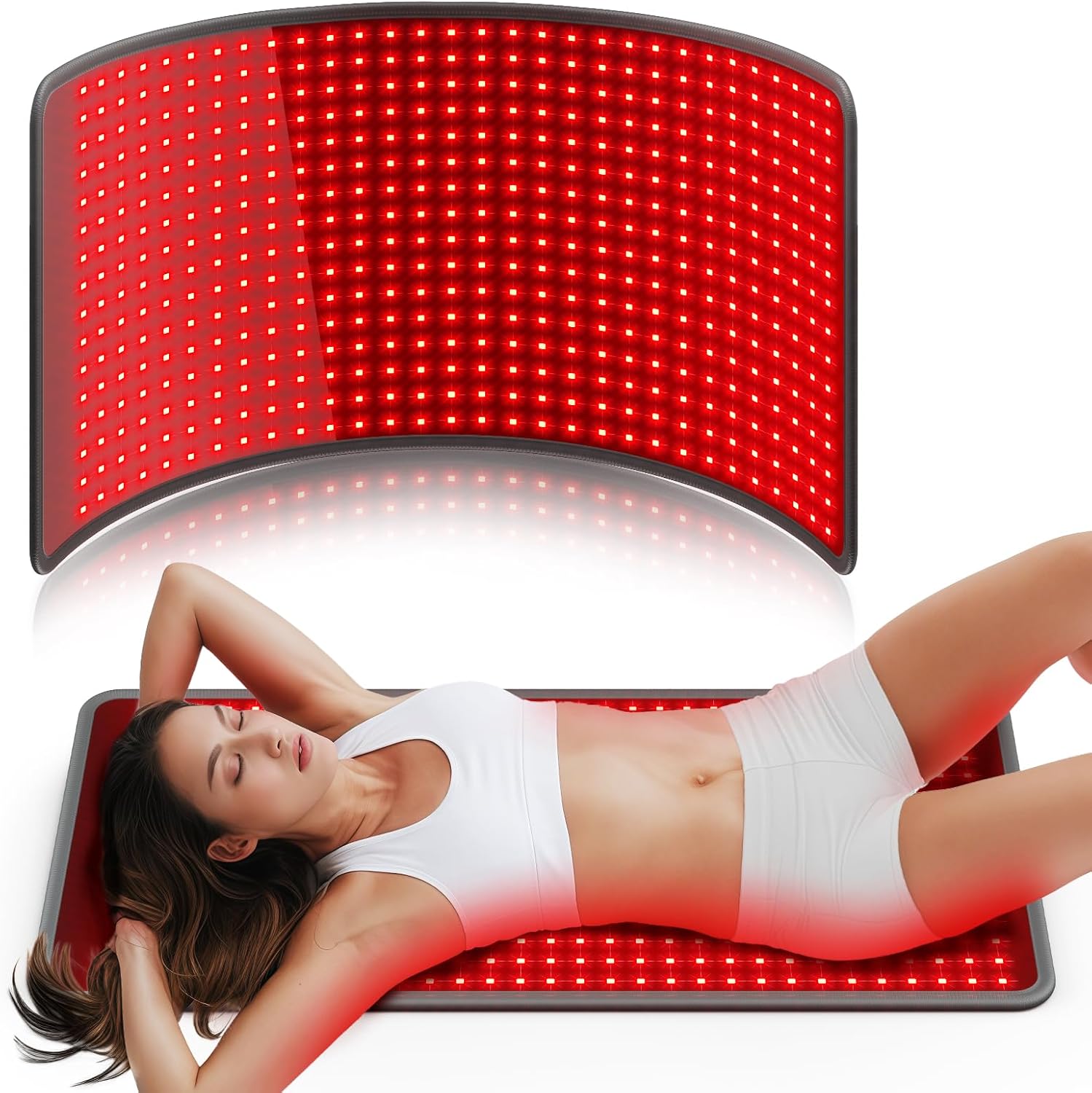


Four form factors, and which one you want
Belts and wraps
A belt straps the LEDs against the area, which means contact, no distance loss, and hands free use. The Comfytemp belt states 126 LEDs at 660nm and 850nm drawing 22W. For a lower back or a knee this is usually the right answer, and it is the form factor people actually keep using because you can do something else while wearing it.
Pads and mats
Larger flexible arrays you lie on or wrap around a limb. The Comfytemp mat states 33 by 17 inches, which covers a back properly. Bigger coverage, less portable, and they need somewhere to lie down.
Small panels
Rigid panels like the Hooga HG300 and the BestQool sit on a desk or a stand and you position yourself in front of them. More output per area than a belt, but you have to hold still, and the distance question from our irradiance guide applies in full.
Torches and handhelds
The Lifepro Lumicure is a handheld torch. Convenient and genuinely portable, but the treated area is small and you are holding it, so sessions are short by necessity.
What separates them
Contact versus distance
This is the practical version of the irradiance argument. A belt in contact with skin sidesteps the whole question of measurement distance, because there is no distance. A panel does not, and the figure on its box was almost certainly measured closer than you will sit.
If specification scepticism is what brought you here, contact devices are the honest shortcut.
Wavelengths
Nearly all of these combine 660nm red with 850nm near infrared. A few add 630nm or 810nm. The bands are not the differentiator in this category, and a longer list on the box does not mean more output in the two that matter. Our guide to the wavelengths on the box explains why.
Timers and controls
A device you have to remember to switch off is a device you use badly. Most of these include a timer, and the belts with an inline controller are the easiest to live with.
Warranty
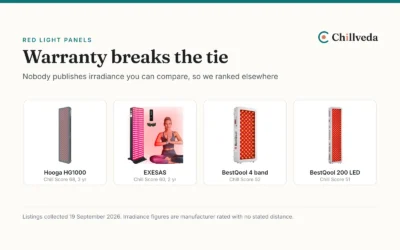
One of our six publishes a warranty term. That is the worst rate of any category on this site, and it is why scores here sit where they do.
On the claims
Listings in this category promise relief from pain, inflammation, stiffness and recovery time. Chillveda does not repeat those claims and does not endorse them when a seller makes them.
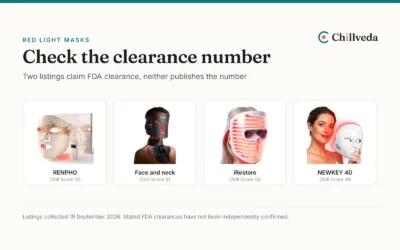
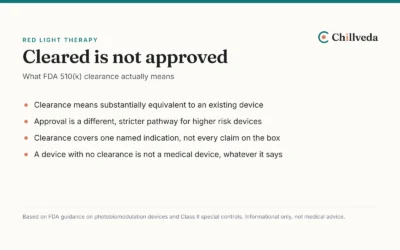
None of our picks states FDA clearance. If a device you are considering claims clearance, ask for the number and check the indication it was cleared for, because clearance covers one named use and nothing else. Our guide to what clearance actually means shows how.
Safety
Near infrared is invisible and your eyes will not defend themselves against it, so use whatever eye protection comes with the device and do not look into an illuminated array.
Do not use these on an area of numbness, on an acute injury, over a known tumour, or on broken skin. If you are pregnant, take photosensitizing medication, or have a skin condition, speak to a clinician first.
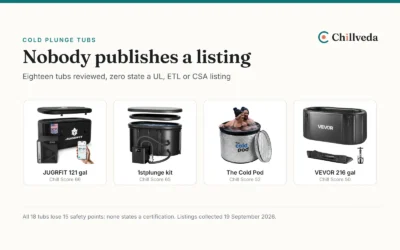
None of these devices states a UL, ETL or CSA listing, which costs every one fifteen points in our scoring. They are low power mains devices, but the absence is consistent across the whole category and worth stating.
Who should skip these
If you want to treat your whole body rather than one area, buy a full body panel. Waving a torch at yourself for forty minutes is not a substitute.
If the area bothering you is an undiagnosed persistent pain, see somebody qualified before buying a light. A device is not a diagnosis.
And if you want something for your face specifically, a mask is the purpose built form factor.
Common questions
Belt or panel for a bad back?
A belt or a mat. You can wear it while doing something else, and contact removes the distance problem entirely.
How long per session?
Manufacturer guidance is typically ten to twenty minutes per area. Longer is not better and every one of these has a timer for a reason.
Can I use it every day?
Most makers say yes within their stated session limits. We are not going to give you a protocol, because that would be medical advice and we do not give it.
Sources: Specifications, warranty statements and customer review counts are as published on the retailer listings and were collected on 19 September 2026. LED counts, wavelengths, wattages and dimensions are manufacturer rated.
Write Your Review
No reviews yet. Be the first to share your experience!