Side by side Choose a back stretcher if Choose stretching straps if
The evening routine is a few quiet minutes on the living room floor, and the question is which tool earns that time. In back stretcher vs stretching straps, the verdict is simple: pick a back stretcher if you want a machine or device that guides the stretch, and pick stretching straps if you want the portable, do-anywhere option. This comparison walks through both sides with three scored picks, so you can match the tool to your own routine. Listings were collected 22 October 2026.
This article is informational and is not medical advice. Stretching gear is not treatment for back pain or injury: avoid aggressive stretching with acute injuries, and ask a clinician first if you have back pain, a spine condition, or are recovering from an injury. See our Medical Disclaimer.
Chillveda earns a commission when you buy through links on this page, at no extra cost to you. As an Amazon Associate I earn from qualifying purchases. Affiliate disclosure.
Quick picks
-
1
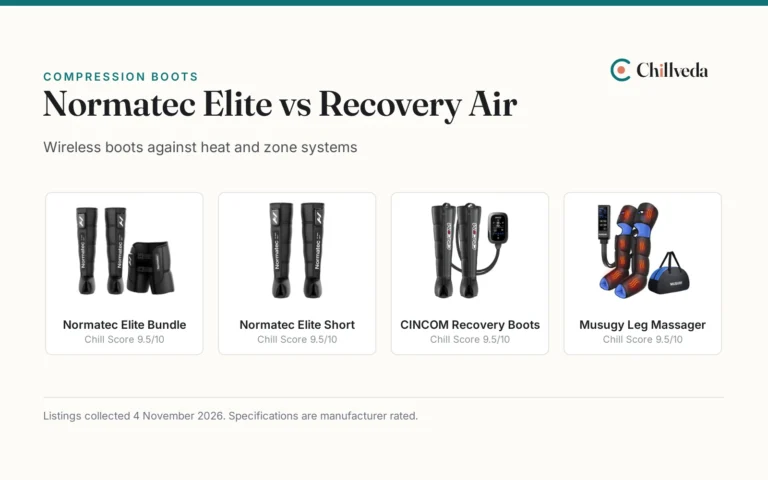
 YOLEO Gravity Inversion Table for Back Pain Relief Chill Score 9.5/10Check price on Amazon
An inversion table with adjustable angle, adjustable lumbar support and a 300 lbs capacity, for users 4ft-1in to 6ft-2in.
-
2
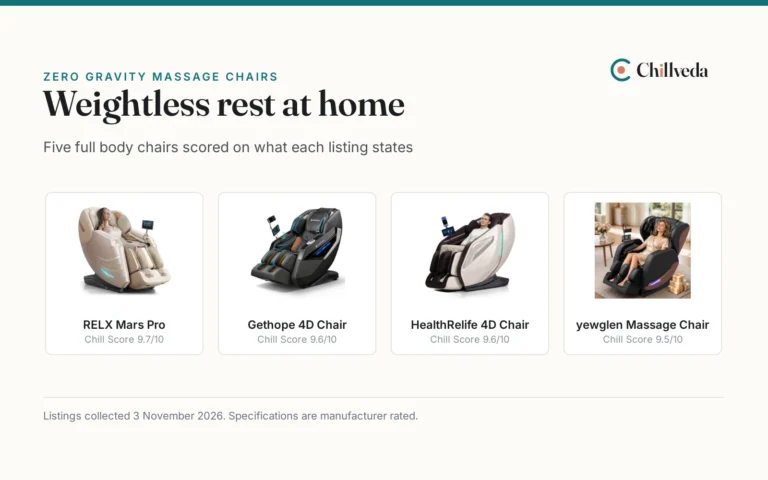
 ProStretch CoreStretch, Adjustable Stretcher Chill Score 9.4/10Check price on Amazon
A collapsible floor stretcher with 360-degree rotating handles and 10 sizing options, with a 1 year warranty.
-
3
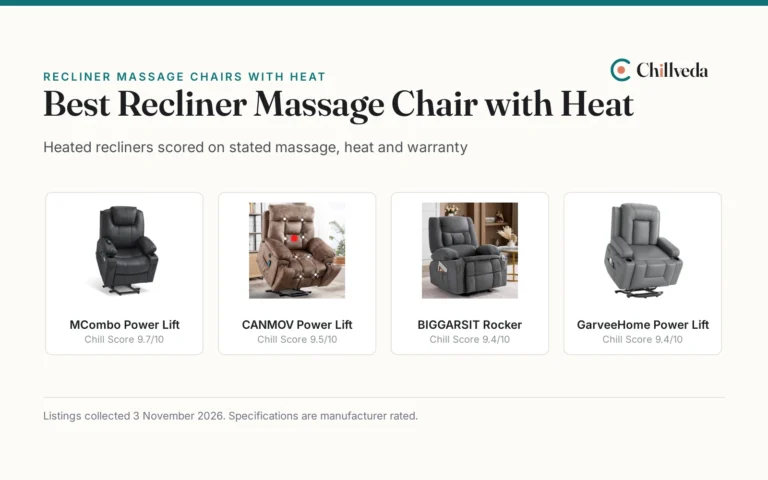
 Abiarst Stretching Strap Yoga Straps for Physical Chill Score 9.3/10Check price on Amazon
A non-elastic stretching strap with 10 loops, 75 in long and 1 in wide, for yoga, pilates and daily stretching.

An inversion table with adjustable angle, adjustable lumbar support and a 300 lbs capacity, for users 4ft-1in to 6ft-2in.
Pros & ConsViewHide
Pros
- 300 lbs capacity stated in the title
- Adjustable inversion angle through a multi-angle rear cross bar
- Adjustable lumbar support with memory foam backrest
- Folds for storage in a closet or against the wall
Cons
- Bullets describe a heavy duty integrated steel frame while the spec table says aluminum
- Maker recommends 265 lbs or less despite the 300 lbs title figure
- Warranty description of 1 is not a concrete term, so no warranty is stated
- Listing makes back-pain relief claims we do not repeat

A collapsible floor stretcher with 360-degree rotating handles and 10 sizing options, with a 1 year warranty.
Pros & ConsViewHide
Pros
- Upper handles rotate 360 degrees for varied stretches
- Push button gives 10 sizing options
- Fully collapsible for storage and transport
- Free stretching guide included
Cons
- Spec table lists package weight 1.18 kg and item weight 1.6 ounces, which contradict
- Listing names medical conditions in claims we do not repeat
- No safety features stated
- No capacity figure stated

A non-elastic stretching strap with 10 loops, 75 in long and 1 in wide, for yoga, pilates and daily stretching.
Pros & ConsViewHide
Pros
- 10 individual loops for solo stretching
- 75 in long and 1 in wide in non-elastic fabric
- 0.1 kg, the most portable pick here
- Washable, skin-friendly fabric with eco-friendly dye stated
Cons
- No warranty term stated
- No adjustability beyond the 10 fixed loops
- Listing makes recovery and injury claims we do not repeat
- Fabric only, no rigid support
More to compare
 JUMPOW Back Stretcher for Lower Back Pain ReliefCheck price on Amazon
 Stretching Strap Yoga Strap with Loops for Physical TherapyCheck price on Amazon
 Back StretcherCheck price on Amazon
 Stretching Strap for Physical Therapy and Home Rehab 10 LoopsCheck price on Amazon
 Premium Back Stretcher for Lower Back Pain ReliefCheck price on Amazon
 YAJIACLONE Back Stretcher for Lower BackCheck price on Amazon
Back stretcher vs stretching straps at a glance
| Back stretcher | Stretching straps | |
|---|---|---|
| How it works | A device or table that positions the stretch for you | A fabric band with loops you pull with your own hands |
| Space | Inversion table lists 45x31x60 in; floor device lists 1.5×1.5×32 in | 75 in long, 1 in wide, 0.1 kg |
| Setup | Inversion angle adjusts; handles rotate 360 degrees | No setup, 10 loops to choose from |
| Storage | Inversion table folds; floor device collapses | Not stated |
| Warranty | 1 year on the floor device; none stated on the inversion table | None stated |
| Included extras | Adjustable lumbar support; stretching guide | Not stated |
How the two sides differ
The back stretcher side is the machine-led route. The YOLEO inversion table lists a 300 lbs capacity, an adjustable inversion angle through a multi-angle rear cross bar, adjustable lumbar support and a memory foam backrest, with a ratchet ankle locking system and a safety lock pin. The ProStretch CoreStretch is the floor-device version: the upper handles rotate 360 degrees, a push button gives 10 sizing options, and the unit collapses for storage, with a stretching guide included.
The stretching straps side is the do-it-yourself route. The Abiarst strap is a non-elastic fabric band with 10 loops, 75 in long and 1 in wide, listed for yoga, pilates, dance, ballet, daily stretching and physical therapy. It weighs 0.1 kg and needs no setup: the loops are the adjustment.
Neither side wins on specs alone, because the listings on the two sides state different things. Compare them on routine instead: guided positioning against portable simplicity. See our back stretcher vs inversion table guide for where the inversion table sits among stretchers.
Space, storage and setup
The inversion table is the biggest commitment: 45x31x60 in listed, though it folds for storage in a closet or against the wall. The CoreStretch lists 1.5×1.5×32 in and is fully collapsible for storage and transport. The strap needs only the floor you already have. None of the three lists a power requirement, so no outlet figures into the decision, and none lists water use either, so the bathroom stays out of it.
Gear for each route
These are scored on the Chill Score: performance, build, value, safety (where it applies) and warranty. Only the inversion table states safety features, so it is the only pick with a safety score above zero, and only the CoreStretch states a warranty term.
| Product | Chill Score | Perf. /35 | Build /25 | Value /25 | Safety /10 | Warranty /5 |
|---|---|---|---|---|---|---|
| YOLEO Inversion Table | 9.5 | 30 | 19 | 20 | 5 | 0 |
| ProStretch CoreStretch | 9.4 | 27 | 19 | 20 | 0 | 3 |
| Abiarst 10-Loop Strap | 9.3 | 23 | 18 | 21 | 0 | 0 |
Scores run from 9.2 to 9.8: each product’s point total is placed on that range, so more points always means a higher score.
Choose a back stretcher if
- You want a machine or device that guides the stretch, by inversion or by handles.
- You have floor space for the inversion table’s listed 45x31x60 in footprint.
- You fit the listed user range of 4ft-1in to 6ft-2in.
- You want the included extras: adjustable lumbar support or a stretching guide.
Choose stretching straps if
- You want the most portable option: 0.1 kg and 75 in long.
- Your routine is yoga, pilates, dance or daily stretching, as the listing describes.
- You prefer 10 fixed loops and no setup over a machine.
- You want the lowest-fuss option: no assembly, no power, no storage footprint.
Check Your Space First
- The inversion table lists 45x31x60 in and folds for storage in a closet or against the wall.
- The CoreStretch lists 1.5×1.5×32 in and collapses for storage and transport.
- The strap lists 75 in by 1 in at 0.1 kg and needs no power, outlet or water.
- None of the three lists an electrical requirement, so any room with floor space works.
Common questions
Is an inversion table the same as a back stretcher?
In this comparison the inversion table stands in for the back stretcher side: it is the machine-led option, with a 300 lbs stated capacity and an adjustable inversion angle. A stretcher can also be a floor device like the CoreStretch, which uses handles and sizing options instead of inversion.
Do stretching straps work without a partner?
The Abiarst listing describes solo contexts like yoga, pilates and daily stretching, and the 10 loops let you hold the stretch yourself. The listing also names physical therapy among its uses, which is worth discussing with a clinician first.
How much space does an inversion table need?
The YOLEO listing gives 45x31x60 in and says it folds for storage in a closet or against the wall. Measure the room before it arrives, and check your own height against the listed 4ft-1in to 6ft-2in range.
Can a strap replace a stretcher machine?
They serve different routines: the strap is 0.1 kg and travels anywhere, while the stretcher side offers guided positioning through handles or inversion. If portability matters most, the strap wins; if you want the machine-led routine, it does not.
What should I check before buying a back stretcher?
Check the listed height range, here 4ft-1in to 6ft-2in, the 300 lbs capacity against the maker’s 265 lbs or less recommendation, and the warranty: the CoreStretch lists 1 year while the others state no term. The YOLEO listing also advises consulting a licensed physician first.
Back to all recovery tool reviews.