Side by side Choose red light therapy if Choose a tanning bed if
Red light therapy vs tanning bed comes down to biological purpose: cellular skin rejuvenation versus cosmetic skin darkening. Red light therapy uses non-ionizing visible red and near-infrared wavelengths to support skin texture and collagen without ultraviolet radiation. A tanning bed emits intense ultraviolet rays (UVA and UVB) to stimulate melanin production and darken the skin, carrying cumulative risks of burns and premature aging. Choose red light therapy if your goal is skin health, and choose a tanning bed only if your goal is a cosmetic tan.
Chillveda earns a commission when you buy through links on this page, at no extra cost to you. As an Amazon Associate I earn from qualifying purchases. Affiliate disclosure.
Gear in this guide


More to compare
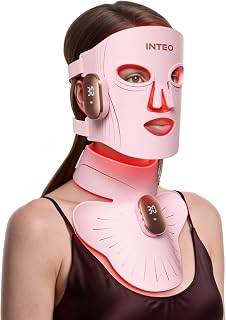 Red Light Therapy Mask for Face & NeckCheck price on Amazon
 iRestore EliteCheck price on Amazon
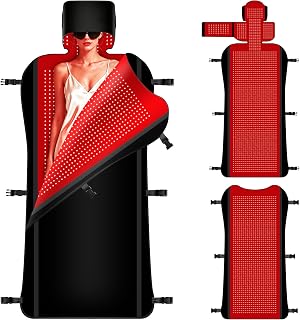 Red Light Therapy Mat for Body with 3040 LEDsCheck price on Amazon
 NVBOTY Red Light Therapy for FaceCheck price on Amazon
 Red Light Therapy Mat for Full BodyCheck price on Amazon
 iRestore EssentialCheck price on Amazon
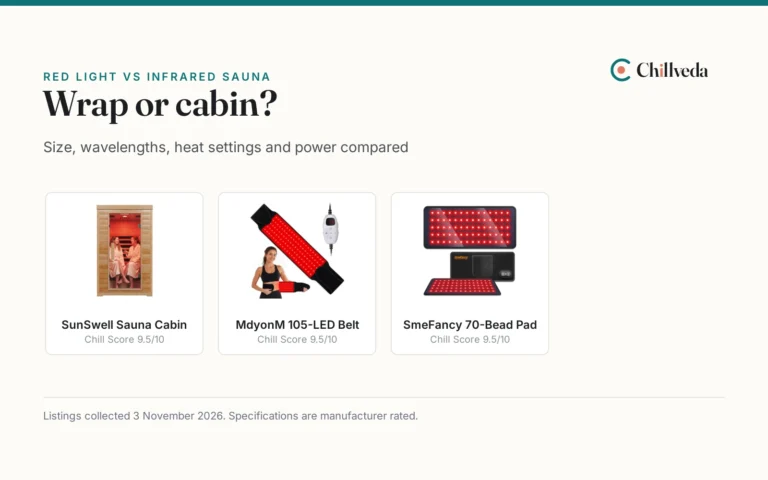
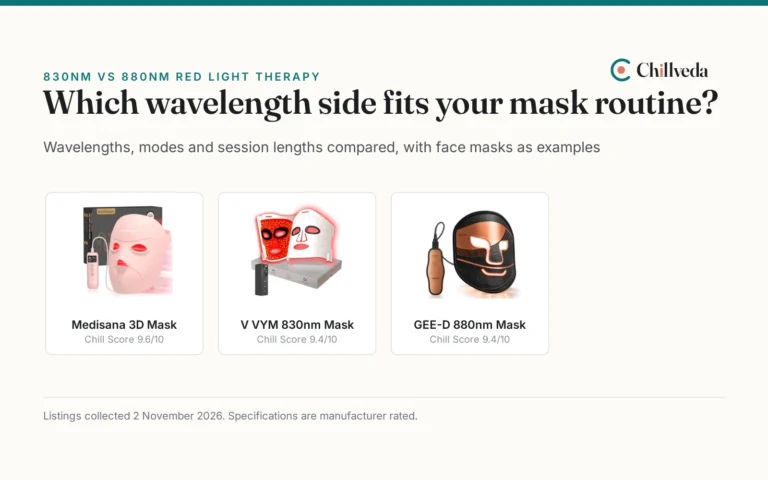
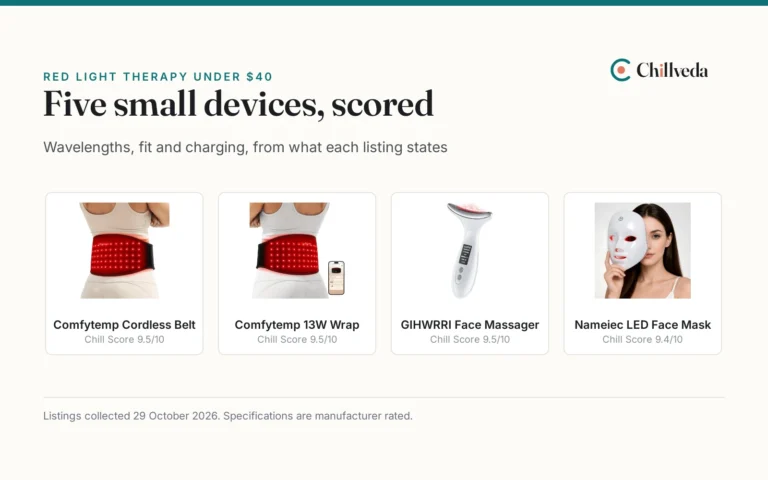
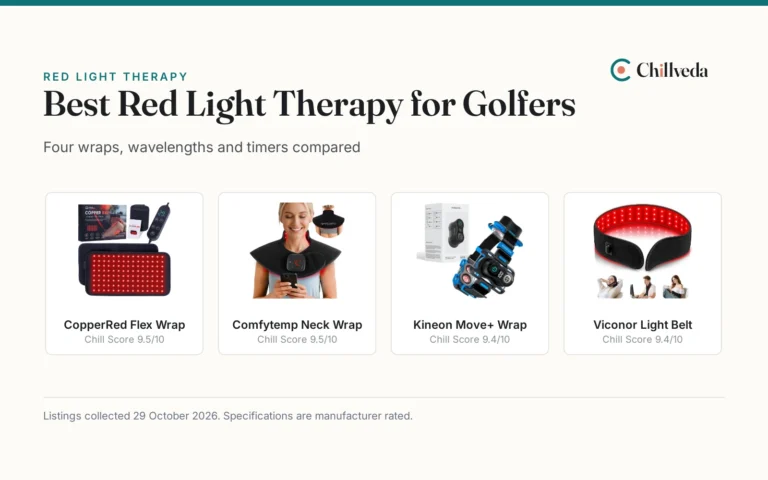
This comparison examines radiation types, skin effects, safety protocols, upkeep, and the specialized lotions formulated for each route, featuring three concrete product listings evaluated across both sides. Listings were collected 10 October 2026.
This article is informational and is not medical advice. High-intensity light and ultraviolet radiation can cause retinal strain and skin damage. Always wear approved protective eyewear during sessions and speak with a healthcare professional before starting light or tanning routines. See our Medical Disclaimer and our red light therapy eye safety guide.
Red light therapy vs tanning bed at a glance
| Red light therapy | Tanning bed | |
|---|---|---|
| Radiation type | Non-ionizing red and near-infrared light | Ultraviolet radiation (UVA and UVB) |
| Primary purpose | Skin rejuvenation and cellular support | Skin pigment darkening (cosmetic tan) |
| Tanning effect | Light does not stimulate melanin or tanning | Stimulates melanin for darker skin tone |
| UV skin risks | No sunburn or UV damage | Risk of sunburn and accelerated skin aging |
| Eye protection | Required due to intense brightness | Required due to ultraviolet radiation |
| Session lotions | Hydrating prep lotions, sometimes with peptides | Accelerators and intensifiers without sunscreen |
| Hardware formats | Canopy beds, panels, or targeted devices | Canopy beds, stand-up booths, or face units |
| Upkeep focus | Sanitizing surfaces and hydrating skin | Sanitizing acrylics and replacing UV lamps |
Wavelengths and UV radiation explained
The fundamental distinction between these two modalities is the light spectrum they emit. Red light therapy relies on visible red light and near-infrared energy. These wavelengths penetrate skin tissue without causing DNA breaks or cellular burns. They do not trigger melanin production, so they cannot produce a tan. For a detailed breakdown of how these frequencies operate, see our red light wavelengths explained guide.
In contrast, tanning beds generate concentrated ultraviolet radiation. UVA rays penetrate into deeper skin layers to oxidize existing melanin, while UVB rays stimulate melanocytes to produce new pigment. That same ultraviolet radiation degrades skin collagen and carries risks of cellular DNA damage. While some commercial facilities promote hybrid beds that combine light sources, the biological effects remain fundamentally separate: visible and near-infrared light do not trigger melanin synthesis, whereas ultraviolet rays induce cosmetic pigment darkening through radiation exposure.
Cost, space and power
Equipment format determines the space and electrical requirements for each approach. Red light therapy is commonly delivered through modular panels or targeted devices that hang on doors or mount on stands, but commercial and high-end home setups also use full-body canopy beds. For panel and device formats, see our full body red light panels and targeted red light devices guides.
Tanning beds are almost exclusively large horizontal canopies or vertical booths designed for whole-body ultraviolet radiation exposure. Full-body beds on either side require substantial dedicated floor area, ventilation for heat dissipation, and appropriate electrical supply.
Upkeep
Upkeep for red light therapy equipment is straightforward. Users wipe down the acrylic shield or LED surface after sessions and apply specialized prep lotions. Formulas designed for red light sessions emphasize hydration and peptides like Matrixyl, while dual-purpose versions also incorporate tanning accelerators.
Tanning bed maintenance is far more demanding. The acrylic shield must be sanitized after every session using non-abrasive, acrylic-safe disinfectant to prevent residue buildup and microbial growth. Tanning lotions are formulated as accelerators that moisturize the skin to hasten tanning results under UV bulbs. However, because these accelerators contain no sunscreen, users must carefully regulate exposure durations to avoid severe burns. Both modalities require dedicated eye protection: protective eyewear shields the eyes from the high-intensity illumination of red light LEDs and the damaging ultraviolet radiation of tanning lamps.
Choose red light therapy if
- You want skin health support and collagen support without ultraviolet exposure.
- You want to avoid the risks of sunburn and premature photoaging from UV rays.
- You do not want your skin to tan or darken.
- You prefer options that can be used with modular panels as well as full-body beds.
Choose a tanning bed if
- Your primary objective is cosmetic skin darkening and browning.
- You have adequate floor space and ventilation for an ultraviolet enclosure.
- You are prepared to sanitize acrylic surfaces and replace UV lamps as they age.
- You understand and accept the cumulative risks associated with ultraviolet radiation.
Common questions
Does red light therapy tan your skin?
No. Red light therapy uses visible red and near-infrared wavelengths that do not stimulate melanin production. It produces no pigment changes, browning, or tan.
Can you use red light therapy lotion in a tanning bed?
Some dual-purpose products are blended for both red light prep and tanning acceleration. However, standalone red light lotions lack UV accelerators and provide no sunscreen protection. Always check the manufacturer’s directions before applying any topical product before UV exposure.
Is a red light bed safer than a tanning bed?
Red light therapy does not emit ultraviolet radiation, avoiding the sunburn, cellular DNA damage, and premature photoaging associated with tanning beds. Both modalities require protective eyewear, but for different reasons: red light demands protection against intense visible glare, while tanning beds require shielding against destructive ultraviolet rays.
Can you do red light therapy and tanning on the same day?
Some salons offer hybrid beds or recommend applying red light before tanning to moisturize and condition the skin. While hydration helps keep skin supple, it provides no barrier against ultraviolet rays. Anyone combining sessions must keep UV exposure conservative and wear appropriate eye protection throughout each modality.
Do you need goggles for red light therapy?
Yes. While red light therapy does not emit ultraviolet radiation, high-output LED arrays produce intense visible and near-infrared brightness that can strain the eyes. Always wear fitted, opaque or wavelength-filtering protective goggles during every session.
Back to all red light therapy reviews.