Short answer
What is the difference between 660nm and 830nm?
660nm is visible red light, while 830nm is near-infrared and invisible to the eye. The Morfone listing describes 660nm as visible red for surface use and the longer wavelengths as invisible infrared. In these listings the two wavelengths appear together in multi-wavelength devices rather than alone.
Side by side Choose a 660nm-led device if Choose the 830nm mask if
660nm vs 830nm red light therapy is less about picking a wavelength and more about picking a device shape. The 660nm-led examples here are a tri-wavelength panel and a wearable pad aimed at body coverage, while the 830nm example is a cordless face mask. Note that all 3 devices list multiple wavelengths, so the sides describe which wavelength leads, not the only wavelength inside.
Listings were collected 19 October 2026.
This article is informational and is not medical advice. Red light devices shine bright light near your eyes: wear the eye protection supplied and never stare into the LEDs. Ask a clinician first if you are pregnant, photosensitive, or take medication that affects light sensitivity. See our Medical Disclaimer.
Chillveda earns a commission when you buy through links on this page, at no extra cost to you. As an Amazon Associate I earn from qualifying purchases. Affiliate disclosure.
Quick picks
-
1
 Infrared Red Light Therapy Mask for Face Chill Score 9.6/10Check price on Amazon
A cordless 830nm near-infrared face mask with 292 LEDs, 4 preset modes and a rechargeable controller.
-
2
 Morfone Red Light Therapy for Body Face Chill Score 9.6/10Check price on Amazon
A tri-wavelength 660nm+850nm+940nm panel with 200 3-in-1 LED beads, 5 light modes and an adjustable stand.
-
3
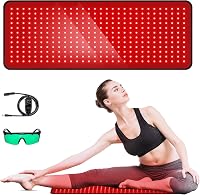 Red Light Therapy for Body Chill Score 9.4/10Check price on Amazon
A wearable 31.5 x 11.8 in pad with 360 3-in-1 LED beads, 660 and 850nm, timer and pulse modes.

A cordless 830nm near-infrared face mask with 292 LEDs, 4 preset modes and a rechargeable controller.
Pros & ConsViewHide
Pros
- 292 LEDs with up to 40mW/cm2 stated intensity
- 4 preset modes across 830, 633 and 590nm
- 1.8mm thin, 4.6 oz flexible silicone fit
- 1-year warranty with rechargeable controller included
Cons
- Face-only coverage, no body use
- No UL or ETL listing stated
- Cordless means charging between sessions
- LED count and intensity are the maker's figures

A tri-wavelength 660nm+850nm+940nm panel with 200 3-in-1 LED beads, 5 light modes and an adjustable stand.
Pros & ConsViewHide
Pros
- 200 3-in-1 LED beads across 660, 850 and 940nm
- 5 light modes including 660nm-only
- Adjustable stand with 180-degree rotation
- Protective glasses included; 1-year quality assurance
Cons
- 6.94 lb with stand needs floor space
- No UL or ETL listing stated
- 110V outlet required, not cordless
- Session guidance is the maker's own figure
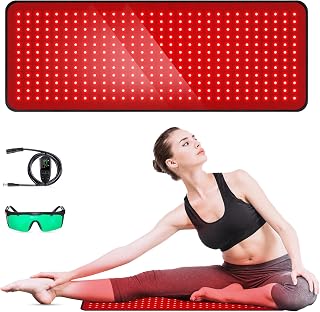
A wearable 31.5 x 11.8 in pad with 360 3-in-1 LED beads, 660 and 850nm, timer and pulse modes.
Pros & ConsViewHide
Pros
- 360 3-in-1 LED beads, the most in this group
- Wearable 31.5 x 11.8 in pad with adjustable band
- 6-level timer from 10 to 90 minutes
- TPU film isolates sweat and oil from the skin
Cons
- No warranty term stated
- No UL or ETL listing stated
- No power figure stated
- Maker's health claims we do not repeat
More to compare
 LED-Red-Light-Therapy-DeviceCheck price on Amazon
 BestQool Red Light Therapy PanelCheck price on Amazon
 BONTANNY Red Light TherapyCheck price on Amazon
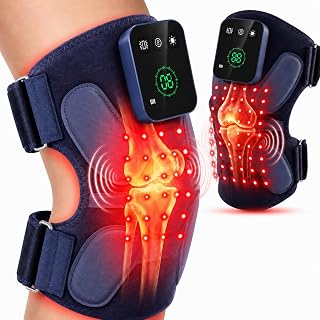 Red Light Therapy Knee Massager DeviceCheck price on Amazon
 Lifepro Allevabody Red Light Therapy WrapCheck price on Amazon
 Red Light Therapy Panel for Body 660nm 850nmCheck price on Amazon
660nm vs 830nm red light therapy at a glance
| 660nm-led devices | 830nm device | |
|---|---|---|
| Example devices | Morfone panel, GMOWNW pad | V VYM face mask |
| Wavelengths listed | 660nm+850nm+940nm (Morfone); 660nm 850nm (GMOWNW) | 830nm, 633nm and 590nm (mask) |
| Form | Panel on a stand; wearable wrap pad | Flexible face mask |
| Coverage | Body: 16 x 8 in panel; 31.5 x 11.8 in pad | Face only |
| Controls | 5 light modes (Morfone); 5 levels plus timer (GMOWNW) | 4 preset modes |
| Session guidance | 10-30 min, 3-7 times weekly (Morfone); 10-90 min timer (GMOWNW) | 4 times weekly per the maker |
| Power | 110V outlet (Morfone); not stated (GMOWNW) | Rechargeable, battery included |
| Warranty | 1-year quality assurance (Morfone); not stated (GMOWNW) | 1-year warranty |
What the 660nm side actually lists
Both 660nm-side devices list more than 660nm. The Morfone panel combines 660nm, 850nm and 940nm in 200 3-in-1 LED beads, and describes 660nm as visible red light for surface use with 850nm and 940nm as invisible infrared. Its 5 modes range from full combo to 660nm only to a pulse mode, on a 16 x 8 in panel with an adjustable stand. The GMOWNW pad pairs 660nm with 850nm in 360 3-in-1 beads on a wearable 31.5 x 11.8 in pad, with 5 lightness levels, a 6-level timer from 10 to 90 minutes, and constant, 10Hz and 40Hz pulse modes.
What the 830nm side actually lists
The V VYM mask is the 830nm example, but it is also multi-wavelength: 830nm near-infrared plus 633nm red and 590nm yellow across 292 LEDs, with up to 40mW/cm2 stated intensity and 15W total power. It offers 4 preset modes, Quick, Infrared, Red Light and Combo, in a 1.8mm thin flexible silicone mask listed at 4.6 oz, with a rechargeable controller and battery included. The maker states the mask surface stays below 40C and includes a 1-year warranty.
Coverage, controls and running cost
Coverage is where the sides split hardest. The Morfone panel covers a 16 x 8 in area from its stand, the GMOWNW pad wraps a 31.5 x 11.8 in area around the body, and the mask covers the face only. For controls, the Morfone gives 5 wavelength modes, the GMOWNW gives lightness levels plus a long timer, and the mask gives 4 named presets. On running cost, only the mask states power: 15W. The panel and pad state no wattage, so their running cost is not stated. See our red light therapy pad versus panel comparison and the multi versus dual wavelength panel guide for more on form factors.
The devices
These are scored on the Chill Score across performance, build, value, safety (where it applies) and warranty. The mask and the panel state a 1-year warranty; the pad states no warranty term. No device states a UL or ETL listing.
| Product | Chill Score | Perf. /35 | Build /25 | Value /25 | Safety /10 | Warranty /5 |
|---|---|---|---|---|---|---|
| V VYM Face Mask | 9.6 | 29 | 21 | 20 | 4 | 2 |
| Morfone Panel Light | 9.6 | 29 | 20 | 20 | 4 | 2 |
| GMOWNW Therapy Pad | 9.4 | 28 | 19 | 21 | 0 | 0 |
Scores run from 9.2 to 9.8: each product’s point total is placed on that range, so more points always means a higher score.
Choose a 660nm-led device if
- You want body coverage: a panel on a stand or a pad you can wrap around a shoulder or knee.
- You want the visible red 660nm mode the Morfone lists as a separate setting.
- You want a long timer: the GMOWNW pad sets 10 to 90 minutes in 6 levels.
- You want the highest LED count here: the pad lists 360 3-in-1 beads.
Choose the 830nm mask if
- You want a face-only routine you can wear hands-free.
- You want cordless sessions: the rechargeable controller ships with its battery.
- You want preset modes instead of manual wavelength mixing.
- You want the stated 40mW/cm2 intensity figure, the only one published here.
Common questions
What is the difference between 660nm and 830nm?
660nm is visible red light, while 830nm is near-infrared and invisible to the eye. The Morfone listing describes 660nm as visible red for surface use and the longer wavelengths as invisible infrared. In these listings the two wavelengths appear together in multi-wavelength devices rather than alone.
Can one device offer both 660nm and 830nm?
The examples here do not pair exactly 660nm with 830nm. The Morfone panel lists 660, 850 and 940nm, the GMOWNW pad lists 660 and 850nm, and the mask lists 830, 633 and 590nm. Multi-wavelength devices are the norm in these listings, not single-wavelength ones.
Do I need eye protection?
Yes for panels and pads: the Morfone panel ships with protective glasses, and the red-light guidance is to never stare into the LEDs. The mask sits on the face, so follow the maker’s directions on eye coverage during sessions.
How long are sessions?
Per the makers: the Morfone suggests 10 to 30 minutes, 3 to 7 times a week; the GMOWNW timer runs 10 to 90 minutes; the mask maker mentions 4 sessions a week. These are the makers’ figures, not a schedule we set.
Which device covers the largest area?
The GMOWNW pad at 31.5 x 11.8 in covers the most skin of the three, followed by the Morfone 16 x 8 in panel. The mask is face only by design.
Back to all red light therapy reviews.