


Infrared and traditional saunas are sold side by side as though they were two versions of the same thing. They are not. They heat you by different mechanisms, they run at different temperatures, they need different wiring, and they suit different people.
This guide lays out the real differences, and it ends with a fairly blunt view of who should buy which.
This article is informational and is not medical advice. Heat exposure places real stress on the cardiovascular system. Please read our Medical Disclaimer and speak to a clinician first if you have a heart condition, are pregnant, or take medication affecting blood pressure or thermoregulation.
The mechanism, briefly
A traditional sauna heats the air. Electric elements warm a bed of stones, the stones warm the room, and the room warms you. Throw water on the stones and you get a burst of steam that makes the same air temperature feel considerably hotter.
An infrared sauna heats surfaces, including your skin, using emitters rather than hot air. The air in the cabin stays much cooler than in a traditional room, which is the whole point of the design for people who find high air temperature unpleasant.
Manufacturer figures put traditional saunas broadly in the 150 to 195 degree Fahrenheit range, and infrared cabins broadly in the 110 to 150 range. Those are the numbers the makers publish, and the honest way to think about them is not that one is hotter but that the heat arrives differently.
Warm up time and how you use it
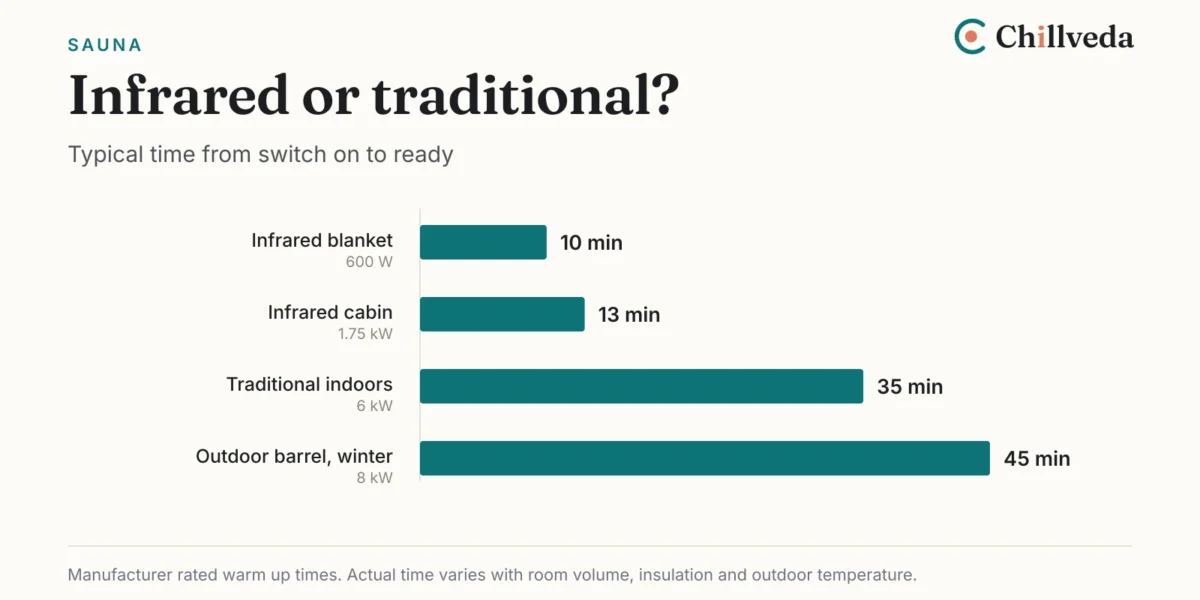
The chart above shows the gap that matters most in daily life. An infrared cabin is usable in about ten to fifteen minutes. A 6 kW traditional heater generally wants half an hour or more, and an outdoor barrel in winter longer still.
That difference decides whether you use the thing. A sauna you can switch on when you walk in the door gets used on a Tuesday evening. A sauna that needs planning gets used at weekends, if at all. Be honest with yourself about which person you are, because it is a better predictor of value than any specification.
Installation and running cost
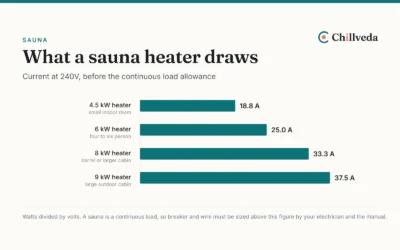
Infrared cabins in the one or two person size usually run on a standard 120V supply. Traditional heaters from about 4.5 kW upward need 240V and an electrician. That is often the deciding factor for apartments, rentals, and any home with a full electrical panel. Our guide to sauna electrical requirements works through how to check.
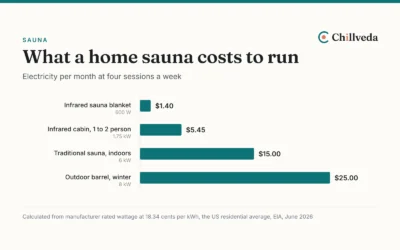
Running cost follows the same split. Using the figures in what it costs to run a home sauna, a one to two person infrared cabin costs a few dollars a month at four sessions a week, while a 6 kW traditional heater indoors runs closer to fifteen, and an outdoor barrel in winter higher again.
What each one is actually better at
Traditional
- Steam. If the ritual of water on hot stones is what you want from a sauna, no infrared cabin substitutes for it.
- Groups. Traditional rooms scale to four, six, or more people more naturally.
- Heat intensity. If you want the high air temperature, this is the only way to get it.
- Longevity. A well built room with a replaceable heater is a long term fixture.
Infrared
- Speed. Ready in minutes, which is the difference between using it and not.
- Electrics. Usually plugs into what you already have.
- Comfort at lower air temperature, which suits people who find a traditional room hard to tolerate.
- Footprint. One and two person cabins fit in spare rooms and garages.
On the health claims
Infrared saunas in particular are marketed with claims about detoxification, calorie burning, and metabolic effects. We do not repeat those claims, because we cannot support them, and because the Federal Trade Commission takes a dim view of sellers who do.
What is fair to say is that people find heat pleasant and relaxing and that is why they keep using saunas. Buy for that. If you are buying because a product page promised something clinical, read our How We Review page for how we treat this category of claim.
The same applies to the low EMF and zero EMF labels on infrared products. There is no agreed standard behind those terms, so treat them as marketing until a manufacturer publishes a measurement method alongside the figure.
So which one
Buy infrared if you rent, if your panel cannot take a 240V circuit, if you want to use it on a weeknight without planning, if you are the only regular user, or if high air temperature is unpleasant for you.
Buy traditional if steam is the point, if more than two people will use it regularly, if you own the property and can run the circuit, and if you are prepared to plan sessions around a warm up.
Buy a blanket if you are not sure yet. At around eight cents a session it is the cheapest way to find out whether home heat is something you will actually keep doing, and it costs less than two months of gym membership.
Who should skip both
If you have never used a sauna regularly somewhere else, start with a gym or a spa for a month before spending thousands. A surprising number of expensive cabins become storage by the second winter.
And if you are buying primarily as a health intervention rather than something you expect to enjoy, talk to your doctor first about whether heat exposure is appropriate for you at all.
Safety, briefly
Whichever you choose: drink water, keep sessions moderate, never use a sauna after alcohol, leave immediately if you feel dizzy or unwell, and do not leave children unattended near one. Look for a UL or ETL listing on anything that plugs into mains power.


Write Your Review
No reviews yet. Be the first to share your experience!