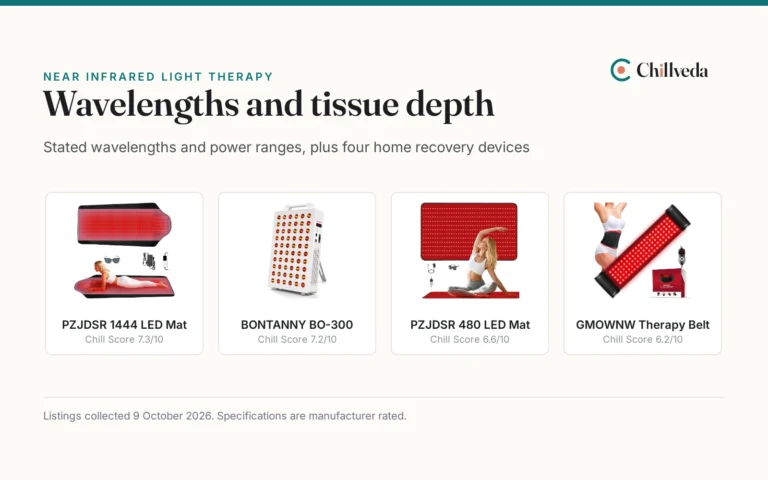
What is near infrared light therapy? Near infrared light therapy is a recovery method that uses optical wavelengths just beyond visible red light, such as 810nm, 830nm, and 850nm, to deliver light energy into tissue below the skin. While visible red light at 630nm to 660nm is absorbed primarily in surface skin layers, near infrared wavelengths penetrate deeper into subcutaneous tissue, muscles, and joints. At home, it is delivered through specialized LED mats, targeted panels, and flexible wearable wraps.
This guide explains how near infrared wavelengths work, how irradiance changes with distance, and compares four home devices across stated wavelengths, power levels, and build specs. Listings were collected 9 October 2026.
This article is informational and is not medical advice. Near infrared light emits optical radiation that penetrates beneath the skin; always wear appropriate protective goggles and never look directly into the LEDs. Consult a physician before use if you have medical implants, light sensitivity, or skin conditions. See our Medical Disclaimer.
Chillveda earns a commission when you buy through links on this page, at no extra cost to you. As an Amazon Associate I earn from qualifying purchases. Affiliate disclosure.
Quick picks
-
1
 Red Light Therapy Mat for Full Body Chill Score 9.5/10Check price on Amazon
A 73 by 35 inch full body light therapy mat featuring 1444 triple chip LEDs, five intensity levels, and a 1-year warranty.
-
2
 BONTANNY Red Light Therapy Chill Score 9.5/10Check price on Amazon
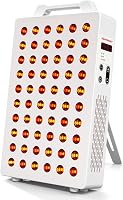
A freestanding targeted red and near infrared panel with 60 dual-chip LEDs across five wavelengths, rated at 131 mW/cm² at 6 inches.
-
3
 Red Light Therapy Mat for Full Body Chill Score 9.4/10Check price on Amazon
A foldable 39.4 by 23.6 inch therapy pad with 480 dual-wavelength LEDs, stated 65W power, and stated 180 mW/cm² surface irradiance.
-
4
 Red Light Therapy for Body Chill Score 9.3/10Check price on Amazon
A wearable 7 by 50 inch wrap featuring 105 3-in-1 LED beads, four brightness levels, and dual USB and wall charging options.

A 73 by 35 inch full body light therapy mat featuring 1444 triple chip LEDs, five intensity levels, and a 1-year warranty.
Pros & ConsViewHide
Pros
- 1444 triple chip LEDs with 660nm and 850nm chips
- Full body 73 by 35 inch coverage
- 5 intensity levels and pulse modes (10 Hz, 40 Hz)
- 1-year warranty stated
Cons
- Contradiction: title claims 288W but controller lists 39W to 100W
- No irradiance figure stated
- Heaviest package here at 9.55 pounds
- FDA-registered facility claim is not an FDA medical clearance
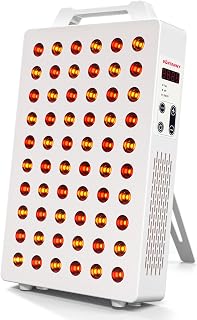
A freestanding targeted red and near infrared panel with 60 dual-chip LEDs across five wavelengths, rated at 131 mW/cm² at 6 inches.
Pros & ConsViewHide
Pros
- Five wavelengths: 630nm, 660nm, 810nm, 830nm, 850nm
- Stated irradiance of 131 mW/cm² at 6 inches
- Includes adjustable stand, cooling fan, and eye protection
- 60 dual-chip LEDs with 60-degree beam angle
Cons
- Spec table confuses wattage, listing 131 milliwatts
- No warranty term is stated
- Remote control battery (23A 12V) is not included
- Targeted 14 by 12 inch coverage area at 6 inches

A foldable 39.4 by 23.6 inch therapy pad with 480 dual-wavelength LEDs, stated 65W power, and stated 180 mW/cm² surface irradiance.
Pros & ConsViewHide
Pros
- 480 LEDs with 660nm red and 850nm near infrared
- Stated power up to 65W
- Surface irradiance rated up to 180 mW/cm² at 0 inches
- Waterproof neoprene and leather construction
Cons
- Contradiction: title states 5 power levels but bullets state 3
- Bullet header mistakenly writes 80 LEDs instead of 480
- Title uses foot marks (39.4'x23.6') instead of inches
- No warranty term is stated

A wearable 7 by 50 inch wrap featuring 105 3-in-1 LED beads, four brightness levels, and dual USB and wall charging options.
Pros & ConsViewHide
Pros
- 105 3-in-1 beads (105 660nm red and 210 850nm near infrared units)
- Dual charging options via USB port or wall outlet
- Timer controller with 5 to 30 minute settings
- Lightweight wearable wrap at 1.52 pounds package weight
Cons
- No wattage figure is stated
- No irradiance number is stated
- No concrete warranty term is stated
- Narrow 7-inch width limits coverage to one area at a time
More to compare
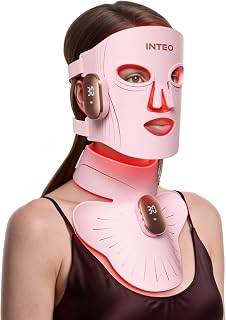 Red Light Therapy Mask for Face & NeckCheck price on Amazon
 Red Light Therapy Mat with 253 LEDsCheck price on Amazon
 LED-Red-Light-Therapy-DeviceCheck price on Amazon
 45W Red LED Light Therapy PanelCheck price on Amazon
 LifePro BiorecoverCheck price on Amazon
 Comfytemp Cordless Red Light Therapy Knee WrapCheck price on Amazon
What is near infrared light therapy across home devices
| Device type | Example listing | Stated wavelengths | Stated power or irradiance |
|---|---|---|---|
| Full body mat | PZJDSR 73×35 Mat, 1444 LEDs | 660nm red, 850nm near infrared | 39W to 100W (title lists up to 288W) |
| Targeted panel | BONTANNY BO-300, 60 dual-chip LEDs | 630nm, 660nm, 810nm, 830nm, 850nm | 131 mW/cm² at 6 inches (table lists 131 milliwatts) |
| Mid-size mat | PZJDSR 39.4×23.6 Mat, 480 LEDs | 660nm red, 850nm near infrared | Up to 65W, 180 mW/cm² at 0 inches |
| Wearable belt | GMOWNW Belt Wrap, 105 3-in-1 beads | 660nm red, 850nm near infrared | Not stated (4 brightness levels) |
These listings illustrate different form factors for home use. Large mats like the PZJDSR models provide broad body coverage using 480 or 1444 LEDs designed for direct surface contact. Wearable wraps like the GMOWNW belt use 105 diode beads to target smaller areas like the waist or shoulder. Meanwhile, freestanding panels like the BONTANNY BO-300 use 60 dual-chip LEDs with 60-degree lenses to project light across a 6-inch distance. All four listings include 660nm red and 850nm near infrared, while the BO-300 also adds 630nm, 810nm, and 830nm wavelengths.
How near infrared differs from visible red light
Visible red light and near infrared light sit next to each other on the electromagnetic spectrum, but they behave differently when they reach human tissue. Visible red light spans approximately 630nm to 660nm, shines bright red to the human eye, and is absorbed primarily in the top layers of the skin. Near infrared light in these devices uses 810nm, 830nm, and 850nm wavelengths. Because its wavelengths are longer and experience less absorption by surface melanin, it penetrates deeper through the skin barrier into subcutaneous tissue, muscles, and joint structures. Our near infrared vs infrared light therapy comparison breaks down how these bands differ from far infrared heat.
The visual difference between the two can be surprising. When a device runs in near infrared mode, the 850nm LEDs emit only a very faint, dim red glow that can look almost dark in a lit room, while 660nm LEDs shine with intense, vibrant red light. Users unfamiliar with this optical characteristic often assume the near infrared diodes are unpowered or defective, even though they are delivering full optical output. Our guide on red light wavelengths explained details what each nanometer rating delivers.
Why irradiance distance changes your exposure
Irradiance measures the optical power delivered per unit area, expressed in milliwatts per square centimeter (mW/cm²). As light travels outward from an LED, it disperses, which means the reading drops sharply as distance increases. A device placed directly against the skin delivers its maximum stated rating, while a panel positioned several inches away spreads its output over a broader field. Our guide on how to read a red light irradiance number covers how makers calculate these ratings.
In the listings below, the PZJDSR 480 mat states an irradiance reaching up to 180 mW/cm² at 0 inches, whereas the BONTANNY BO-300 panel states 131 mW/cm² at a distance of 6 inches across a 14 by 12 inch field. Placing a panel closer concentrates the optical energy, while backing away softens intensity and broadens coverage. Always follow the maker’s stated placement instructions: contact mats and wraps are designed to rest directly against the body, whereas rigid panels are designed to operate at a distance with active cooling fans.
Near infrared light therapy devices compared
These are scored on the Chill Score, which weighs performance 35, build 25, value 25, safety certifications 10 where it applies and warranty 5. None of these listings carry a third-party safety certification like UL or ETL, so all four score 0 for safety.
| Product | Chill Score | Perf. /35 | Build /25 | Value /25 | Safety /10 | Warranty /5 |
|---|---|---|---|---|---|---|
| PZJDSR 1444 LED Mat | 9.5 | 29 | 21 | 21 | 0 | 2 |
| BONTANNY BO-300 | 9.5 | 30 | 21 | 20 | 0 | 0 |
| PZJDSR 480 LED Mat | 9.4 | 27 | 19 | 20 | 0 | 0 |
| GMOWNW Therapy Belt | 9.3 | 24 | 19 | 19 | 0 | 0 |
Scores run from 9.2 to 9.8: each product’s point total is placed on that range, so more points always means a higher score.
For larger setups and specialized configurations, see our best full body red light panels and best red light therapy mats roundups.
How to use near infrared light therapy in practice
- Start with shorter sessions. Makers recommend building consistency rather than overusing the device. For example, BONTANNY suggests 15 minutes daily, while GMOWNW and PZJDSR provide timer settings from 5 to 30 minutes. Follow the session times in your product manual.
- Use eye protection with panels. Because near infrared wavelengths stimulate little visual brightness, they do not trigger a normal blink reflex even while delivering optical energy. Always wear protective goggles or close your eyes when facing active panels or light sources, rather than looking directly into the LEDs.
- Plan your floor space. Full-body mats like the 73 by 35 inch PZJDSR require a clear floor or mattress space, while mid-size pads measure 39.4 by 23.6 inches and tabletop panels like the BO-300 need a stable surface for their 13.2 by 8.7 inch stand.
- Keep contact surfaces clean. The mats use waterproof neoprene and leather materials designed to handle sweat. Wipe them clean with a damp cloth after use rather than submerging them in water or using abrasive cleaners.
- Follow distance guidelines for panels. Unlike contact mats designed for direct placement, panels are built for use at a distance. For example, the BONTANNY listing rates its BO-300 panel at 6 inches to deliver its stated 131 mW/cm² output across a 14 by 12 inch field. Always check your specific device manual for its recommended standoff distance.
Common mistakes
- Assuming dim or unlit 850nm diodes are defective when near infrared modes are active.
- Looking directly at active LED clusters without dedicated eye protection.
- Confusing irradiance figures (131 mW/cm²) with electrical power draw (131 milliwatts).
- Treating an FDA-registered manufacturing facility as an FDA clearance or official safety listing.
- Exceeding the 30-minute maximum session timers provided on the device controllers.
Common questions
What does near infrared light therapy do?
Near infrared light therapy delivers optical energy at wavelengths such as 810nm, 830nm, and 850nm into tissue beneath the skin surface. Because these wavelengths have lower absorption in surface pigments than visible red light, they penetrate deeper into subcutaneous tissue, muscles, and joints. Home devices package these LEDs with built-in timers, typically adjustable from 5 to 30 minutes.
What is near infrared light therapy good for?
Makers market near infrared light therapy devices for relaxing muscles, easing joint stiffness, and supporting post-exercise recovery across the back, waist, shoulders, and legs. Form factors range from 73 by 35 inch full-body mats to targeted 7 by 50 inch wraps. Listings recommend regular sessions between 15 and 30 minutes.
Can you see near infrared light?
Barely. While near infrared wavelengths sit just beyond the standard visible spectrum, the human eye can typically detect a very faint, dim red glow from active 850nm LEDs in a darkened room. They appear vastly dimmer than bright 660nm red LEDs, which often leads buyers to mistakenly think the near infrared diodes are unlit or broken.
How to use near infrared light therapy at home?
Place contact mats or wraps directly against the target area, or position freestanding panels at the maker’s recommended distance, such as 6 inches for the BO-300. Select your desired mode and timer interval, typically 15 to 30 minutes as stated in product manuals. Use protective eyewear when facing active light panels.
What is the best near infrared light therapy device?
The best choice depends on whether you need targeted relief or full-body coverage. The PZJDSR 73 by 35 inch mat provides full-body coverage with 1444 LEDs and a 1-year warranty, while tabletop panels like the BONTANNY BO-300 offer multi-wavelength targeted exposure at 6 inches on a freestanding stand. Check your available space and recovery needs before selecting a model.
Sources: Amazon product listings for the red light therapy devices named above, collected 9 October 2026. Related: our best targeted red light therapy devices and best near infrared light therapy belts.
Back to all red light therapy reviews.