How long should you stay in a sauna? A session should last only as long as your equipment manufacturer manual specifies and your clinician approves, ending immediately if you feel dizzy, overheated, or uncomfortable. Because safe session duration depends on the specific heat source, room temperature, ventilation, and individual health, there is no universal duration. Starting with short sessions and paying close attention to your body matters far more than matching a fixed time.
Chillveda earns a commission when you buy through links on this page, at no extra cost to you. As an Amazon Associate I earn from qualifying purchases. Affiliate disclosure.
Gear in this guide


This guide sets out session limits from maker guidelines, why heating method changes your exposure, and 0 heat trapping suits compared on stated specifications. Listings were collected 9 October 2026.
This article is informational and is not medical advice. Heat exposure strains the heart and causes fluid loss. Do not use a sauna after alcohol, when pregnant, when unwell, or with a heart condition or low blood pressure without asking a clinician first. Leave at once if you feel dizzy, sick or confused. See our Medical Disclaimer.
How long should you stay in a sauna by heat source
| Sauna type | Operating principle | Session guideline |
|---|---|---|
| Traditional cabin | Stove heated stones warm room air | Follow stove manual limits, allow cool down rounds |
| Infrared cabin | Radiant panels warm body directly | Follow panel timer cutoff, maintain hydration |
| Infrared blanket | Thermal blanket with radiant heating elements | Follow controller timer limit, unwrap to cool down |
| Portable steam tent | Steam generator supplies enclosed fabric cabin | Follow generator timer, vent cabin between rounds |
Equipment manufacturers provide specific timer boundaries designed around the heating capacity of each enclosure. Traditional stone heaters produce high ambient air temperatures, making periodic cooling breaks a standard part of the routine. Infrared cabins and blankets operate at lower air temperatures while warming tissue directly, but still demand strict adherence to built-in shutoff timers. Steam enclosures introduce dense humidity that alters thermal perception, requiring equally careful monitoring.
Why infrared exposure differs from traditional heat
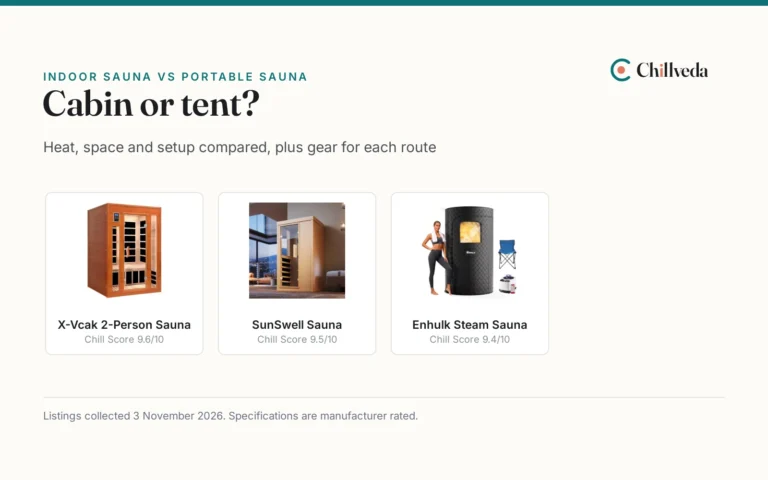
A traditional sauna heats the surrounding air, which gradually warms your body. An infrared sauna uses radiant heating elements to warm your skin directly, allowing the air to remain cooler while still inducing perspiration. When considering how long to sit in infrared sauna cabins, remember that lower air temperatures do not eliminate cardiovascular strain. Our infrared vs traditional sauna guide examines the operational differences between these systems.
Humidity also influences how intense a traditional room feels. Ladling water onto hot rocks produces steam that raises humidity, reducing the rate of evaporative cooling and making the air feel substantially hotter. Paying attention to physical comfort rather than forcing a preset session length is essential in both environments.
Tracking session duration and cooling intervals
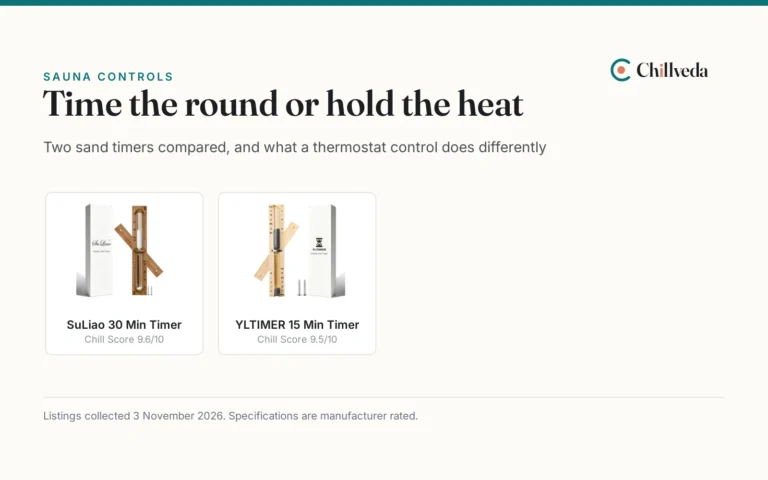
Relying on guesswork while relaxing in heat often leads to overstaying recommended limits. Using a heat-rated analog sand glass or clock from our best sauna timers guide provides a simple way to track elapsed time without bringing delicate electronics into the room. Mount your timer on a wall away from the direct heat source where it remains visible from the bench.
Never take smartphones or standard plastic digital timers into a heated cabin, as high temperatures degrade batteries and internal components. Mechanical timers built specifically for heat rooms provide reliable tracking throughout multiple heating and cooling rounds.
Setting your session length in practice
- Follow your equipment manual. Manufacturers set specific operational cutoffs and session timers for their heaters. Always respect those boundaries.
- Start with brief intervals. When using any new sauna, begin with short exposures to assess personal comfort and heat tolerance.
- Hydrate before and after. Sweating causes rapid fluid loss. Drink water before entering and replenish fluids immediately after stepping out.
- Cool down between rounds. If you enjoy multiple heating cycles, rest at room temperature until your breathing and heart rate normalize before returning.
- Never use heat after alcohol. Alcohol increases dehydration and impairs judgment, making heat exposure dangerous.
- Exit immediately if uncomfortable. Lightheadedness, nausea, or dizziness are clear signals to end the session at once.
Common mistakes
- Staying inside past your comfort level to reach an arbitrary duration found online.
- Wearing heat-trapping sweat suits inside an operating sauna cabin or steam enclosure.
- Neglecting fluid intake before, during, and after heat exposure.
- Assuming that lower air temperatures in infrared cabins permit unlimited exposure time.
- Ignoring early warning signals such as lightheadedness or headache.
Common questions
How long should you stay in a sauna on your first visit?
Beginners should start with very brief sessions to gauge personal heat tolerance. Step out as soon as you feel sufficiently warm or notice any lightheadedness. Cool down completely and drink water before considering a second round.
How long to sit in infrared sauna cabins compared to traditional rooms?
Infrared cabins operate at lower ambient air temperatures than traditional rooms while warming the body directly with radiant emitters. Regardless of the heating method, maximum session duration is governed by your specific equipment manual and personal heat tolerance. Never extend your time in an infrared unit under the assumption that lower air temperatures eliminate the risk of overheating.
How often should you take breaks during a sauna session?
Many bathers divide their time into distinct heating rounds separated by cool-down periods. Stepping out to rest, hydrate, and let your skin cool prevents excessive heat accumulation. Return to the heat only after your pulse and breathing have returned to baseline.
Can you wear a sauna suit inside a heated sauna?
You should not wear a heat-trapping sweat suit inside an operating sauna cabin. Sauna suits trap sweat and block airflow, which can rapidly accelerate body temperature rise in an already heated environment. Wear loose cotton or a towel inside a cabin and reserve suits for intended workout sessions.
What should you do immediately after leaving a sauna?
Sit or rest in a temperate area to allow your core temperature and blood pressure to stabilize gradually. Drink water to replace lost fluids, and wait until your body stops perspiring before taking a lukewarm shower. Avoid abrupt temperature shifts if you feel faint or fatigued.
Sources: Amazon product listings for the heat gear and suits named above, collected 9 October 2026. Related: our what temperature should a sauna be guide and best traditional saunas.
Back to all sauna reviews.