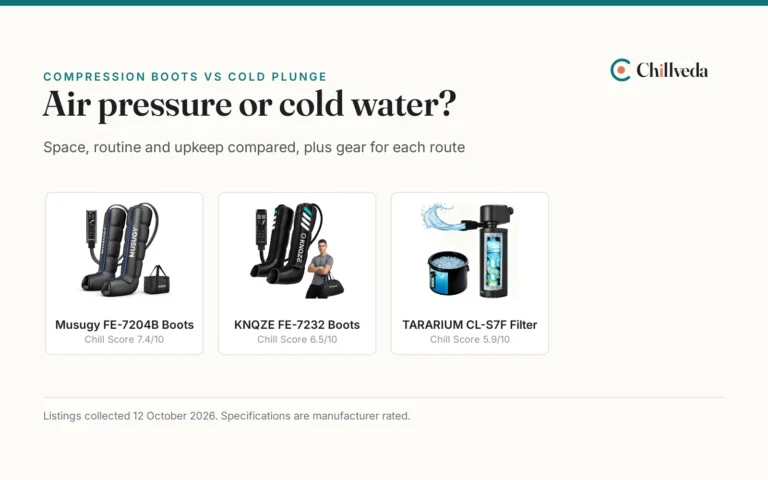
Side by side Choose compression boots if Choose a cold plunge if
Sitting on the living room sofa in the evening next to a standard wall outlet is a very different recovery routine than stepping into a water-filled tub in the garage. Deciding between compression boots vs cold plunge comes down to your available space, daily routine, and maintenance tolerance. Compression boots offer dry, seated relaxation that packs into a closet after a session, while a cold plunge provides full-body cold immersion that demands dedicated floor space, water management, and ongoing sanitation.
Readers with limited space, apartment living, or a preference for quiet evening routines should choose compression boots. Plungers with an outdoor patio, garage space, and a desire for brisk whole-body cold exposure should pick a cold plunge setup. Listings in this comparison were collected 12 October 2026.
This article is informational and is not medical advice. Cold water immersion triggers a gasp reflex and rapid breathing, while your core body temperature continues falling after exiting (afterdrop). Never plunge alone, keep your head above water, and consult a physician if you have high blood pressure, a heart condition, or are pregnant. Pneumatic compression boots apply mechanical pressure to the limbs; consult a healthcare professional before use if you have circulation disorders, deep vein thrombosis, or open wounds. See our Medical Disclaimer and our cold plunge safety guide.
Chillveda earns a commission when you buy through links on this page, at no extra cost to you. As an Amazon Associate I earn from qualifying purchases. Affiliate disclosure.
Quick picks
-
1
 Sequential Leg Compression Massager Chill Score 9.5/10Check price on Amazon
A corded electric full leg compression system with five sequential air chambers, nine pressure levels, and a 12-month warranty.
-
2
 KNQZE Full Leg Compression Massager Chill Score 9.4/10Check price on Amazon
A corded electric four-chamber leg compression massager offering 11 intensity levels up to 160 mmHg and an LCD controller.
-
3
 300 GPH Cold Plunge Filter for 100-600 Gal Ice Chill Score 9.3/10Check price on Amazon
A 300 GPH submersible cold plunge filter and pump unit with dual filtration and UV sanitation for tubs up to 600 gallons.

A corded electric full leg compression system with five sequential air chambers, nine pressure levels, and a 12-month warranty.
Pros & ConsViewHide
Pros
- Five sequential air chambers from foot to thigh
- Nine pressure levels from 40 to 120 mmHg
- Built-in pressure sensor auto-balances chamber output
- 12-month warranty stated by the manufacturer
Cons
- Weight listed as both 2.8 pounds and 2.75 pounds
- Not water resistant per the spec table
- Corded electric operation requires a nearby wall outlet
- No third-party safety certification stated

A corded electric four-chamber leg compression massager offering 11 intensity levels up to 160 mmHg and an LCD controller.
Pros & ConsViewHide
Pros
- 11 pressure levels from 60 to 160 mmHg
- Four sequential air chambers from foot to thigh
- LCD controller with real-time pressure display
- Eligible for FSA and HSA reimbursement
Cons
- Model number listed as both FE-7232 and FE-7204B
- No warranty term is stated
- Heavier build at 6.15 pounds
- No third-party safety certification stated

A 300 GPH submersible cold plunge filter and pump unit with dual filtration and UV sanitation for tubs up to 600 gallons.
Pros & ConsViewHide
Pros
- 300 GPH flow rate for 100 to 600 gallon tubs
- Four-in-one system combines pump, filtration, and aeration
- Dual filtration with membrane bag and UV sanitation
- 180-day warranty stated by the manufacturer
Cons
- Electrical wattage and voltage are not stated
- Listing bullet cuts off mid-sentence on sanitation
- Does not chill water on its own
- No third-party safety certification stated
More to compare
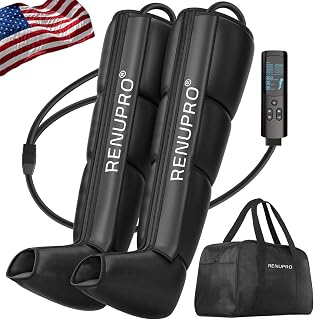 Leg Compression MassagerCheck price on Amazon
 SAN HIMA Air Compression Leg MassagerCheck price on Amazon
 Air Relax Plus AR-3 Professional Compression BootsCheck price on Amazon
 DEKEMASTER Full Leg Compression MassagerCheck price on Amazon
 JZBRAIN Professional Sequential Air Compression Boots forCheck price on Amazon
Compression boots vs cold plunge at a glance
| Feature | Compression boots | Cold plunge |
|---|---|---|
| Primary mechanism | Sequential pneumatic air compression | Cold water immersion |
| Setup location | Living room, bedroom, or office sofa | Patio, garage, or dedicated waterproof area |
| Water required | None | Water in a tub (the TARARIUM filter example covers 100 to 600 gallons) |
| Space needed | Folds into a bag or closet | Dedicated tub footprint plus circulation gear |
| Routine | Seated relaxation during or after work | Active immersion session |
| Upkeep | Wipe nylon sleeves clean | Water changes, filtration, and sanitation |
| Power source | Corded electric wall outlet | Submersible pump or chiller power |
Setup, space and power
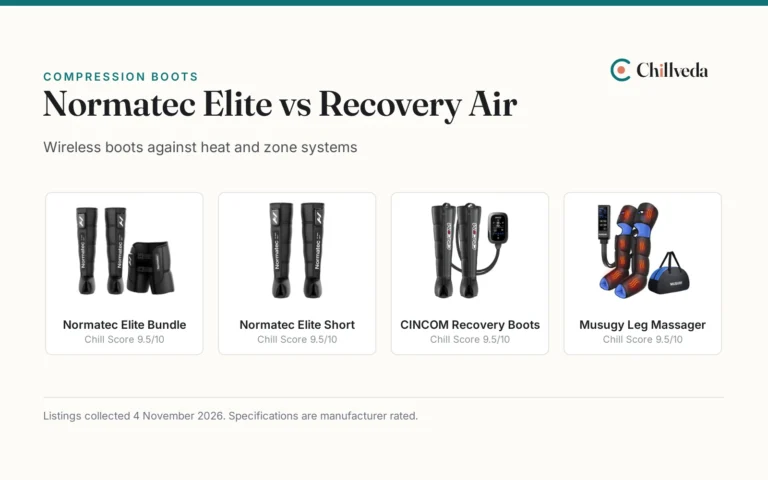
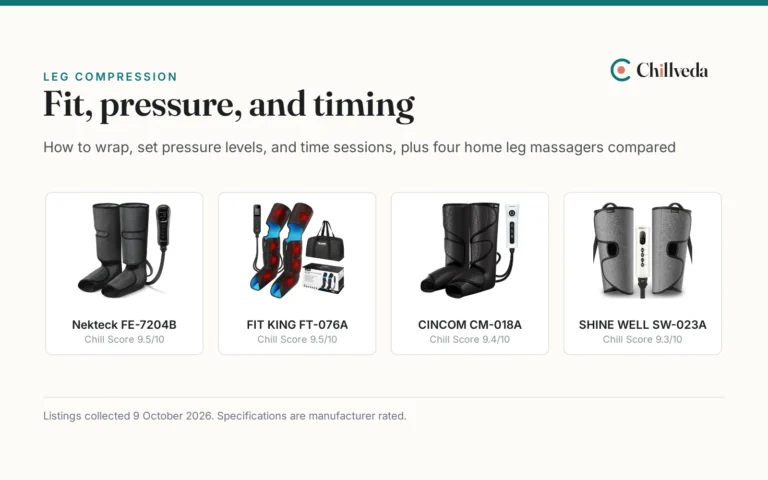
Compression boots require minimal floor space and store easily between uses. The Musugy boots list packaged dimensions of 10 by 10 by 28 inches and an item weight of 2.8 pounds (with 2.75 pounds stated on the dimensions line), while the KNQZE boots list dimensions of 9.84 by 28.15 by 9.84 inches, a 30-inch sleeve length, and a weight of 6.15 pounds. Both models operate on corded electric power, meaning you only need access to a standard wall outlet beside a sofa or bed. When a session ends, the sleeves fold flat or store inside an included carry bag, as provided with the KNQZE set. See our how to use compression boots guide for routine setup details.
A cold plunge demands a dedicated, waterproof installation zone. Setting up a plunge tub requires structural floor support for water weight and space for water circulation equipment. For example, the TARARIUM submersible filter measures 15.5 by 5 by 4 inches and weighs 2.2 pounds, designed for tubs holding between 100 and 600 gallons. None of the three listings publishes operating wattage or voltage. Both boots specify corded electric power for standard outlets, while the TARARIUM listing leaves its electrical cord length and power specifications unstated. Operating any water circulation appliance near water requires a grounded outlet with ground-fault circuit interrupter (GFCI) protection.
Upkeep and routine
Maintenance routines between the two categories could not be more different. Compression boots need virtually no daily maintenance. Both the Musugy and KNQZE sleeves use nylon fabric with double-stitched seams or reinforced panels that wipe clean with a damp cloth after use. The Musugy model notes in its spec table that it is not water resistant, so keeping the electronics dry is essential. Sessions run on preset timers of 15, 20, or 25 minutes, allowing you to relax while reading or watching television.
In contrast, a cold plunge involves ongoing water management. Water in an open tub accumulates sweat, oils, and environmental debris, requiring active filtration. The TARARIUM filter unit uses a bottom suction design, an internal membrane bag, and ultraviolet light sanitation to keep tub water clear, stating that cloudy water clears within 3 to 7 days. Even with filtration, plunge tubs require regular water checks, filter rinsing, and periodic draining. Our cold plunge water care guide outlines the full routine.
Gear for each route
These are scored on the Chill Score: performance 35, build 25, value 25, safety certifications 10 where it applies and warranty 5. None states a UL or ETL listing, so all score 0 for safety.
| Product | Chill Score | Perf. /35 | Build /25 | Value /25 | Safety /10 | Warranty /5 |
|---|---|---|---|---|---|---|
| Musugy FE-7204B Boots | 9.5 | 30 | 20 | 21 | 0 | 2 |
| KNQZE FE-7232 Boots | 9.4 | 29 | 18 | 19 | 0 | 0 |
| TARARIUM CL-S7F Filter | 9.3 | 23 | 16 | 18 | 0 | 2 |
Scores run from 9.2 to 9.8: each product’s point total is placed on that range, so more points always means a higher score.
Choose compression boots if
- You live in an apartment, rent, or lack space for a permanent water tub.
- You want a dry recovery session you can complete while working, reading, or relaxing on the couch.
- You prefer zero water maintenance, plumbing, or chemical sanitizing routines.
- You want portable gear that folds into a closet or travels in a carry bag.
Choose a cold plunge if
- You have dedicated space on a patio, basement, or garage with drainage.
- You want whole-body cold immersion rather than localized leg pressure.
- You are prepared to manage water filtration, pump maintenance, and periodic water changes.
- You already have or plan to set up a dedicated ice bath or cold plunge tub.
Check Your Space First
- Outlet location: The Musugy and KNQZE boots specify corded electric power for standard outlets near your seat, while none of the three listings publishes operating wattage. The TARARIUM filter listing also leaves cord length unstated.
- Body fit and sizing: Sizing specs must be checked before purchase; the Musugy boots fit inseams up to 32 inches, thighs up to 28 inches, and calves up to 22 inches, whereas the KNQZE medium boots fit thighs up to 27.2 inches and calves up to 20.1 inches.
- Floor capacity for water: Plunge setups require solid ground capable of holding substantial water volume; the TARARIUM filter example is specified for tubs holding 100 to 600 gallons of water.
- Storage footprint: When not in use, the Musugy boots weigh 2.8 pounds (with 2.75 pounds on the dimensions line) and fold away, the KNQZE boots weigh 6.15 pounds and pack into an included carry bag, and the TARARIUM filter measures 15.5 by 5 by 4 inches at 2.2 pounds.
Common questions
How do compression boots work compared to a cold plunge?
Compression boots use motorized pneumatic pumps to inflate and deflate air chambers along the feet, calves, and thighs in sequence. This delivers mechanical compression to leg muscles. A cold plunge immerses the body in chilled water, using temperature rather than mechanical pressure for recovery.
Can you use compression boots and a cold plunge in the same routine?
Many athletes incorporate both tools into a broader recovery program on different days or separate sessions. If used on the same day, they serve different purposes: cold water immersion provides acute cold exposure, while compression boots deliver mechanical massage during seated rest. Because the boots are corded electrical devices and not water resistant, you must warm up and dry off completely before putting them on.
Which option requires less storage space?
Compression boots require significantly less storage space. The Musugy boots weigh 2.8 pounds and fold flat, while the KNQZE boots weigh 6.15 pounds and store in an included bag. A cold plunge requires a dedicated tub along with water care equipment, such as the TARARIUM filter rated for tubs holding 100 to 600 gallons.
What maintenance do compression boots require compared to a plunge?
Compression boots require only an occasional wipe with a damp cloth on their nylon fabric. A cold plunge requires ongoing filtration, regular water checks, debris removal with a submersible filter, and periodic water replacement to keep the tub clean.
Are compression boots or cold plunges eligible for FSA or HSA reimbursement?
Eligibility depends on manufacturer qualification and account guidelines. In our comparison, the KNQZE listing explicitly states eligibility for FSA and HSA reimbursement. The Musugy boots and TARARIUM filter listings do not state FSA or HSA eligibility.
Back to all recovery reviews.