


A two person sauna is the size most households actually want and the size where the buying decision gets complicated. It is big enough to need real thought about power and placement, and small enough that a portable steam tent is a genuine alternative rather than a compromise.
We looked at twelve of them. Only one states a safety certification, which is the single most useful thing in this article.
This article is informational and is not medical advice. Heat exposure places real stress on the cardiovascular system. Please read our Medical Disclaimer and speak to a clinician first if you have a heart condition, are pregnant, or take medication affecting blood pressure or thermoregulation.
Our picks



The one that publishes a certification
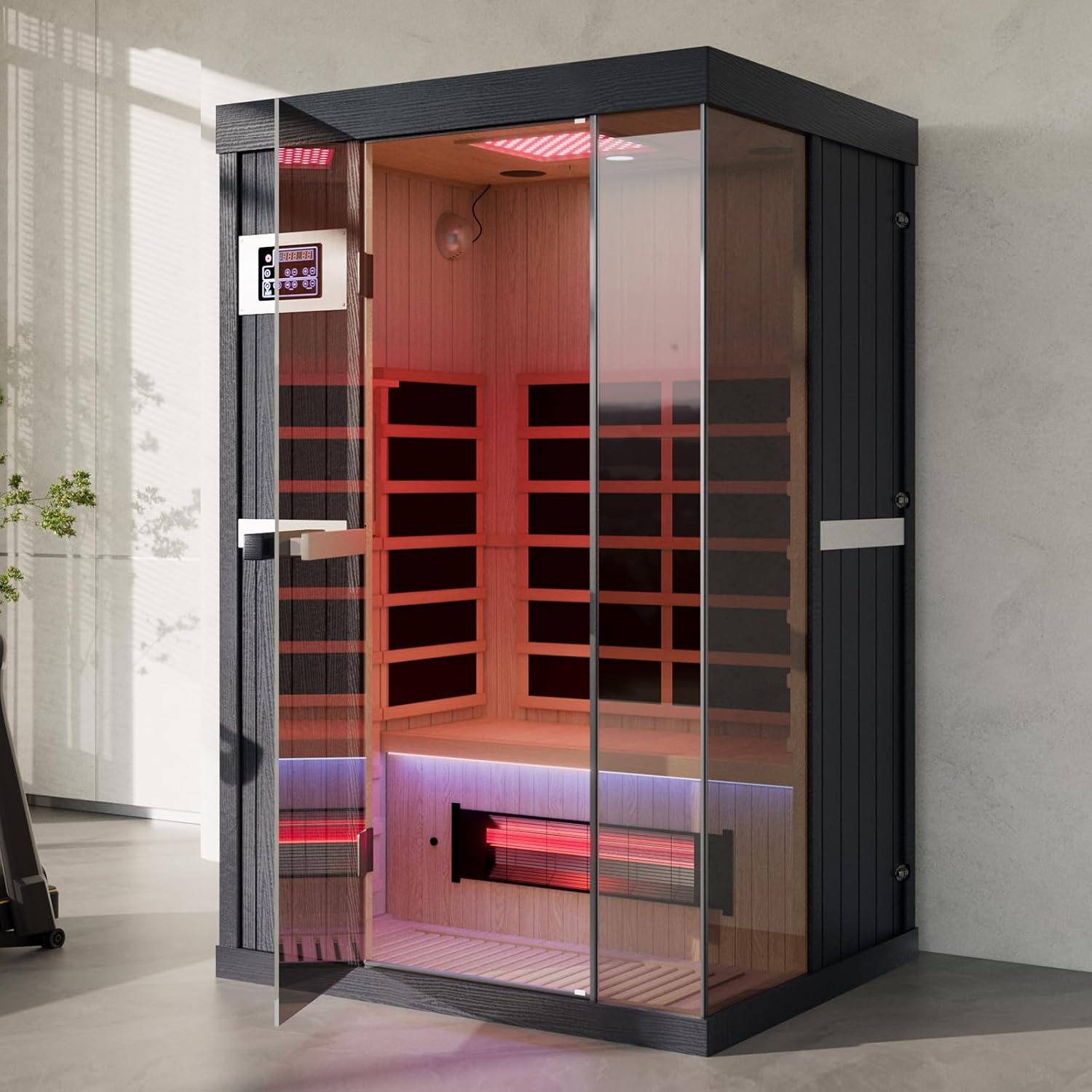
Across everything we reviewed in this category, a single listing states an independent safety certification: the 1990W full spectrum cabin, rated for a 120V supply. It tops our table for that reason rather than because its wood is nicer.
That may look like a small thing. It is not. A sauna is a wooden box containing a heater drawing between one and three kilowatts, used by wet people. An independent electrical safety listing is the baseline assurance, and eleven of twelve brands here do not mention one.
Under our Chill Score, non-disclosure scores zero for that criterion, so everything else on this page starts fifteen points down.
Cabin or tent: the real fork
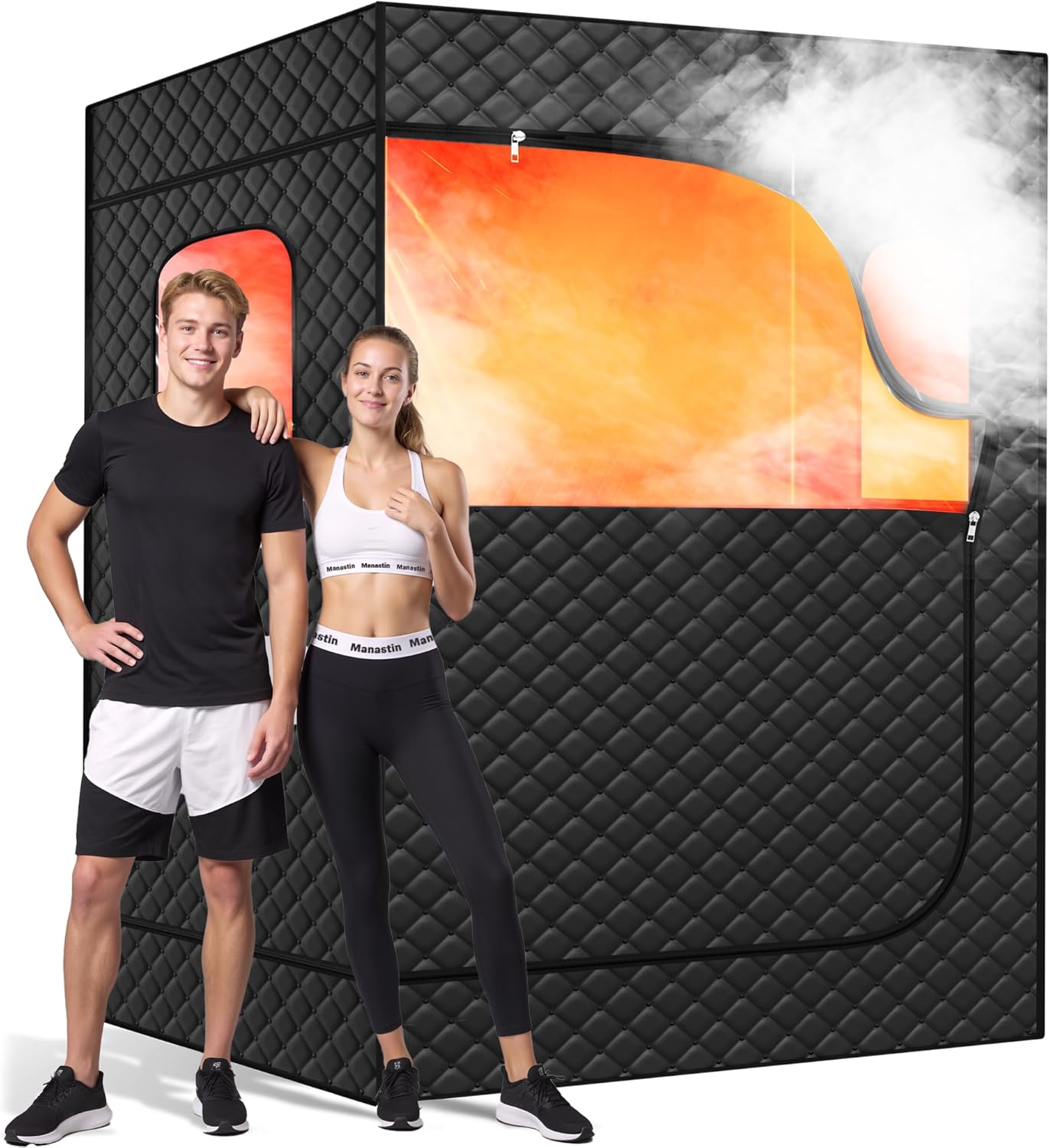
Half of these are wooden cabins and half are portable steam tents, and they are not competing products.
A cabin is furniture. It takes floor space permanently, it usually wants a dedicated circuit, and the larger traditional units need 240V and an electrician. In exchange you get a proper room that holds heat, lasts years, and adds something to the house.
A tent is a frame and fabric with a small steam generator. It plugs into a normal outlet, folds away, and costs a fraction as much. The Manastin and the X-Vcak are the two with real buyer history here. They are also fabric, they will not last like timber, and steam in a tent is a different experience from dry heat in a cedar room.
If you are not certain you will use a sauna several times a week, buy the tent and find out. Plenty of cabins become clothes racks.
Power, and the question to answer first
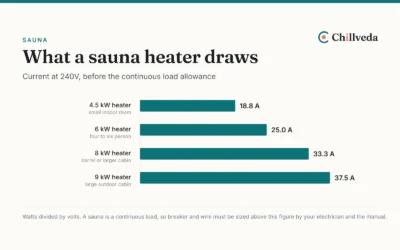
The OUTEXER in our picks states 240V and 3 kW. That is an electrician job, a dedicated circuit, and possibly a panel conversation. The full spectrum cabin states 1990W on 120V, which is close to the ceiling of a standard household circuit and will want one of its own.
Portable steam units generally run on a normal outlet without drama.
Work out which category you are in before you shortlist anything. Our guide to what a 240V cabin actually needs shows how to turn a wattage figure into an amperage figure and what to ask an electrician.
What it costs to run
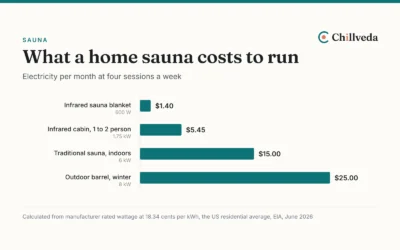
A one to two person infrared cabin costs roughly five dollars a month at four sessions a week, using the June 2026 US residential average of 18.34 cents per kWh. A 3 kW traditional or steam unit runs higher, and an outdoor unit in winter higher still.
Steam tents are cheap to run because the generator is small and the volume it heats is tiny. The full arithmetic is in what it costs to run a home sauna.
On the low EMF labels
Several of these listings advertise low EMF construction. There is no agreed standard behind that phrase, no published measurement method, and no independent verification on any listing we saw. Treat it as a manufacturer claim, the same way we do throughout our sauna coverage.
The same applies to any listing pairing a sauna with red light therapy. A red light feature inside a cabin is specified even more loosely than a standalone panel, and our guide to reading an irradiance figure explains what to ask.
Who should not buy one
If you rent, a hard wired cabin is out and a 1990W unit may still be more than your circuit will take. Buy a tent or a blanket.
If two adults will genuinely use it together and regularly, be honest about the internal dimensions rather than the marketing label. “Two person” in this category frequently means two people who are comfortable sitting close.
If you have a heart condition, are pregnant, or take medication affecting how your body handles heat, speak to a doctor before buying rather than after.
Safety
Drink water, keep sessions moderate, never use a sauna after alcohol, and leave immediately if you feel dizzy or unwell. Do not leave children unattended near one. Have any hard wiring done by a licensed electrician, and prefer a unit with a stated UL, ETL or CSA listing where you can find one, which in this category means checking carefully.
Common questions
Is infrared or steam better for two people?
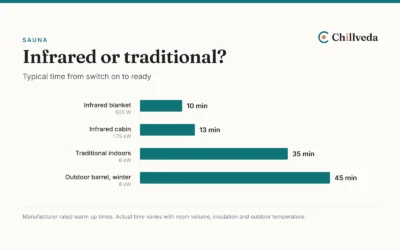
Steam suits people who want humidity and a traditional feel. Infrared warms up faster and is easier to power. The full comparison is in infrared or traditional.
How much space do I need?
Beyond the footprint, allow clearance around the unit per the manual and room to open the door fully. Cabins also need a level floor that can carry the load when occupied.
Why is the top score only in the sixties?
Because eleven of twelve brands publish no safety certification and most publish no warranty. We score non-disclosure as zero rather than ignoring it, for the reasons on our How We Review page.
Sources: Specifications, warranty statements and customer review counts are as published on the retailer listings and were collected on 19 September 2026. Wattages, voltages, dimensions and EMF claims are manufacturer rated. Electricity figures use the US Energy Information Administration residential average for June 2026, 18.34 cents per kWh.

Write Your Review
No reviews yet. Be the first to share your experience!