


LED face masks are the one part of red light therapy where regulatory status genuinely shows up on the box. Two of the masks we reviewed put “FDA cleared” directly in the product title, which is more than the entire rest of our red light coverage combined.
That is worth understanding properly, because clearance means something specific and narrower than most buyers assume.
This article is informational and is not medical advice. Please read our Medical Disclaimer, use the eye protection supplied, and speak to a clinician first if you have a photosensitive condition, take photosensitizing medication, or have any eye condition.
Our picks


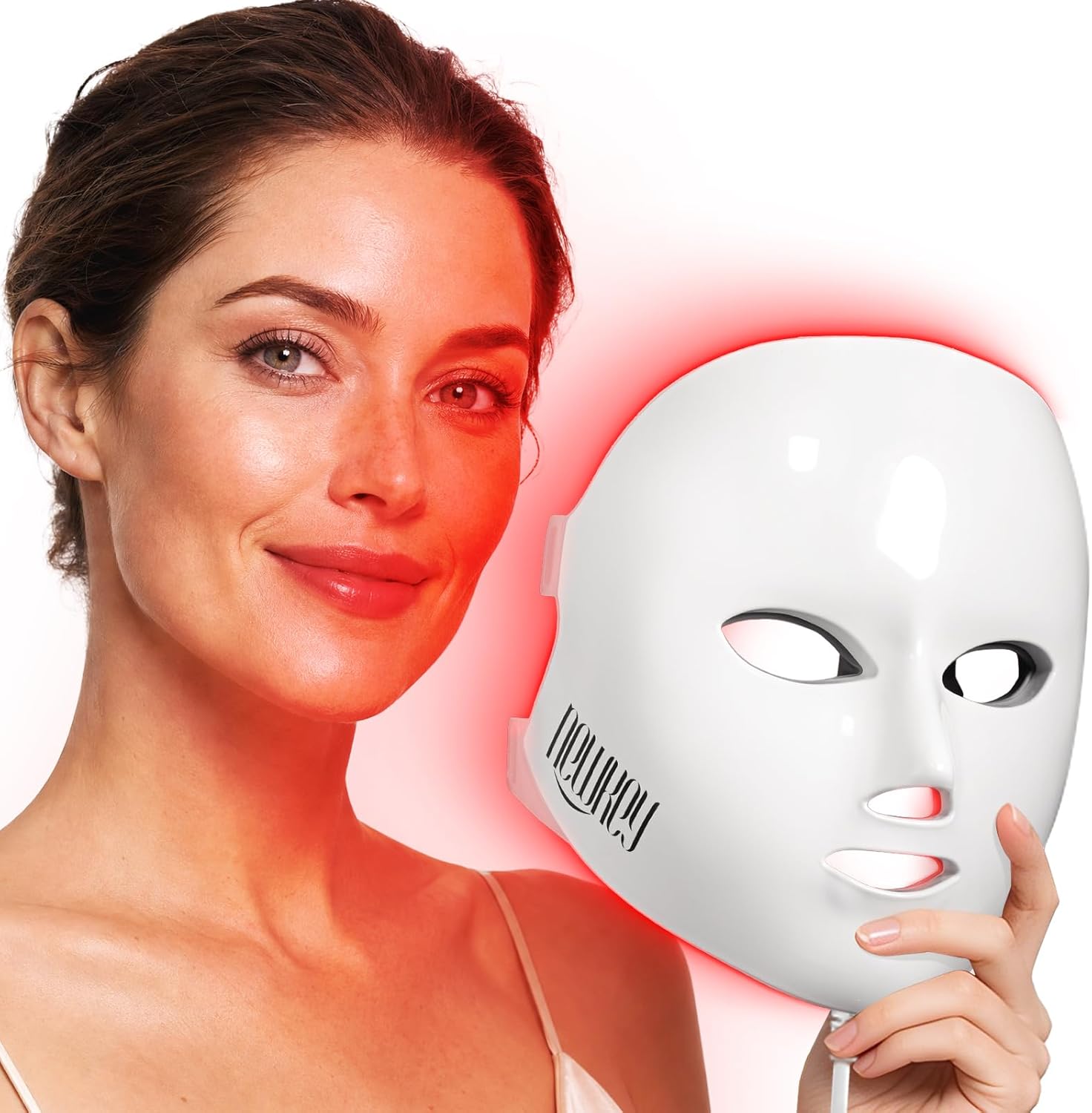


About that FDA cleared label
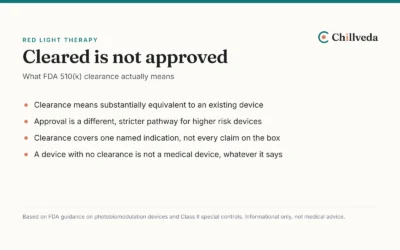
Clearance under the 510(k) pathway means a device was found substantially equivalent to one already legally on the market. It is not approval, which is a stricter pathway for higher risk devices, and it covers one specific named indication rather than everything the marketing mentions.
So a mask cleared for the treatment of wrinkles has been cleared for that. It has not been cleared for anything else on the listing.
We have not independently confirmed the clearance numbers behind the claims on these listings, and neither has the retailer. If regulatory status is part of why you are buying, ask the brand for the clearance number and look it up in the FDA public database. It takes two minutes and a company with a real clearance will hand the number over without hesitation. Our guide to what clearance actually means walks through it.
In our scoring we treat a stated clearance as a manufacturer claim and give partial credit, not the full safety score that an independent electrical listing would earn.
What separates a good mask from a cheap one
Wireless or tethered
A mask with a cable running to a controller is a mask you use sitting still. Several of our picks are wireless with an onboard battery, which is the difference between a ten minute session while you do something else and a ten minute session staring at a wall. For a device whose main competitor is not bothering, that matters.
Coverage, particularly the neck
Face only masks leave out the area people most often want treated. Three of our picks state face and neck coverage. Check the stated dimensions rather than the marketing photograph.
LED count and wavelengths
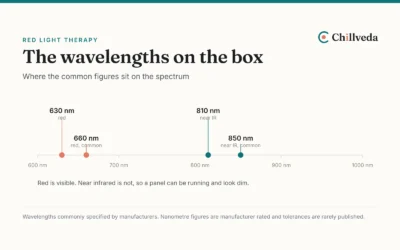
Counts here run from under a hundred to nearly five hundred. As everywhere in red light, more is not automatically better, and the distribution across the mask surface matters more than the total. Most combine red around 630nm or 660nm with near infrared at 850nm, and some add blue.
Blue light is marketed for acne and is a different wavelength range doing a different thing. Treat any specific claim about it the same way as the rest: as a manufacturer claim unless a clearance says otherwise.
Eye protection
This is the specification to check hardest in this category, because the array sits directly over your eyes. Look for built in shielding or supplied goggles, and follow the instruction to keep your eyes closed even when shielded. Near infrared is invisible, so your blink reflex will not help you.
What we did not find
Not one mask in this category states a UL, ETL or CSA electrical listing. Every one loses fifteen points in our scoring for that, and it is why nothing here reaches the seventies.
Warranty disclosure is also poor. Most listings say nothing about it at all.
On the skin claims
Listings promise collagen production, wrinkle reduction, firmer skin, and acne improvement. We do not repeat these claims. Research on light and skin exists, some of it is the basis for the clearances above, and none of it amounts to a promise about a specific consumer mask or about your face.
If a listing makes a medical claim and holds no clearance for that indication, that tells you something about the company before you have read anything else. Our Editorial Policy sets out how we handle this.
Who should skip a mask
If you want to treat your body rather than your face, a mask is the wrong shape. Buy a targeted device or a panel.
If you have an eye condition, are pregnant, take a photosensitizing medication such as certain antibiotics or acne treatments, or have a condition like lupus or porphyria, speak to a doctor before using one at all.
And if you expect results on a specific timeline for a specific skin concern, a dermatologist is a better first spend than a mask.
Common questions
How often should I use one?
Follow the manufacturer’s stated session length and frequency for the specific device. We do not publish protocols, because that would be medical advice.
Do I keep my eyes closed?
Yes, and use whatever shielding the device provides. This is not optional and it is the most common thing people get wrong.
Is a more expensive mask better?
Not reliably. In our picks the correlation between price and anything measurable is weak. Wireless operation, neck coverage and a verifiable clearance are worth paying for. LED count on its own is not.
Sources: Specifications, regulatory claims, warranty statements and customer review counts are as published on the retailer listings and were collected on 19 September 2026. LED counts, wavelengths and coverage figures are manufacturer rated, and stated FDA clearances have not been independently confirmed by us.





Write Your Review
No reviews yet. Be the first to share your experience!