


Massage guns are the one category on this site with a genuine buying public behind it. The devices in this roundup carry between sixty thousand and thirty thousand customer reviews at the top end, which is more evidence than everything in our sauna and cold plunge coverage combined.
That changes what a roundup is for. The question here is not whether these work as advertised. It is which specification actually predicts how a device feels, and the answer is not the one on the front of the box.
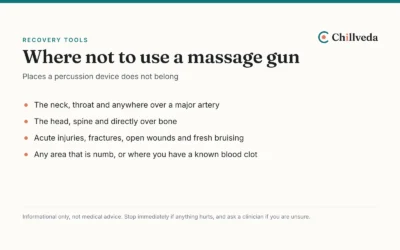
This article is informational and is not medical advice. Percussion devices must not be used on certain areas of the body. Please read our Medical Disclaimer and our guide to where not to use a massage gun before you start.
Our picks

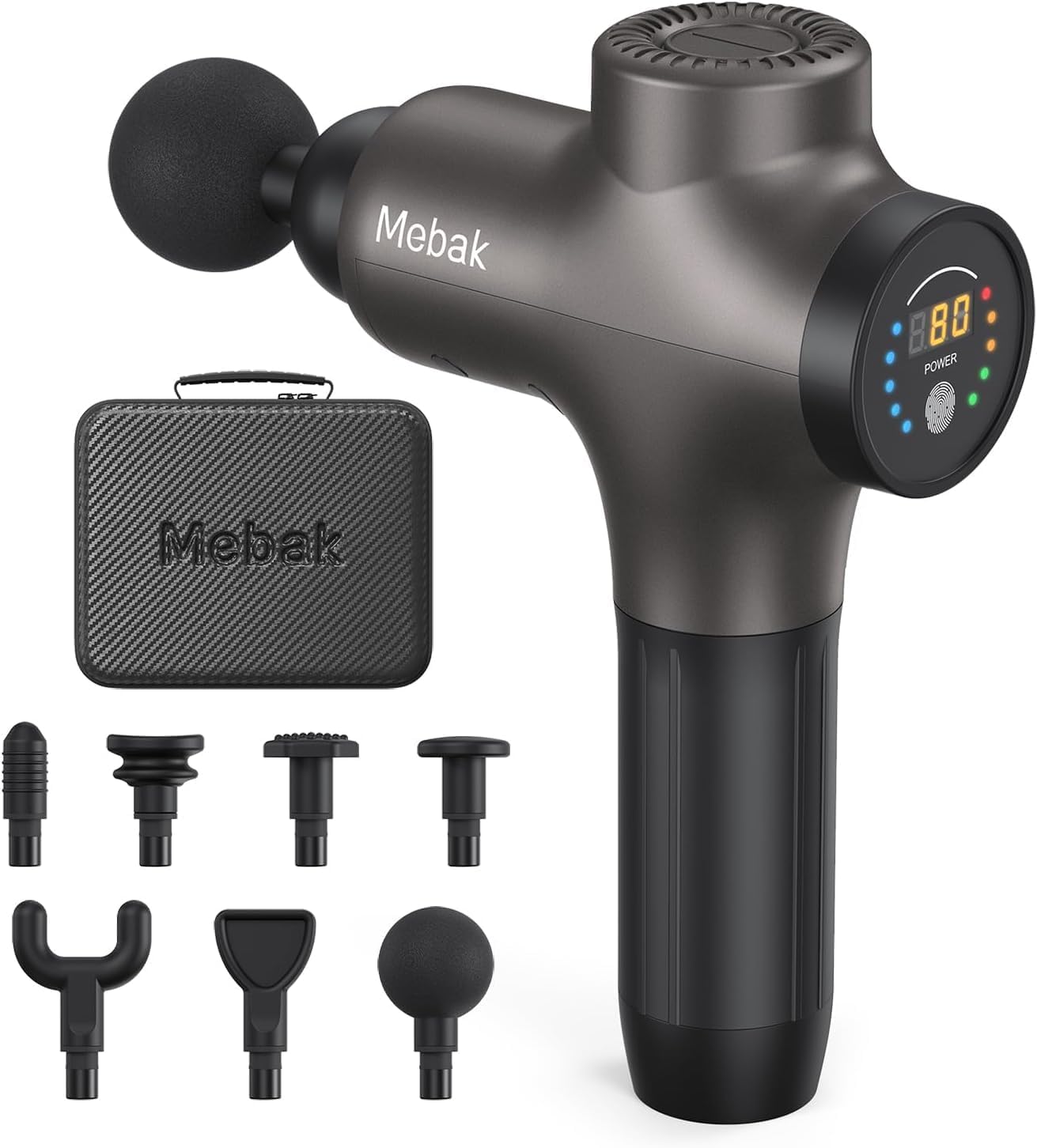
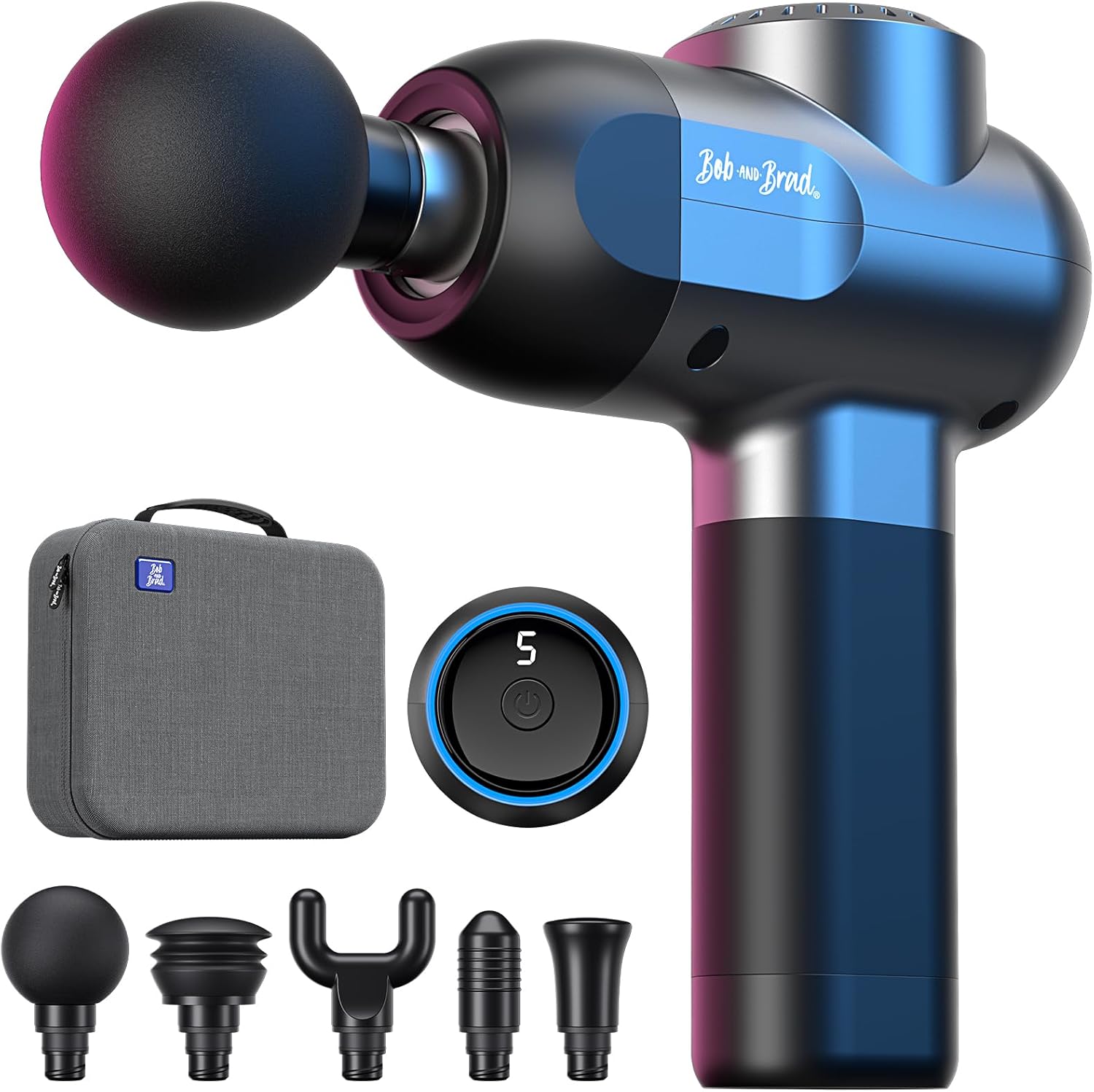


Amplitude, not percussions per minute
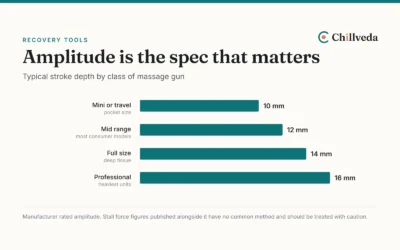
Amplitude is how far the head travels on each stroke, in millimetres. It decides how deep the percussion reaches, and between two devices it is the specification you feel.
Percussions per minute is easy to advertise and easy to inflate. A device running 3200 strokes a minute at 8mm of travel is moving fast and not far, which feels busy on the skin and does little underneath it. Our guide to amplitude and stall force sets out the typical ranges by class.
Stall force is the other headline number, and it has no common measurement method behind it. Two brands can publish the same figure from entirely different procedures. We treat every one as manufacturer rated and use it as a tie breaker at most.
What separates these seven
Weight and balance
You hold this at arm’s length, sometimes reaching behind your own back. The Hyperice Hypervolt Go 3 is the lightweight option here and it is a genuinely different tool from the full size units, easier to use on yourself and easier to travel with.
A heavy device with poor balance gets used less, and the gap between specification and daily reality is wider here than anywhere else in recovery gear.
Noise
Brands publish decibel figures using methods they do not disclose, so treat them as manufacturer rated. The physics still holds: higher amplitude and heavier motors are louder. If you want to use one in a shared room in the evening, this is a real constraint and a reason to consider a mid range device rather than the most powerful one.
Heat and cold heads
Several of these add heated or chilled attachments. It is a genuine feature rather than a gimmick for some people, and it also adds weight, cost and another thing to break. Buy it because you want it, not because it appeared on the comparison table.
Battery
Look at runtime at a realistic speed setting rather than the headline figure at the lowest. Check whether the battery is removable, because a sealed battery sets the lifespan of the whole device.
Attachments
Most people use two: a flat head and a ball head. A case of fifteen shapes is packaging. Do not pay for it.
Why the scores are not higher
The Chill Score weighs performance 30, build 20, value 20, safety certifications 15 and warranty 15.
Not one of these devices states a UL, ETL or CSA listing on its retailer listing, so all lose fifteen points. Several are from established brands that almost certainly hold certifications, but our rule is that we score what is published, not what we assume. Warranty disclosure in this category is also thin.
The result is that scores here cluster in a narrow band, and the separation comes from amplitude, weight and warranty rather than from anything dramatic.
Who should not buy one
Speak to a clinician first if you take an anticoagulant, have a clotting disorder, have osteoporosis, have neuropathy or any area of reduced sensation, or are pregnant. This is not a formality, and our safety guide sets out the areas these devices must never be used on.
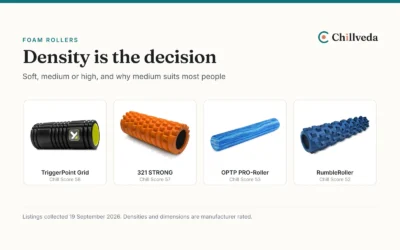
If you want general stiffness relief rather than targeted muscle work, a foam roller does a related job for a fraction of the money and has far fewer contraindications.
If you are buying as a gift, buy a mid range device rather than the most powerful one you can find. The heaviest professional units are unpleasant for most people to use on themselves.
Common questions
What amplitude should I look for?
Twelve millimetres and above for deep tissue work, around ten for a travel or mini unit. The full explanation is in amplitude and stall force.
How long should I use it on one muscle?
A minute or two, keeping the head moving. There is no benefit to grinding at one spot and it is how people cause bruising.
Are the expensive brands worth it?
Sometimes, for build quality, battery and support. But the highest review counts in this category belong to mid priced devices, and the specification gap is smaller than the price gap.
Heat, cold, or neither?
Neither, for a first device. Get the amplitude and the weight right, and add features later if you find you want them.
Sources: Specifications, warranty statements and customer review counts are as published on the retailer listings and were collected on 19 September 2026. Amplitude, stall force, decibel and battery figures are manufacturer rated.




Write Your Review
No reviews yet. Be the first to share your experience!