


Massage guns are marketed on two numbers: percussions per minute, and stall force. The first is close to irrelevant, the second is close to unverifiable, and the specification that actually separates a good device from a toy barely appears in the advertising.
That specification is amplitude.
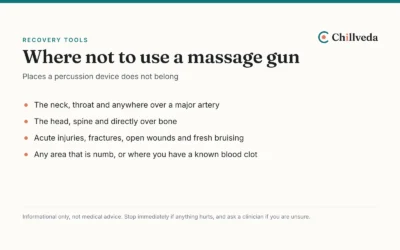
This article is informational and is not medical advice. Percussion devices should not be used on certain areas of the body. Please read our Medical Disclaimer and our guide to where not to use a massage gun.
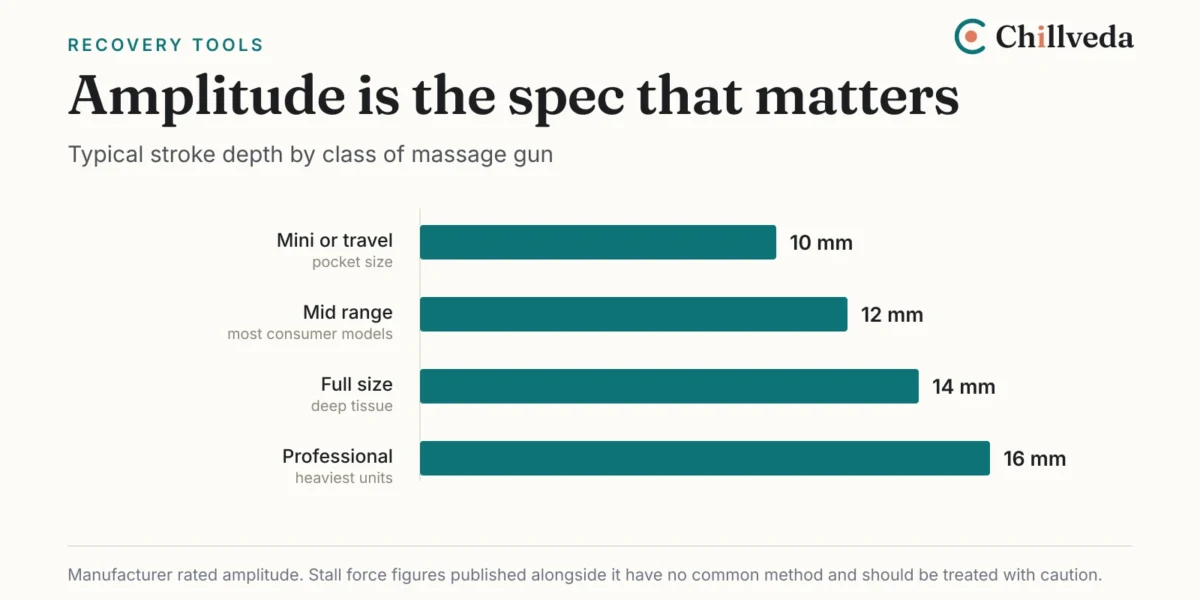
Amplitude, the spec that matters
Amplitude is how far the head travels on each stroke, measured in millimetres. It determines how deep the percussion reaches, and it is the difference between a device that vibrates the surface of a muscle and one that moves tissue.
The chart above shows the typical range across classes of device. Pocket and travel units usually sit around 10 mm. Most mid range consumer models land near 12 mm. Full size deep tissue devices reach about 14 mm, and the heaviest professional units around 16 mm.
That spread looks small on paper. In use it is the most noticeable difference between two massage guns, far more than a difference of a thousand percussions per minute.
Why percussions per minute is a weak number
Speed is easy to advertise and easy to increase. A device with 3200 percussions per minute and 8 mm of amplitude is moving quickly and not very far, which feels busy on the skin and does little underneath it.
Speed matters at the margins, and a wide adjustable range is genuinely useful. But between two devices, amplitude is the figure that predicts how the thing feels, and speed is the figure that fills a headline.
Stall force, and why to be sceptical
Stall force is how much pressure you can apply before the motor stops. It sounds like a hard engineering figure. It is not, in practice, because there is no common method behind the numbers manufacturers publish.
How the measurement is taken, at what speed setting, with which attachment, against what surface, and how “stall” is defined all change the result. Two brands can publish the same figure from very different tests, and a figure of sixty pounds from one company is not comparable to sixty pounds from another.
Treat every stall force number as manufacturer rated, which is how we label it throughout this site. A very high claim with no method attached is a marketing number.
There is also a practical ceiling on how relevant it is. Most people do not press a massage gun into their own leg with forty pounds of force, and the devices where stall force is genuinely decisive are the ones used by a therapist on somebody else.
The specifications that get overlooked
Noise
Measured in decibels by manufacturers, using methods they do not publish. Still worth reading, because a device you cannot use while somebody else is in the room is a device you use less. The heaviest, highest amplitude units are generally the loudest, which is a real trade off rather than a flaw.
Weight and balance
You hold this at arm’s length, sometimes behind your own back. A heavy device with poor balance is tiring to use on yourself, and a device that is tiring gets used less. Weight matters more than most spec sheets suggest.
Battery and charging
Look for the runtime at a realistic speed setting rather than the headline figure at the lowest one, and check whether the battery is removable. A sealed battery sets the lifespan of the whole device.
Attachments
Most people use two. The rest are packaging. A flat head and a ball head cover the great majority of real use, so do not pay for a case of fifteen shapes.
How to choose
If you want percussion that reaches deep muscle, look for amplitude at 12 mm or above and accept the size and noise that come with it.
If you want something for travel, for a bag, or for light use on smaller areas, a 10 mm mini is the right tool and you should not overpay for stall force you will never reach.
Compare amplitude first, then weight and noise, then battery, and treat stall force as a rough tie breaker rather than a ranking. Our massage gun coverage applies that order, and our How We Review page explains how the Chill Score weighs it.
Who should skip a massage gun entirely
If you have a condition affecting circulation or clotting, take an anticoagulant, or have any area of numbness, speak to a clinician before using one at all.
If you want something for general stiffness rather than targeted muscle work, a foam roller costs a fraction as much and does that job well.
And if you are buying for somebody else as a gift, buy a mid range 12 mm device rather than the most powerful one you can find. The heaviest professional units are unpleasant for most people to use on themselves.




Write Your Review
No reviews yet. Be the first to share your experience!